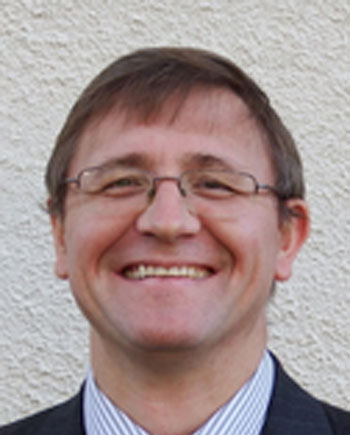
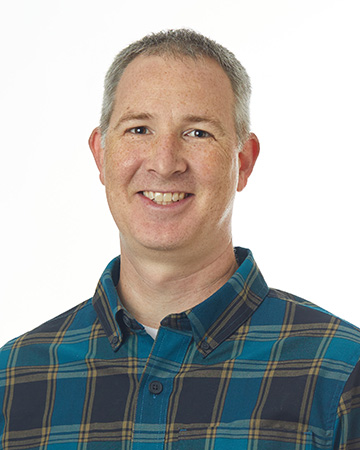
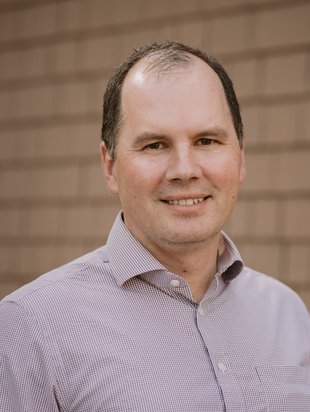
Qianru Sun is an Associate Professor at the School of Computing and Information Systems, Singapore Management University (SMU), and a Lee Kong Chian Fellow. Her research focuses on artificial intelligence, machine learning, computer vision, and semantic segmentation, with a particular emphasis on few-shot learning, meta-learning, and domain adaptation in remote-sensing imagery. Recent publications highlight her work on visual chain-of-thought reasoning , 3D scene understanding via 2D models , and parameter-efficient fine-tuning of large models. Her research also extends to weakly-supervised semantic segmentation and cross-modal video retrieval . Scientific Awards : Lee Kong Chian Fellow (2021–2023, 2025–2027) Outstanding Service Award by MMAsia (2020) Outstanding Reviewer at NeurIPS'21 and ICLR'21 Students : PhD students: Luo Zilin, Tian Zichen, Ying Jiahao Master’s students: Bao Chunhui, LOH Yi Lin, MA Li
Debra Davis is an Associate Teaching Professor at Florida International University , affiliated with the School of Computing and Information Sciences (2010–present) and serving as an Adjunct Faculty Member in the Department of Psychology (2010–present). She holds a Ph.D. in Cognitive Developmental Psychology (2004) and advanced degrees in Computer Science (2000) and Psychology (1996), with a minor in Statistics. Education : Ph.D., Cognitive Developmental Psychology (minor: Statistics), University of Texas at Austin (2004) M.S., Computer Science, Florida International University (2000) M.A., Developmental Psychology (minor: Statistics), University of Texas at Austin (1996) B.A., Psychology (minor: Computer Science), Florida International University (1993) Her research spans Human-Computer Interaction , Applied Usability Studies , and geospatial data systems, with expertise in real-time data integration, 3D visualization, and educational technology. She has contributed to spatial data platforms like Terrafly and advised on usability for grants and projects. Recent publications (1998–2001) focus on geospatial data systems, real-time search algorithms, and 3D satellite imagery. Awards include multiple Phi Kappa Phi Honor Society nominations, a research grant at UT Austin, and Dean’s List recognition. Professional Roles : Faculty Associate, NSF Industry-University Cooperative Research Center (2010–present) Principal Investigator, All Stars Effectiveness Research Project (2007–2008) Program Evaluator, Read 2 Succeed 21st Century Grant (2009–2010) Consultant, Collins Center of Public Policy (2008) Grant Reviewer for Miami-Dade County, Early Learning Coalition, and CASA (2005–2009)
Michael Olsen is an Associate Professor of Geomatics in the School of Civil and Construction Engineering at Oregon State University (OSU). He holds a Ph.D. in Structural Engineering from the University of California, San Diego, and degrees in Civil Engineering from the University of Utah. His research focuses on terrestrial laser scanning, remote sensing, GIS, earthquake engineering, and 3D visualization, with applications to disaster response, hazard mapping, and infrastructure monitoring. Recent projects include developing mobile laser scanning guidelines for transportation agencies, advancing point cloud segmentation algorithms, and conducting post-disaster reconnaissance in regions like Chile, Japan, and Nepal. Education: Ph.D., Structural Engineering, University of California, San Diego, 2009 M.S., Civil Engineering, University of Utah, 2005 B.S., Civil Engineering, University of Utah, 2004 Research Interests: His work bridges geomatics and civil engineering, emphasizing innovation in 3D data collection and analysis. Key areas include landslide displacement modeling, coastal erosion forecasting, and the integration of UAS (drone) imagery for damage assessment. He also explores accessibility compliance via mobile LiDAR and has pioneered courses in 3D laser scanning and Building Information Modeling at OSU. Publications Trends: Recent articles highlight advancements in automated infrastructure analysis, disaster response technologies, and hazard vulnerability assessments. His work often combines geospatial data with machine learning to address real-world challenges in transportation, environmental science, and structural safety. Awards/Recognition: None explicitly listed in provided materials. Advising & Grants: While no student advisees or grant details are specified, Olsen’s research is supported by projects with state DOTs, federal agencies, and international collaborations. His contributions include developing protocols for post-earthquake bridge restoration and asset management frameworks for transportation networks. Labs/Teams: Collaborates with the National Science Foundation’s NHERI RAPID facility and leads OSU’s efforts in geospatial hazard modeling. His work integrates field data collection with computational tools, forming a multidisciplinary approach to infrastructure resilience.
Gino Dardanelli is an Associate Professor in Geomatics at the Department of Engineering, University of Palermo, where he graduated in Civil Engineering and Transport in 2000 and earned his PhD in Geodetic and Topographic Sciences in 2006. His research focuses on advanced geospatial technologies including GNSS networks, laser scanning, satellite imagery analysis, and structural monitoring. Education: PhD in Geodetic and Topographic Sciences, University of Naples Parthenope, 2006 Degree in Civil Engineering and Transport, University of Palermo, 2000 Research Interests: Dardanelli's research addresses the integration of geomatic technologies for environmental and structural analysis. Key areas include multi-GNSS system integration, WebGIS development, laser scanning applications in cultural heritage documentation, high-resolution satellite image processing, and cadastral mapping innovations. Publication Focus: Recent publications demonstrate strong emphasis on coastal monitoring techniques using isoradiometric methods, cultural heritage documentation through 3D modeling, and geodetic network development. The research consistently integrates field measurements with computational analysis for environmental and infrastructural applications. Teaching: Regularly instructs courses including Topography (Civil Engineering), Topography/Cartography (Agricultural Engineering), and Applied Topography Laboratory (Environmental Engineering). Student Supervision: Advises graduate theses on topics including GNSS applications, geological monitoring, and surveying techniques.
Kristina Rand is an Associate Professor in the Department of Psychology at the University of Utah, specializing in spatial cognition and visual perception. She directs the Visual Perception and Spatial Cognition Lab , focusing on how perceptual limitations affect navigation and spatial learning. Education: Ph.D. in Psychology (2014), University of Utah; M.S. in Psychology (2009), Montana State University; B.S. in Psychology (2006), University of Oregon. Her research examines spatial memory, environmental complexity, and cognitive adaptations for individuals with visual impairments. Key themes include the interplay between attention, mobility monitoring, and perceptual cues in navigation tasks. Her publications since 2009 highlight applications in accessibility design, human-computer interaction, and aging cognition. Articles analyze spatial learning impairments, distance perception biases, and assistive technologies like physical guidance and low-vision simulations. Contact details include office 630 BEHS and phone 801-581-8081 .
Thomas Williams is an Associate Professor of Computer Science at the Colorado School of Mines, where he directs the MIRRORLab (Mines Interactive Robotics Research Lab). He earned his PhD in Computer Science and Cognitive Science from Tufts University in 2017. His educational background includes: BA in Computer Science, Hamilton College, 2011 MS in Computer Science, Tufts University, 2013 PhD in Computer Science: Cognitive Science, Tufts University, 2017 Williams' research focuses on artificial intelligence for human-robot interaction, especially natural language understanding and generation in uncertain environments. His work integrates cognitive science principles from linguistics and psychology to develop context-aware robotic systems. Key areas include Human-Robot Interaction, Natural Language Processing, Robot Ethics, and Augmented Reality, with emphasis on ethical implications and social dynamics in human-robot communication. Analysis of his publications (2015-2020) reveals a clear trajectory toward context-sensitive dialogue systems that handle ambiguity, social norms, and ethical considerations. His work increasingly explores multimodal interaction through AR/VR and examines how language-capable robots influence human moral frameworks, with growing attention to gender dynamics and noncompliance behaviors in social robotics. His notable awards include: New and Future AI Educator Award, EAAI (2017, 2018) Teaching Fellowship, Tufts Graduate Institute for Teaching (2015) Doctoral Consortia participation at YRRSDS (2014), HRI (2015), and AAAI (2016) Williams teaches Human-Robot Interaction, Robot Ethics, and Computer Vision courses while leading externally funded research. His work receives support from NSF, ONR, ARL, and Early Career awards from NSF, NASA, and AFOSR, focusing on grants that advance context-aware natural language interaction in robotics. As director of the MIRRORLab, he oversees research on human-robot interaction systems that dynamically adapt to environmental, cognitive, social, and moral contexts, with applications in assistive robotics and collaborative workspaces.
Nam Wook Kim is an Assistant Professor of Computer Science at Boston College, specializing in Data Visualization and Human-Computer Interaction. His research focuses on making data accessible to broader audiences through innovative tools and accessibility-focused design. He holds a Ph.D. from Harvard University and has conducted research at Microsoft, Disney, and Adobe. His work bridges academic research with practical applications, emphasizing accessibility, AI-driven interfaces, and creative computing. Education: B.S. in Mathematics & Computer Science (Stony Brook University), M.S. (Stanford University), and Ph.D. (Harvard University). Research Interests: Data Visualization Accessibility, Human-Computer Interaction (HCI), Creative Computing, AI Integration in Visualization, and Design Methodologies. Awards: Recognized by ACM CHI, ACM UIST, Kantar Information is Beautiful Awards, and NSF grants. His research addresses gaps between visualization research and practice, advocating for inclusive design principles. Teaching: Courses include Human AI Interaction, Data Visualization, and Web Application Development. He actively collaborates with institutions like Washington University and Northeastern University. Lab & Teams: Leads the Data Within Reach research group, focusing on accessibility and user-centric visualization tools. His work has generated over 100 publications, emphasizing empirical studies and practical tool development.
Dr. Salavat Aglyamov is a Research Professor in the Department of Mechanical and Aerospace Engineering at the University of Houston. His work focuses on biomechanical imaging and elastography techniques such as optical coherence elastography (OCE), Brillouin microscopy, and ultrasound. He leads the Biomedical Optics Laboratory and teaches courses in biomedical engineering. Research interests include corneal biomechanics, tissue stiffness analysis in diseases like glaucoma and keratoconus, and developmental biology applications in embryos and zebrafish models. Key innovations involve multimodal imaging systems combining OCT with other modalities for non-invasive tissue characterization. Recent studies address age-related lens changes, drug delivery monitoring, and the biomechanics of neural tube defects in mouse embryos. Education: Ph.D., Institute of Theoretical and Experimental Biophysics, Pushchino, Russia His research applies machine learning (CNNs) to improve strain estimation in OCE and explores clinical applications like glaucoma detection and corneal crosslinking treatment efficacy. He collaborates on projects involving systemic sclerosis assessment via OCT/OCE/OCTA and has developed novel methods for safe acoustic radiation force-based measurements on ocular tissues. His lab’s work spans from fundamental material science (e.g., Brillouin frequency shifts under environmental conditions) to translational medicine (e.g., drug delivery tracking). Publications emphasize high-resolution 3D elasticity mapping of embryos, alcohol’s impact on embryonic development, and nanobomb OCE for glioblastoma studies. His work bridges engineering and medicine through advanced optical techniques for understanding tissue mechanics in health and disease.
Colin Belby serves as Professor and Dean of the College of Science & Health at the University of Wisconsin-La Crosse . With expertise in Geomorphology, River Systems, Water Resources, Environmental Contamination, Geospatial Field Mapping, and GIS , he leads the Geography and Environmental Science department while maintaining active research programs. Education: B.A. in Geography & Mathematics (2002) - Augustana College M.S. in Geography - Fluvial Geomorphology (2005) - University of Wisconsin-Madison Ph.D. in Geography - Fluvial Geomorphology (2009) - University of Wisconsin-Madison His research emphasizes river systems and environmental contamination , particularly in the Driftless region of Wisconsin. Recent projects focus on sediment dynamics , channel migration , and fire history reconstruction using lake sediment cores. He frequently collaborates with students on UAV photogrammetry and geospatial analysis applications. Colin actively mentors students in field methods and geospatial technologies, with recent work spanning from the Mississippi River to the Himalayas . He has contributed to institutional development through the River Studies Center and maintains partnerships with organizations like the J.F. Brennan Company for hands-on hydrographic surveying experiences.
Andrei Faraon is the William L. Valentine Professor of Applied Physics and Electrical Engineering at the California Institute of Technology, where he has been a faculty member since 2012 and promoted to Professor in 2018. He works in the Division of Engineering and Applied Science within the Department of Applied Physics and Materials Science. Ph.D. in Applied Physics from Stanford University (2009) B.S. in Physics with Honors from Caltech (2004) His research focuses on solid-state quantum optics and nano-photonics , developing technologies for quantum information processing, ultra-low power optical signal processing, energy-efficient sensors, and bio-photonics. His group pioneers metasurfaces and cavity QED systems for quantum networks. Recent publications highlight expertise in dielectric metasurfaces , quantum memories , and photon pair generation . He leads research supported by grants from the Department of Energy (LMI-EFRC $15M renewal) and collaborates in MURI quantum engineering projects . 2023 Moore Foundation Experimental Physics Investigator 2018 Adolph Lomb Medal 2016 ONR Young Investigator 2015 NSF CAREER Award 2015 AFOSR Young Investigator He teaches graduate courses like APh/EE 130 – Electromagnetic Theory for Photonic Devices and APh/Ph 138 ab – Quantum Hardware and Techniques . The Nanoscale and Quantum Optics Lab at Caltech's T.J. Watson Laboratory develops quantum photonic platforms with rare-earth ions and inverse-designed meta-optics.
Associate Professor Joel Carpenter is an ARC Future Fellow in The University of Queensland's School of Electrical Engineering and Computer Science. His research focuses on manipulating and measuring spatial, polarization, spectral, and temporal properties of light, particularly through multimode fiber applications in optical telecommunications, biomedical imaging, quantum mechanics, and astronomy. He holds a PhD from the University of Cambridge and has held roles at The University of Sydney and industry positions. Education: Doctor of Philosophy (2009-2012), University of Cambridge, UK Master of Engineering (2007), University of Queensland, Australia Bachelor of Engineering (2002-2006) and Bachelor of Science (2002-2006), University of Queensland, Australia Research interests include spatiotemporal light fields, multimode fiber systems, spatial light modulation, and quantum optics. His work often employs spatial light modulators for beam shaping and control. Recent trends in his publications focus on high-dimensional quantum gates, multi-plane light conversion (MPLC), and ultra-high-speed optical transmission (e.g., 3.56 Peta-bit/s over 55-mode fibers). Awards: ARC Future Fellow Grants/Advising: His ARC Fellowship supports research into novel photonics systems. Advising details are not explicitly listed, but his work involves collaborations with students/postdocs in fiber optics and photonics. Key contributions include development of MPLC devices, spatial tomography techniques, and applications in free-space optical communication. His lab likely focuses on experimental photonics with state-of-the-art spatial light modulators and fiber characterization tools.
Dr. Oleksiy Klymenko is a Senior Lecturer in Chemical Process Engineering at the University of Surrey, affiliated with the School of Chemistry and Chemical Engineering and the Institute for Sustainability. He holds a DPhil and specializes in model-based process design, mathematical modeling, and uncertainty quantification. Research Interests: Model-based design and optimization of process systems Mathematical modeling in natural and life sciences Uncertainty quantification, particularly global sensitivity analysis Teaching: Module leader for three M-level modules: ENGM071 Process and Energy Integration (MSc) ENGM214 Process Modelling and Simulation (MSc/Year 4 MEng) ENGM256 Technology, Business and Research Seminars (MSc/Year 4 MEng) Contributes to a Year 2 BEng/MEng module. Research Trends: Publications focus on antimicrobial technologies, energy systems optimization, and electrochemical simulations. Recent work includes 3D modeling of microbial dynamics, sustainable energy design, and the development of tools like KISSA software for electrochemical analysis. Advising & Grants: No explicit student advisees or grant details provided in texts. Research collaborations likely underpin his work in interdisciplinary areas like food safety and energy systems. Labs/Teams: Part of the Institute for Sustainability at Surrey, collaborating on projects aligning with sustainable development goals, particularly in energy and food systems.
David Kirsh is a Professor in the Department of Cognitive Science at the University of California, San Diego. He holds a D.Phil from Oxford University and completed post-doctoral work at MIT's AI Lab. His research focuses on distributed cognition, embodied cognition, and human-computer interaction, with specific interests in how environments shape cognitive processes and how physical objects become tools for thought. Key research areas include: Theory of Interaction: Examines how people adapt environments to simplify cognitive tasks Environment Design: Develops principles for designing collaborative spaces and smart rooms Information Architecture: Designs large-scale web systems and information spaces Dr. Kirsh directs the Interactive Cognition Lab and co-directs the Arthur C. Clarke Center for Human Imagination. His work bridges cognitive science with practical applications in workplace design, e-learning, and human-computer interaction.
Prof. Dr. Renato Pajarola is the Head of the Visualization and MultiMedia Lab at the Department of Informatics, University of Zurich. His research focuses on computer graphics, scientific visualization, and geometric processing, with applications in 3D scanning, point cloud analysis, and real-time rendering. He leads a team developing advanced visualization techniques for high-dimensional data, parallel rendering frameworks, and interactive systems for complex datasets. Key research areas include: 3D reconstruction of indoor environments Tensor approximation for volume visualization Interactive ray tracing and point cloud processing Parallel rendering frameworks (e.g., Equalizer) Scientific computing and sensitivity analysis His recent publications emphasize: High-dimensional data exploration using tensor methods Efficient rendering techniques for large-scale point clouds Integration of citizen-reported weather data for environmental analysis Prof. Pajarola’s lab collaborates on projects like VIAN (visual annotation tool for film analysis) and Terrender (web-based terrain visualization). His Erdős number is 3, reflecting interdisciplinary research connections in mathematics and computer science.
Dr Joshua Shaw is a Lecturer in Law at Kent Law School, University of Kent (since 2023). He holds a PhD from York University (Canada), specializing in the lawful use of human corpses and tissues. His research explores intersections of law, medicine, and the human body through historical and doctrinal legal methods. He previously taught at Dalhousie University and York University, and practiced law in Ontario before becoming non-practicing. Shaw is a member of the Centre for Critical Thought and holds a Postgraduate Certificate in Higher Education. His research focuses on medical law, historical legal practices (18th–19th century UK/commonwealth), and bioethical issues like organ donation and mortuary practices. He received SSHRC and SLSA grants. Teaching includes modules on healthcare law, medical ethics, contract law, and tort law. He co-authored works on forensic mental health systems and 3D bioprinting's legal implications.