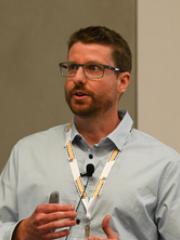
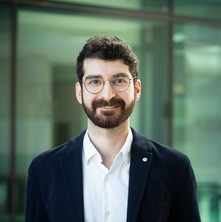
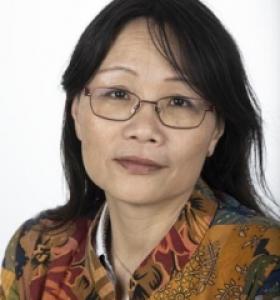
Dr. Hermann Tempel, Acting Department Head of Functional Materials and Components at Jülich Research Centre, Germany, is a leading researcher in advanced electrochemical energy systems. Affiliated with the Institute of Energy Technologies (IET) , specifically the Fundamentals of Electrochemistry (IET-1) department, he focuses on next-generation battery and electrolysis technologies. His research explores solid-state batteries post-lithium chemistries (sodium-, aluminum-ion) CO2, wastewater, and alkaline water electrolysis nanoscale material properties with emphasis on industrial scalability and technoeconomic viability. Recent publications highlight trends in 3D carbon fiber interlayers for metal anodes high-entropy halide battery materials CO2 electroreduction catalysts and systems solid-state electrolyte microstructural optimization via advanced electrochemical modeling, operando microscopy, and industrial process engineering. His work addresses critical challenges in energy storage and conversion, particularly through in situ characterization techniques double-layer capacitance analysis solid electrolyte interphase (SEI) engineering electrochemical system design to enable sustainable energy technologies.
Dr. Shicheng Yu is a researcher at the Research Center Jülich GmbH , affiliated with the Institute of Energy Technologies (IET) under the Fundamentals of Electrochemistry (IET-1) department. His work focuses on solid-state battery technologies, electrochemical stability, and advanced energy storage materials. Research Interests Dr. Yu’s research spans Solid-State Battery Engineering Electrochemical Interface Design Ion Transport Mechanisms Material Degradation Analysis Hybrid Energy Systems with a particular emphasis on lithium/sodium metal batteries and computational electrochemistry. Scientific Contributions His recent publications (2023-2025) highlight innovations in 3D Electrode Architectures Garnet/LATP Electrolyte Optimization Non-Radiative Recombination Suppression Nano-Scale Interface Engineering for next-generation energy storage solutions.
Dr. Matthias Zeisberger is a researcher at the Leibniz Institute of Photonic Technology (IPHT) , working in the Fiber Photonics department. His research focuses on advanced photonic device engineering through 3D nanoprinting, with particular expertise in optical fiber functionalization, hollow-core waveguide design, and metasurface integration for enhanced light manipulation. His work addresses critical challenges in Nanophotonics , Optical Fiber Technology , and Integrated Photonics through innovations like: Nanostructured fiber tips for broad-angle light coupling 3D holograms on multicore fibers for remote focus control Optofluidic platforms for nanoparticle tracking Phase-modulated hollow-core waveguides for higher-order mode excitation Key applications span Quantum Technologies , Biophotonics , and Environmental Monitoring . While his publications demonstrate leadership in experimental and computational photonics, no formal advising roles or scientific awards are mentioned in the available texts.
Yu Liu is a researcher at the Center for Quantum Devices within the Niels Bohr Institute at the University of Copenhagen. The Center for Quantum Devices focuses on cutting-edge research in quantum physics, particularly in areas related to spin qubits, topological quantum systems, novel devices, superconducting qubits, and quantum materials. Dr. Liu's research spans multiple disciplines within quantum physics and condensed matter. His primary focus appears to be on quantum devices, particularly investigating superconductivity in hybrid nanowire systems with ferromagnetic components. His work explores spin-split superconductivity, supercurrent transport, and spin-polarized bound states in semiconductor-superconductor-ferromagnetic-insulator hybrid structures. Beyond quantum physics, Dr. Liu has also published work in computer vision, mathematics, particle physics, transportation studies, and medical imaging, demonstrating remarkable interdisciplinary breadth. His recent publications (2021-2025) show a strong focus on quantum transport phenomena in hybrid nanostructures, particularly examining the interplay between superconductivity, ferromagnetism, and spin-orbit coupling in nanowire systems. These investigations have important implications for the development of topological quantum computing platforms and novel quantum devices. The observed phenomena include supercurrent reversal near coercive fields of ferromagnetic insulators, spin-splitting exceeding induced superconducting gaps, and percolative supercurrent flow in bilayer systems. Dr. Liu has collaborated extensively with researchers at the Center for Quantum Devices, including P. Krogstrup, S. Vaitiekėnas, C. M. Marcus, M. Leijnse, and R. Seoane Souto. His work often involves experimental measurements combined with theoretical modeling to explain observed phenomena in quantum transport systems, bridging the gap between fundamental physics and potential quantum technology applications.
Dominik Brands is a researcher at the Institute of Mechanics , University of Duisburg-Essen , specializing in computational mechanics and multiscale modeling of heterogeneous materials. He holds a doctoral degree (Dr.-Ing.) from the same university (2012), with a dissertation titled "Geometrical Modeling and Numerical Simulation of Heterogeneous Materials". Department of Civil Sciences, Faculty of Engineering Board member of the Center for Computational Sciences and Simulation since 2013 Research assistant in the Scientific Computing Support Team since 2015 Research Interests: Dominik's work focuses on Multiscale simulation of dual-phase steels Residual stress analysis in hot bulk forming Numerical modeling of high-performance concrete Phase-field approaches for fracture and fatigue Computational biomechanics of arterial walls Statistically similar representative volume elements (SSRVEs) Publications highlight trends in finite element methods for materials with complex microstructures, particularly steel and concrete systems, with recent work extending to electromechanical coupling in nanocomposites. His scientific contributions span 2012–2025, emphasizing multiscale approaches and advanced numerical techniques. Teaching includes lectures on computational mechanics, coupled problems, and engineering mechanics. He has supervised 8 thesis students (2008–2018) in topics ranging from arterial simulations to phase transformations and concrete mechanics.
Sonja Hellebrand is a Researcher at the Institute of Mechanics , University of Duisburg-Essen, Germany. Her work focuses on computational mechanics, particularly the numerical simulation of thermo-mechanical material behavior and residual stress analysis in hot bulk forming processes. B.Sc. in Technomathematics (Civil Engineering) (2012-2015) M.Sc. in Computational Mechanics (2016-2018) Doctoral Degree (2023) for research on microstructural residual stresses in targeted cooling Her research employs multiscale approaches to model residual stresses during phase transformations (austenite-to-martensite) and thermo-mechanical coupling in metal processing. Recent publications in Finite Elements in Analysis and Design and Archive of Applied Mechanics demonstrate expertise in periodic boundary conditions, two-scale modeling, and transformation-induced stress analysis. Her work bridges experimental validation with numerical simulations (e.g., Metals , 2019), emphasizing cooling rate effects and phase evolution. Collaborative efforts include projects with Prof. Schröder and Dr. Brands, focusing on stress stability and process optimization. Current affiliations: Institute of Mechanics, Faculty of Engineering Sciences, Department of Civil Engineering Teaching: Thermodynamics of Materials, Tensor Calculus, Computational Inelasticity
Francesco Gagliardi is an Associate Professor at the Department of Mechanical, Energy and Management Engineering of the University of Calabria , specializing in Manufacturing Engineering and Materials Science . His research focuses on sustainable manufacturing, numerical simulation of metal forming processes, and optimization of machining techniques. His recent publications analyze energy efficiency in composite production, vibro-acoustic monitoring of tool wear, and hybrid joining methods for multi-material applications. He actively participates in research groups investigating cryogenic manufacturing, additive technologies, and environmental impact reduction in industrial processes. Francesco leads laboratory activities in MATERIA - STAR , focusing on Research, Teaching, and Services . His work contributes to sustainable development goals through process innovation and material characterization studies.
Luigino FILICE is a Full Professor at the University of Calabria, affiliated with the Department of Mechanical, Energy and Management Engineering. His career spans advanced manufacturing research, focusing on sustainable production technologies and numerical simulation of forming processes. Open Innovation in the Industry (Management Engineering, 2025) Biomaterial Processing Technologies (Mechanical Engineering, 2025) Industrial Technologies (Chemical Engineering, 2025) Manufacturing Technologies for Food Industry and Bioprocesses (Chemical Engineering, 2025) Professor Filice's research emphasizes material forming processes, additive manufacturing, and sustainable practices. Key areas include macro/micro joining techniques, mechanical characterization of transformed materials, numerical methods for process design, and energy-efficient production systems. His work addresses both metallic (steels, light alloys) and non-metallic materials (polymers, composites) across industrial and biomedical applications. The 2024-2025 publications highlight his contributions to machining simulations, hybrid drug delivery systems, additive manufacturing of implants, and sustainable automotive production strategies. Keywords span Manufacturing Engineering, Biomaterials, and Industrial Ecology. 2007: European Scientific Association for Material Forming award for outstanding contribution to material forming processes Professor Filice has collaborated on numerous government-funded research projects and served as vice-president of the Italian Association of Mechanical Technology and vice-rector for the Residential Center at University of Calabria. He is involved in research labs focused on material characterization, precision machining, and sustainable manufacturing technologies.
Dr. Yong Wang serves as Senior Lecturer in the School of Chemical Engineering at the University of New South Wales Sydney, where he leads cutting-edge research in food engineering and technology. His academic journey includes a PhD from a joint program between China Agricultural University and University of California Davis (2011), followed by research positions at Monash University (2019-2020) and COFCO Nutrition and Health Research Institute in Beijing (2011-2019), including an Australian Endeavour Fellowship at The University of Queensland in 2016. Most recently, he was awarded an OECD Fellowship for the Co-operative Research Programme: Sustainable Agricultural and Food Systems, collaborating with MIT in April-June 2024. Dr. Wang's research focuses on food structure design (including mechanical properties for solid foods and rheological design for liquid/semi-solid foods), food processing technology (drying, emulsion, encapsulation), plant-based food developments, and human mimicking digestion systems. His work bridges fundamental science with practical applications in sustainable food systems, with particular emphasis on improving plant-based alternatives and novel food manufacturing processes. His current research projects span plant milk technologies, Australian hazelnut processing, alternative texturizers for plant-based meats, and fat distribution in food emulsion gels. His publication record includes 170 journal articles and 12 book chapters, with research trends showing increasing focus on sustainable food technologies, plant-based alternatives, and advanced food structure characterization. Recent work demonstrates expertise in interfacial rheology, 3D food printing, molecular dynamics of plant proteins, and AI applications in food science. OECD Fellow for the Co-operative Research Programme: Sustainable Agricultural and Food Systems (2024) Australian Endeavour Fellowship (2016) Editor of Food Chemistry X (Elsevier) Associate Editor of Measurement: Food (Elsevier) Editorial Board Member of Food Chemistry (Elsevier) Dr. Wang has secured over 1 million AUD in research funding since 2011, currently leading multiple projects including 'Advancing Plant Milk Technologies through Interfacial Rheology' (Sanitarium & Future Food Systems CRC, $232,000), 'Australian hazelnuts processing and quality enhancement' (AgriFutures Australia, $160,000), and 'Engineering network-forming behaviours of plant proteins' (Australian Research Council, $699,300). His research supervision focuses on food structure design, rheology, plant-based foods, and encapsulation technologies, with available honours projects spanning food 3D printing, vegetable chip development, and AI applications in flavor identification. He coordinates and teaches Advanced Food Engineering (FOOD4450/8450) and several other food science courses at UNSW.
Prof. Dr. Stephan Peth is a Professor at the Institute of Earth System Sciences within the Faculty of Natural Sciences at Leibniz University Hannover. He holds key administrative positions including Chairperson of the Examination Board for Landscape Sciences (MSc), Deputy Representative for Professors in the Faculty Council of Natural Sciences, and member of both the Soil Science Section and Soil Biophysics Group. His office is located at Herrenhäuser Straße 2, 30419 Hannover, Building 4110, Room 018. Professor Peth's research focuses on soil structure, soil physics, and soil biophysics, with particular emphasis on understanding soil pore systems, soil mechanical properties, and the impacts of land use on soil functions. He employs advanced imaging techniques like X-ray microtomography and synchrotron radiation to investigate soil structure at various scales. His work spans multiple continents with significant projects in Germany, India, Austria, and Inner Mongolia, China. Analysis of his 15 most recent publications reveals a strong research trajectory toward studying agricultural sustainability, climate change impacts on soil systems, and advanced monitoring techniques. His work increasingly integrates remote sensing with ground-based soil measurements, examines microplastic behavior in soils, and investigates regenerative agriculture practices. The publications span high-impact journals including Soil and Tillage Research, International Journal of Remote Sensing, and Journal of Plant Nutrition and Soil Science. Professor Peth has established himself as a leading researcher in soil structure analysis, with over 260 publications demonstrating methodological innovation and practical applications for sustainable land management. His work bridges fundamental soil science with real-world agricultural and environmental challenges.
Associate Professor Michael Bermingham is an ARC Future Fellow at the School of Mechanical and Mining Engineering , University of Queensland , with affiliations to the Centre for Advanced Materials Processing and Manufacturing (AMPAM) . His research focuses on advanced manufacturing of metal materials , particularly additive manufacturing and subtractive machining technologies , aiming to optimize alloy design and process interactions for improved material performance. Education: Bachelor of Engineering (The University of Queensland) PhD (The University of Queensland, 2010) with Dean's Award for Outstanding Higher Degree Theses His research spans solidification processing (casting, welding, soldering, additive manufacturing), titanium alloy development for aerospace and biomedical applications, and microstructure optimization through techniques like trace element additions and hot isostatic pressing . Recent work explores 3D printing quality improvement via alloy design and machine learning applications for porosity analysis in metal manufacturing. Michael's 15 most recent publications (2023-2025) highlight advancements in titanium additive manufacturing , fatigue crack correction methods , ω phase embrittlement mitigation through Sn additions, and cryogenic coolant applications in machining. These works demonstrate his expertise in materials characterization , defect control , and process optimization . Scientific Awards: Dean's Award for Outstanding Higher Degree Theses (2010) ATN Go8 EIA National Report Rating 'A: Outstanding impacts' (2012) Australian Award for University Teaching (AAUT) Citation (2020) Michael has secured $9.2 million in ARC funding (including a Future Fellowship, Discovery Early Career Award, Discovery Projects, Linkage Project, and Research Hub) and $0.5 million in industry/internal funding . He supervises multiple PhD and Master's students in projects related to titanium alloy optimization , additive manufacturing defects , and biodegradable metal scaffolds .
Dr. Sepanta Hosseinpour is a Clinical Lecturer at the University of Queensland's School of Dentistry and a Fellow of the UK Higher Education Academy. He holds a Doctorate of Dental Surgery (DDS) and Master of Public Health (MPH) from Shahid Beheshti University of Medical Sciences and completed his PhD in tissue regeneration at UQ in 2023. DDS, Shahid Beheshti University of Medical Sciences MPH, Shahid Beheshti University of Medical Sciences PhD, University of Queensland (2023) His research spans tissue engineering, regeneration, endodontics, and nanotechnology , focusing on mesoporous silica nanoparticles for bone repair, immunomodulatory dental biomaterials, and evidence-based dentistry. He has published over 40 papers and a book on regenerative dentistry. Recent works (2023-2025) highlight his expertise in dental biomaterials, nanoparticle delivery systems, and osteoimmunomodulation , with systematic reviews on platelet-rich products and clinical risk assessments of 3D-printed scaffolds. Fellow, UK Higher Education Academy As an affiliate lecturer at ITaLI , he develops teaching innovations. His supervision includes PhD work on macrophage regulation via nano-bio interactions. Current grants (2024-2026) focus on next-generation endodontic biomaterials with the Australian Society of Endodontology Inc. He collaborates with Professor Saso Ivanovski in bone tissue engineering and has contributed to projects involving smart scaffolds, photobiomodulation, and dental stem cell differentiation .
Mahyar Fazeli is a Postdoctoral Researcher at the School of Chemical Engineering , Aalto University . His research focuses on developing sustainable composite materials through innovative processing techniques, including the utilization of textile waste, agricultural byproducts, and lignocellulosic biomass. Current Affiliation: Aalto University, Bioproducts and Biosystems Research Groups: Bioproduct Technology, Postdoctoral Researcher Research Interests include composite material design, biopolymer processing, and environmental impact assessment. His work addresses challenges in sustainable manufacturing, carbon footprint reduction, and functional packaging solutions. Recent Publication Trends highlight advancements in biocomposites, with emphasis on Textile waste recycling Life cycle assessment Hydrogel-based additive manufacturing Lignin valorization Cellulose nanofiber integration Biomedical device fabrication Labs & Teams : Collaborates with interdisciplinary researchers in composite development, including teams led by Prof. Orlando J. Rojas, Prof. Jukka Seppälä, and Prof. Eero Kontturi.
Betül Aldemir Dikici is a current faculty member in the Department of Bioengineering at Izmir Institute of Technology . She specializes in Tissue Engineering and Biomaterials , focusing on emulsion templating techniques for creating porous scaffolds for bone and dental tissue regeneration. Her work bridges materials science and biomedical applications, with expertise in 3D printing , decellularization , and scientific visualization . B.S. in Bioengineering, Ege University (2013) B.S. in International Relations, Anadolu University Ph.D. in Materials Science and Engineering, University of Sheffield Her research emphasizes emulsion-templated scaffolds for tissue regeneration, including alkali surface modification to enhance biological properties. She has pioneered the use of deep learning for quantitative analysis of scaffold pore structures. Her work has been recognized with awards for scientific visualization, including the Nature Reviews Rheumatology cover award (2020). Recent publications focus on optimizing PolyHIPE scaffolds for bone regeneration , exploring surfactant synergy , and developing vascular infiltration models for cancer research. Her studies often involve interdisciplinary collaborations with institutions like MIT and Harvard-MIT Biomedical Engineering Centre. Doctoral Researcher Awards (Engineering Sciences Category Winner, 2020) Mike Sellars Medal and Prize (University of Sheffield) Nature Reviews Rheumatology Cover Competition Winner (2020) Inönü University 'Diseases Through Images' Competition Winner University of Sheffield 'Engineering Image of the Future' Competition Winner Betül Aldemir Dikici's work is supported by the Battelle-Jeff Wadsworth Visiting Research Fellowship and aligns with clinical translation goals in regenerative medicine. She actively contributes to scientific communication through artistic visualization of biomedical data.
Bing Tie is a researcher at the Paris-Saclay Mechanics Laboratory within the University of Paris-Saclay, focusing on computational mechanics and numerical modeling. Their work bridges theoretical and applied mechanics, with a strong emphasis on wave propagation in composite materials and 3D-printed structures. Key research areas: Mechanics, Numerical Methods, Crack Propagation, 3D Printing, Elastic Wave Dynamics Their recent publications highlight applications of discontinuous Galerkin finite element methods to simulate acoustic/elastic wave coupling, ultrasonic imaging of synthetic tissues, and shock wave propagation in aerospace components. These studies often integrate high-fidelity numerical models for 3D-printed materials and structural components. Notable collaborations include work with Denis Aubry, Andrea Barbarulo, and Hossein Kamalinia. The research spans biomedical imaging , aerospace structural analysis , and material failure dynamics , with applications in synthetic organ printing and spacecraft vibration analysis.