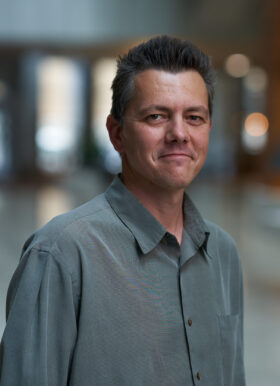
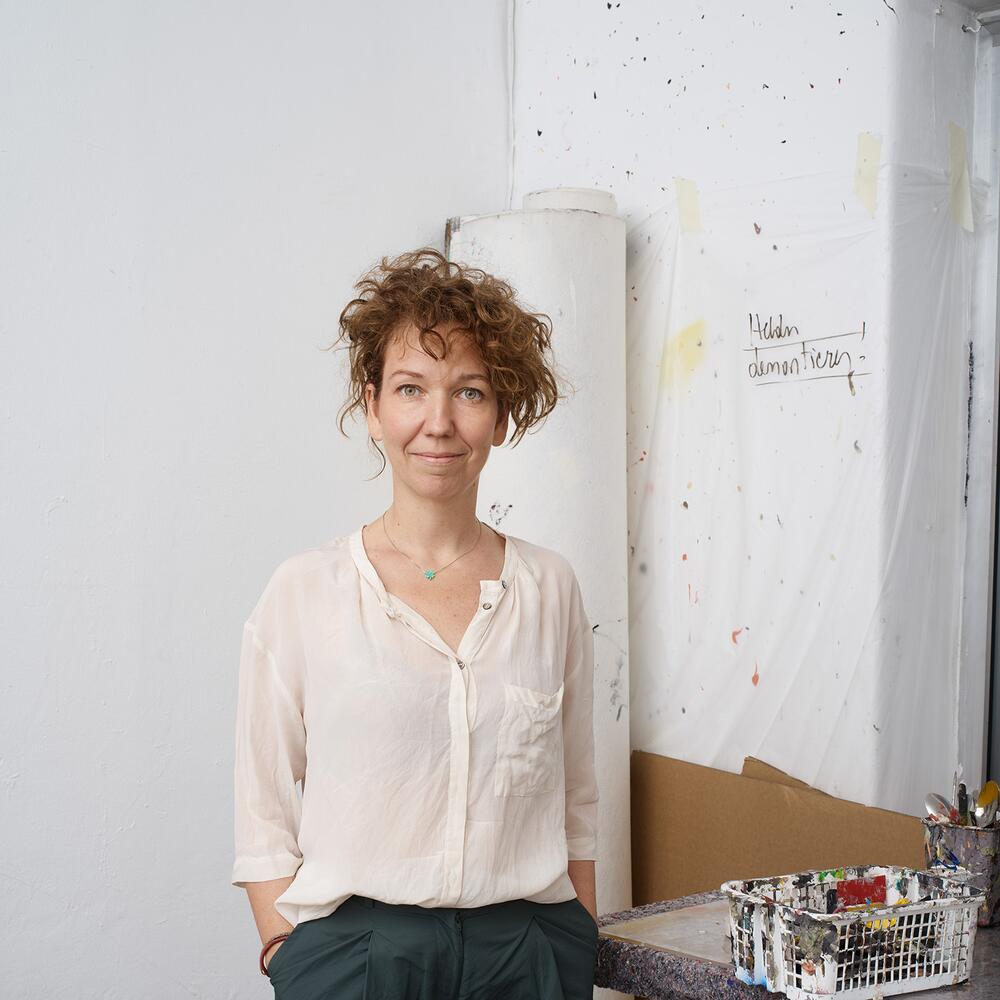
Dr. Linda Adorno is a Research Associate at Freie Universität Berlin's Department of History and Cultural Studies, affiliated with the Institute of Classical Archaeology. Since 2025, she has led the DFG project A new model for the western city district of Selinunte . Previously, she held research positions at the German Archaeological Institute in Rome (2021-2025) and has collaborated continuously with the University of Augsburg (since 2015) and University of Bonn (2011-2016) on Sicilian archaeological projects. She completed her PhD in 2020 at Rheinische Friedrich Wilhelms Universität Bonn with a dissertation on locally produced pottery at Selinunte. Her research focuses on: Greek pottery production and cultural exchange in Sicily Colonial-indigenous interactions in the western Mediterranean Archaeology of craft specialization and urban development Hellenistic and Archaic period material culture Her publications demonstrate consistent focus on Selinunte's urban fabric, with recent works emphasizing 3D modeling of city districts, craft quarter organization, and ritual practices. Archaeological field methodology forms a core theme across her research output. She maintains active collaborations with the German Archaeological Institute and multiple universities, coordinating multidisciplinary fieldwork at key Sicilian sites including Selinunte and Agrigento.
Sanu Vamanchery Mana serves as an Associate Professor at the Department of Game Education within the Faculty of Film, TV and Games at the University of Inland Norway. Based at the Hamar campus in Room 2N3329 (Biohuset, Holsetgata 22, N-2317 Hamar), he contributes to the Game School's educational mission through his expertise in digital media production and 3D technologies. Dr. Mana's research focuses on practical applications of 3D modeling software, particularly Blender, with emphasis on making complex technical processes accessible to students and practitioners. His work bridges theoretical knowledge with industry-relevant skills in game development and digital content creation. The Game School where he teaches is recognized for its hands-on approach to game education within Norway's academic landscape. His scholarly publications demonstrate consistent focus on practical 3D content creation techniques, specifically through the Blender platform. Both publications address fundamental aspects of 3D production pipelines that are essential for modern game development education, with particular attention to material design, lighting techniques, and rendering workflows. As part of the University of Inland Norway's Faculty of Film, TV and Games, Dr. Mana contributes to a program structure designed to prepare students for careers in the rapidly evolving gaming industry through specialized technical training and creative development.
Gillian Lawson is an Associate Professor at the School of Landscape Architecture at Lincoln University, New Zealand, where she has been serving since 2018. She also holds the position of Co-Director of the China-New Zealand Joint International Lab for Climate Change Response with Beijing Forestry University since 2024. Previously, she was Head of School of Landscape Architecture at Lincoln University from 2018-2022 and held various academic positions at Queensland University of Technology in Australia from 2003-2017, including Head of Discipline of Landscape Architecture from 2014-2017. Dr. Lawson earned her PhD from Queensland University of Technology (2001-2007), Master of Agricultural Science (Research) from University of Sydney (1985-1991), Bachelor of Agricultural Science (Honours) from University of New England (1980-1983), Graduate Certificate in Education from QUT (1998-2000), and Graduate Diploma of Landscape Architecture (Distinction) from QUT (1995-1996). Her research interests focus on the intersection of landscape architecture with climate change adaptation, particularly examining water and food systems as catalysts for improving urban resilience. She investigates landscape pedagogy, landscape visualization techniques, and landscape sociology across Australia, New Zealand, and other Asia-Pacific countries. Her work explores social practices in public and private open spaces, green infrastructure, and waterfront communities in landscape planning and design. Dr. Lawson's scholarly contributions demonstrate a strong focus on sustainable urban development, flood mitigation through green infrastructure, mental health benefits of landscape design, and climate change adaptation strategies. Her recent work shows increasing emphasis on international collaborations, particularly with China, and on translating research into practical applications for community resilience. Elected to Board of Trustees for the Landscape Research Group (UK) (2021-present) Associate Editor for Landscape Research (2022-present) Chief Editor for Landscape Review (2023-present) Guest Editor for Special Issue in Land on Innovative Solutions for Mitigating Coastal Flooding (2023) Co-Director of China-New Zealand Joint International Lab for Climate Change Response (2024-present) Senior Fellow, UK Professional Standards Framework (2017-present) Registered Landscape Architect (New Zealand Institute of Landscape Architects, 2019-present) Dr. Lawson has supervised numerous PhD students to completion across diverse topics including carbon sequestration in urban wetlands, flood mitigation strategies, participatory landscape architecture, and campus landscape design for health promotion. She currently supervises four PhD candidates working on projects related to nature deficit disorder, water citizenship, high-density communities with blue-green infrastructure, and playground design for UV protection. Her research has been supported by various scholarships including LU Doctoral Scholarships, CSC Scholarships, and AusAid Scholarships. She is actively involved with the Pūharakekenui Styx Living Laboratory Trust as an MOU Partner Advisor and collaborates with the Landscape Research Group (UK) and the New Zealand Institute of Landscape Architects. Her work aligns with multiple UN Sustainable Development Goals including Zero Hunger, Good Health and Well-Being, Quality Education, Clean Water and Sanitation, Sustainable Cities and Communities, Responsible Consumption and Production, Climate Action, and Life on Land.
Peter Bayguinov, PhD is an Assistant Professor of Neuroscience and Cell Biology & Physiology at Washington University School of Medicine, where he serves as Assistant Director of the Washington University Center for Cellular Imaging (WUCCI). He plays a key role in the development and management of the WUCCI-Neuroscience Facility in the Neuroscience Research Building (NRB), focusing on applying cutting-edge optical modalities to neural systems and disease models. Dr. Bayguinov earned his PhD in Cell and Molecular Pharmacology and Physiology from the University of Nevada in 2010 and his BS in Biology from the University of Washington in 2003. His research expertise centers on dynamic imaging, multiphoton microscopy, lightsheet fluorescence imaging, and tissue processing techniques including optical clearing and expansion microscopy. His research program focuses on developing and applying advanced imaging technologies to address complex biological questions across multiple disciplines. His recent work demonstrates significant contributions to neuroimaging, cerebrospinal fluid dynamics, neural circuit analysis, cardiac immunology, and tumor microenvironment studies. He has pioneered approaches that bridge optical microscopy with electron microscopy and cryogenic techniques to create comprehensive imaging workflows. His publications reveal a strong trend toward interdisciplinary collaboration, with work spanning neuroscience, immunology, cardiology, oncology, and developmental biology. Many of his recent papers focus on developing novel imaging methodologies that enable visualization across varying spatial and temporal scales, particularly for neural systems. 2009 Young Investigator Award, American Neurogastroenterology and Motility Society As Assistant Director of WUCCI, Dr. Bayguinov oversees a major imaging technology hub that serves as a resource for the entire WashU medical campus. The center provides access to cutting-edge optical, electron, data analysis, and cryogenic electron microscopy tools, along with comprehensive training and educational opportunities. His leadership has been instrumental in expanding WUCCI's scope to include specialized neuroscience applications following the construction of the Neuroscience Research Building.
Filip Biljecki is an Assistant Professor at the National University of Singapore, jointly appointed in the Department of Architecture (College of Design and Engineering) and the Department of Real Estate (NUS Business School). He founded and leads the NUS Urban Analytics Lab, which serves as a research hub for urban data science and geospatial AI applications. His work bridges architecture, geomatics, and data science to create smarter, more sustainable urban environments. Dr. Biljecki earned his PhD in 3D GIS from Delft University of Technology with highest honors (top 5%) and completed his MSc in Geomatics at the same institution. His educational background in geospatial science forms the foundation for his innovative research in urban analytics. His research focuses on leveraging emerging urban data sources, particularly street view imagery and other visual data, to advance 3D city modeling, urban digital twins, and GeoAI applications. He investigates spatial data quality, crowdsourcing through platforms like OpenStreetMap, and develops methods to assess urban form and human perception of built environments. His work integrates computer vision, machine learning, and geospatial analysis to address pressing urban challenges related to sustainability, comfort, and equity. Analysis of his recent publications reveals a strong trend toward integrating AI with urban analytics, with particular emphasis on using street view imagery to understand urban environments. His work spans from technical aspects of 3D modeling and digital twins to human-centered applications assessing walkability, thermal comfort, and visual perception. A significant portion of his research addresses sustainability challenges through carbon analysis, urban heat island mitigation, and sustainable urban design. Presidential Young Professorship (NUS), 2020 Top 2% scientists worldwide (Stanford University), 2021 Multiple teaching excellence awards (2021-2025) Best paper awards at 3D GeoInfo (2017, 2023) EuroSDR award for best PhD thesis related to GIS in Europe, 2017 Dr. Biljecki actively supervises PhD students and research fellows through his Urban Analytics Lab, with research supported by various grants and collaborations. He serves as Associate Editor for Computers, Environment and Urban Systems and holds editorial positions with several other leading journals in geography and urban studies. His work bridges academia and practice through collaborations with industry and government agencies focused on urban development. As founder of the NUS Urban Analytics Lab, he leads a vibrant research team exploring the intersection of cities and AI. He also chairs the 3D Information Management Domain Working Group at the Open Geospatial Consortium and serves as Chair of WG IV/1 at the International Society for Photogrammetry and Remote Sensing. His leadership extends to the Future Cities Lab Global at the Singapore-ETH Centre where he serves as Principal Investigator.
Bruno Suner is a Researcher at the AAU Laboratory within the CRENAU research team, operating under the UMR CNRS framework involving Université Grenoble Alpes, ENSA Nantes, ENSA Grenoble, and Centrale Nantes. His work bridges architectural theory, urban planning, and digital technology through immersive applications. His research focuses on architectural and urban scenography , particularly developing immersive systems for sensory urban experiences. Key projects include the HAUP participatory interface for soundscape composition and the CORAULIS VR Platform for architectural simulation. His work explores how virtual environments can transform territorial mediation, urban planning processes, and architectural education through sensory engagement. Virtual reconstruction of historical sites (Gavrinis megalithic tomb) Participatory urban soundscaping methodologies Immersive pedagogical frameworks for architectural training Cinematic representation in digital architectural design Bruno Suner's scientific contributions demonstrate consistent innovation in applying virtual reality to architectural challenges, with recent publications showing increasing focus on community participation in urban sensory design. His work through the AAU Laboratory's forthcoming 2022-2026 scientific project continues to advance interdisciplinary approaches to urban environments. His research methodology integrates practical development of immersive platforms with theoretical exploration of sensory urbanism, creating tangible tools for both academic research and community engagement in urban planning processes.
Larry Neuberger serves as Professor and Department Chair in the Digital Media and Animation department at Alfred State College, where he has taught since 2002. He simultaneously holds an Online Instructor position at Art Institute Online since 2006, delivering courses across digital media disciplines. His educational background includes a Master of Fine Arts from Rochester Institute of Technology (2000) and a Bachelor of Fine Arts from Kutztown University (1995). Neuberger's professional work integrates 3D computer animation, digital photography, and film production. He operates a freelance photography business specializing in creative model/portrait photography and landscape artistry, while his animation expertise manifests through Autodesk Maya tutorials and the "2 Blind Mice" animated film project completed in 2007. His publication series "Maya: Mastering the Basics" (2005-2008) established foundational educational resources in 3D animation, emphasizing practical project workflows that bridge academic instruction and industry software application across computer graphics subfields. No scientific awards were documented in the source material. Institutional service includes Faculty Senate membership (2003-2006), Art Gallery Committee participation (2002-2005), and leadership roles in search committees, curriculum coordination (2007-present), and the CD&R committee (2009-present). He co-chairs the Visual Impact Club, fostering student artistic development through this campus art organization.
Barbara Marana is a Researcher in Topography and Cartography at the University of Bergamo, School of Engineering, Department of Engineering and Applied Sciences (DISA). She has maintained an active academic career since 2003, progressing from Research Fellow to Confirmed Researcher in 2008, while also serving as an Adjunct Professor for Information Systems for the Territory and Topography courses from 2015-2023. Her educational background includes a Doctorate in Geodetic and Topographic Sciences from the Polytechnic University of Turin (1993-1997) and a Degree in Electronic Engineering with specialization in Automatic Control from the Polytechnic University of Milan (1991). She possesses strong English language skills and has authored over 60 scientific publications throughout her career. Dr. Marana's research focuses on the application of Geomatics technologies to cultural heritage preservation, environmental monitoring, and urban planning. Her work demonstrates particular expertise in GIS applications, LIDAR technology, 3D scanning, and photogrammetry for documenting and analyzing historical sites, military landscapes, and natural environments. She has developed innovative approaches for integrating these technologies to create detailed spatial analyses that support conservation efforts and sustainable development initiatives. Her recent work shows increasing emphasis on interdisciplinary applications, particularly in environmental monitoring and cultural heritage documentation. Analysis of her publication record reveals consistent thematic development across multiple domains: Early work focused on 3D modeling and documentation of archaeological sites in Central Sicily Mid-career publications expanded into military archaeology and LIDAR visualization techniques Recent research demonstrates sophisticated integration of multiple geospatial technologies for environmental applications, including air pollution analysis and climate change impact assessment Dr. Marana has received recognition for her contributions to geospatial science education through innovative teaching methods including challenge-based learning approaches to digital mapping instruction. Her educational work aligns with Sustainable Development Goals 4 (Quality Education) and 11 (Sustainable Cities and Communities). She leads research projects focused on cultural heritage documentation, particularly using 3D scanning and BIM technologies for historical structures, and maintains active collaborations on projects involving the Grotto of Saints in Enna and the Necropolis of Realmese in Calascibetta. Her methodology consistently combines traditional surveying techniques with advanced technologies including terrestrial laser scanning, UAV systems, and multispectral imagery.
Alison Griffiths is a Distinguished Professor in the Department of Communication Studies at Baruch College's Weissman School of Arts and Sciences, with a joint appointment at the CUNY Graduate Center. An internationally recognized scholar, her research bridges film history, visual anthropology, and media theory, significantly influencing studies of ethnographic cinema, prison media, and immersive technologies. Her educational background includes: Ph.D. in Cinema Studies from New York University M.A. in Film & TV from University of London P.G.C.E. in Education from University of London B.A. in Drama & English from University of Leicester Griffiths' research explores the cultural politics of visual representation across historical and contemporary media. She examines how technologies from 19th-century panoramas to modern VR shape perceptions of space, time, and cultural difference. Key themes include: Carceral media : Prison film exhibition and the ethics of incarcerated spectatorship Expedition cinema : Colonial legacies in museum-sponsored travel films Medieval interfaces : Pre-cinematic visual culture and digital medievalism Indigenous sovereignty : Decolonial approaches to Sámi and Native American archives Her publications demonstrate consistent interdisciplinary innovation, with recent work analyzing virtual reality through medieval cartography, amateur film as cultural memory, and Everest expeditions as cinematic spectacles. Thematically, her scholarship connects institutional power structures with sensory experiences of media immersion. Major honors include: John Simon Guggenheim Fellowship (2018) Fulbright Distinguished Chair, Australia (2024) Katherine S. Kovacs Award for Best Book (2003) ACLS and Waterhouse Family Institute grants SCMS Best Anthology Award (2012) She actively mentors graduate students in film and media studies at CUNY, supervising MA theses on topics from television criticism to documentary ethics. Current grants support projects on Sámi visual sovereignty and the Gallup Inter-Tribal Ceremonial archives, continuing her commitment to community-engaged scholarship.
Elisabeth Schmirl (*1980) is a University Professor for Graphics & Painting and Art Education at the Mozarteum University Salzburg, where she has been teaching since 2015. She serves as Deputy Department Head and Representative for the Study of Art and Craft Education within the Department of Visual Arts, Art and Craft Education. Professor Schmirl's research and artistic practice spans multiple disciplines within visual arts, with particular emphasis on: Graphics & Printmaking - running her own printmaking studio since 2002 Contemporary Painting techniques and conceptual approaches Art Education methodologies and practices Interdisciplinary art projects bridging visual arts with social commentary Artistic responses to ecological and societal challenges Her extensive exhibition history demonstrates a consistent engagement with themes of perception, social structures, and artistic process. Schmirl's works often explore the intersection of personal experience with broader societal contexts, employing diverse media including painting, printmaking, and conceptual installations. Her artistic output shows a progression from more traditional approaches toward increasingly conceptual frameworks addressing contemporary issues such as environmental concerns and social structures. Among her notable recognitions are: Staatsstipendium Bildende Kunst des Bundeskanzleramts (2019) Jahresstipendium des Landes Salzburg (2015) Förderpreis des Landes Salzburg (2012) Nomination for the Großer Kunstpreis des Landes Salzburg (2011) Nomination for the Kardinal König Kunstpreis (2009) Schmirl has been actively involved in artistic communities and initiatives beyond her academic role. Since 2006, she has served as chairwoman of periscope, an art initiative, and since 2015 has operated SUPER - Initiative for interim use of vacant spaces as cultural action areas. She is also a board member of the Salzburg Cultural Venues Association and has been a member of the Salzburg State Cultural Council since 2017.
Dr. Barnaba Bonati serves as academic staff at the Władysław Strzemiński Academy of Fine Arts in Łódź, affiliated with the Institute of Animation and Games. His institutional role focuses on digital creative disciplines within Poland's prominent fine arts academy. His research interests center on Animation and Game Design , with specialization in Digital Media and Interactive Art development. The Institute of Animation and Games at this historic institution blends traditional fine arts education with contemporary digital production techniques. As a doctorate-holding faculty member, Dr. Bonati contributes to programs exploring the intersection of artistic expression and interactive media technologies within Central Europe's academic landscape.
Vojtěch Nosek serves as an Assistant Professor at the Institute of Archaeology and Museology within the Faculty of Arts at Masaryk University in Brno, Czech Republic. His office is located at Joštova 220/13 in building M/M01, where he conducts research and teaching activities focused on advanced archaeological documentation methods and material analysis. With over 66 publications to his name, Nosek has established himself as a specialist in digital archaeological techniques and ceramic studies. Dr. Nosek's research interests center on archaeological methodology, particularly the application of 3D modeling, photogrammetry, and multi-analytical approaches to archaeological materials. His work bridges traditional archaeological analysis with cutting-edge digital techniques, with special emphasis on Neolithic ceramic figurines and Early Medieval pottery. His research frequently employs μCT scanning, petrographic analysis, and use-wear studies to extract maximum information from archaeological artifacts. Nosek has developed specialized tools like the MeshSection Toolset for Blender and the NEOFIG database to advance digital documentation standards in archaeology. Analysis of his recent publications reveals a strong trend toward interdisciplinary collaboration and methodological innovation. His work spans from the Neolithic period through the Early Medieval era, with particular focus on Central European contexts. Nosek frequently collaborates with international researchers across diverse fields including material science, paleontology, and computer science. His publications demonstrate a consistent emphasis on developing and applying rigorous analytical frameworks to understand artifact production, use, and deposition patterns. Dr. Nosek actively participates in major research projects including the FORMOR project analyzing the formation of complex societies in Early Medieval Moravia. His collaborative network includes prominent researchers such as Ludmila Kaňáková Hladiková, Martin Kostal, and Jiří Macháček. While specific grant information isn't detailed in the provided text, his extensive publication record across high-impact journals suggests successful funding acquisition for his research initiatives. Nosek's laboratory work focuses on digital documentation and material analysis, utilizing 3D modeling software, photogrammetry equipment, and various analytical techniques to study archaeological materials. His research group appears to specialize in creating digital archives and developing analytical tools for archaeological applications, with particular attention to making methodologies accessible through open-source platforms like Blender.