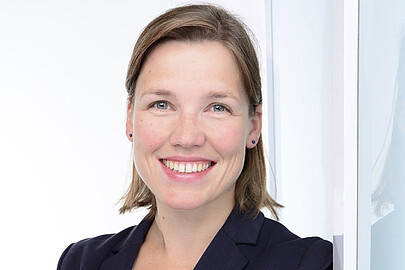
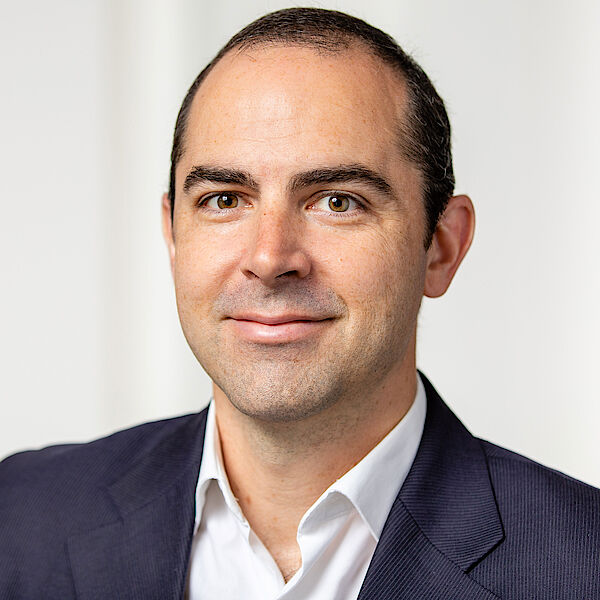
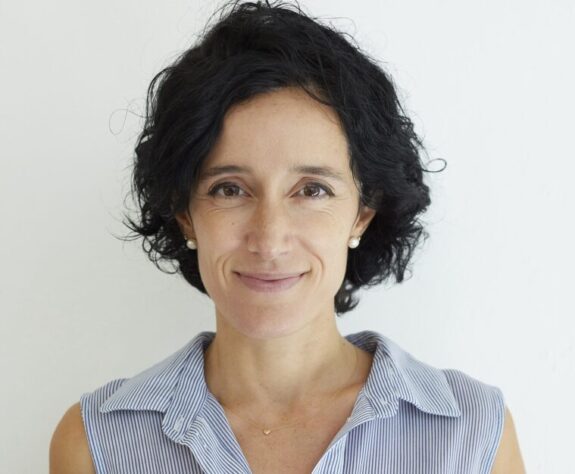
Tobias Ofner-Graff is a researcher at the Institute of Forest Growth within the Department of Ecosystem Management, Climate and Biodiversity at the University of Natural Resources and Life Sciences, Vienna (BOKU). Based at Peter-Jordan-Straße 82, 1190 Wien, his work focuses on advanced forest monitoring technologies. His research interests include: LiDAR and remote sensing applications in forestry Automated forest inventory systems Forest regeneration quantification Airborne Laser Scanning (ALS) data analysis Sustainable forest harvesting planning Recent project contributions include: Leading lidar-based forest monitoring systems development Developing spatial forest growth models Implementing digital inventory workflows His publications demonstrate expertise in: Quantifying forest resources through 3D point clouds Advanced timber stack measurement techniques ALS data integration for forest modeling Mobile laser scanning applications Forest climate adaptation strategies
Professor Nick Schofield is a leading academic in Igneous and Petroleum Geology at the University of Aberdeen's School of Geosciences . His research focuses on seismic and field interpretation of volcanic terranes, with particular emphasis on igneous-hydrocarbon system interactions. He serves on the UK-IODP program advisory group and is currently on 80% secondment to Pulsar Helium as Chief Geologist. Research Themes : Igneous Systems in Sedimentary Basins, Volcanic-Hydrocarbon Interaction, Sub-Basalt Exploration, Seismic Stratigraphy, Sill Complex Analysis Geographic Scope : North Atlantic Margin, Australian North West Shelf, East African Rift, Norwegian Atlantic Margin Recent publications demonstrate his expertise in: Quantifying volcanic-sedimentary interactions through 3D seismic analysis Advancing sub-basalt imaging techniques for hydrocarbon exploration Characterizing alkaline sill emplacement in sedimentary basins Understanding magma plumbing systems' impact on petroleum geology His work bridges academic research with industry applications, particularly in volcanic terrane characterization for energy resource exploration.
Prof. Dr. Melanie Krüger is a faculty member at Leibniz University Hannover , where she serves as Head of the Research Unit Sports and Cognition within the Institute of Sports Science. Her academic career spans institutions including the Technical University of Munich, University of Tasmania, and Ludwig Maximilian University. She leads research initiatives in embodiment, cognitive aging, motor decision-making, and the impact of physical activity on neurocognitive and motor functioning. Current Position: Professor, Institute of Sports Science, Leibniz University Hannover Prior Appointments: Post-doctoral roles at Technical University of Munich, University of Tasmania, and Pennsylvania State University Education: PhD in Systemic Neurosciences, Ludwig Maximilian University; Diploma in Sports Science, University of Leipzig Krüger's research focuses on: Embodiment Research: Systemic interactions between cognitive and motor development Cognitive Aging: Age-related changes in motor decision-making and coordination Human Locomotion: Collision avoidance, mixed reality interactions, and real-world movement studies Open Science: Advocacy for research data management in sports science Her recent publications explore mixed reality applications ( 2024 ), stress effects on motor function ( 2023 ), and methodological innovations in locomotion studies ( 2021-2025 ). Current projects include Moving Forward (2021-2022) and two Innovation Plus initiatives (2022-2024) developing experimental frameworks for human movement analysis. Krüger actively participates in academic governance: Spokesperson, German Society of Sport Science's Ad Hoc Committee on Research Data Management (since 2022) Board member, DVS Section 'Sports Motor Skills' (since 2022) Doctoral Committee, Faculty of Humanities Examination Board, MSc Sustainable Health Promotion in Sports Science
Associate Professor Erica Southgate is a leading researcher at the University of Newcastle , specializing in emerging educational technologies with a focus on virtual reality and AI ethics . Her work bridges digital learning and sociology of education , emphasizing equity in education and technology accessibility for all learners. PhD and BEd from University of Newcastle 2016 Equity Fellow for national research 2017 ASCILITE Innovation Award Southgate's research explores how immersive technologies can transform education through student content creation , ethical frameworks , and curriculum redesign . Recent studies focus on generative AI policy , VR learning environments , and digital footprint management . Her VR School Study demonstrates practical implementation strategies. Key publications include the first VR education book and AI ethics guidelines for Australian Government. She leads the Digital Identity, Curation and Education (DICE) research network and advocates for human rights in educational technology .
Sidonie Christophe is a Senior Researcher (Directrice de Recherche, DR1) at UMR LASTIG, a joint research unit of Université Gustave Eiffel, IGN-ENSG, and EIVP. She serves as co-director of the LASTIG laboratory and leads research in geovisualization, map design, and interactive spatial data exploration. She also holds a part-time advisory role (60%) at the French Ministry of Higher Education and Research in the domain of digital technology, environment, climate, and sustainable urban development. PhD in Geographic Information Sciences Senior Researcher, DR1, MTECT Co-Director, LASTIG Laboratory (since 2021) Former Team Leader, GEOVIS (Geovisualization, Interaction, and Immersion) Advisor, Environment and Urban Climate, French Ministry of Higher Education & Research Her research centers on innovative methods for 2D/3D and nD geospatial data visualization, with a focus on enabling spatio-temporal understanding through visual and non-visual spatial thinking. Her work integrates principles from geographic information science, human-computer interaction, and computer graphics. Key areas include urban climate visualization, tactile and augmented reality for accessibility, expressive cartographic rendering, and cognitive aspects of map design. She investigates how aesthetic and semiotic choices impact map comprehension and utility. The 15 most recent publications reflect a strong trend in interactive and accessible geovisualization, particularly for urban and environmental applications. Topics include neural map style transfer, 3D urban climate analysis, tactile maps for the visually impaired, augmented reality in geography, and visual analytics for crisis and climate data. There is a consistent emphasis on user-centered design, interdisciplinary integration, and the development of tools for decision-making under uncertainty. Scientific Recognition and Service: Invited speaker at major conferences (IEEEVIS, AGILE, ICC, CPGIS) Co-organizer of international workshops (e.g., GeoVIS, ISPRS AR/VR sessions) Leader of national research projects (ANR ORACLES, ANR ACTIVmap, ANR ECOCIM) Recipient of international mobility grants (AMICI I-SITE FUTURE) Contributor to national glossaries and research strategy (e.g., French photogrammetry glossary) Advising and Grants: Sidonie Christophe actively supervises PhD students and postdoctoral researchers, including Markie Jiang, Maria-Jesus Lobo, and Alexandre Mielniczek. She leads or participates in multiple funded research projects such as ANR ORACLES (marine flooding visualization), ANR ACTIVmap (tactile 3D maps), and ANR ECOCIM (eco-design of city information models). Her advisory role at the MESR involves shaping national research strategy in digital and environmental sciences. Labs and Research Teams: She is a core member of the GEOVIS team (Geovisualization, Interaction, and Immersion) at LASTIG and previously served as its leader. As co-director of LASTIG, she plays a central role in the leadership and strategic direction of the entire laboratory, which comprises over 100 researchers across four teams: ACTE, GEOVIS, MEIG, and STRUDEL.
Prof. Dr.-Ing. Frank Thielecke is a full Professor and the head of the Institute of Aircraft Systems Engineering (Flugzeug-Systemtechnik) at Technische Universität Hamburg (TUHH), Germany. His research is centered on advanced aircraft systems, avionics, flight control, and the integration of emerging technologies such as hydrogen and hybrid-electric propulsion. Institution: Technische Universität Hamburg Department: Institute of Aircraft Systems Engineering (Flugzeug-Systemtechnik) Email: frank.thielecke@tuhh.de Office: Neßpriel 5, Room 1.012, 21129 Hamburg His research interests include integrated modular avionics (IMA), model-based systems engineering (MBSE), aircraft load estimation, health monitoring, fault diagnosis, and sustainable aviation technologies. He leads a research group actively contributing to next-generation aircraft design, with a strong focus on digitalization, virtual testing, and system safety. The recent publications highlight a consistent trend in developing model-based tools and architectures for avionics and aircraft systems. Key themes include the design of IMA platforms, virtual integration, system validation, hydrogen aircraft systems, and control algorithms for UAVs and flexible aircraft. His work frequently appears in AIAA, DASC, DLRK, and CEAS conferences and journals. Prof. Thielecke has been involved in numerous collaborative research projects focusing on more-electric aircraft, fuel cell systems, and advanced actuation. He has contributed to the development of frameworks such as ASHLEY and SArA for avionics platform design and systems architecting. His team also works on noise reduction in hydraulic systems and condition monitoring for aircraft subsystems. He supervises a group of researchers and PhD students, many of whom co-author his publications. While specific student names are not listed, long-term collaborators like Oliver Luderer, Thimo Bielsky, Nils Külper, and Philipp Chrysalidis are likely doctoral candidates or postdoctoral researchers in his group. He has secured funding for projects related to hydrogen aircraft, hybrid propulsion, and digital avionics engineering. His lab, the Institute of Aircraft Systems Engineering, operates test benches for avionics, hydraulic systems, and flight control validation. The team uses advanced simulation, co-simulation (e.g., FMI), and hardware-in-the-loop techniques for virtual integration and testing. Ongoing work includes the development of tools for early validation of flight control platforms and automated requirement-based testing.
Jina Kang is an Assistant Professor in the Department of Curriculum & Instruction at the University of Illinois Urbana-Champaign , with an affiliate appointment at the Siebel Center for Design . Her research focuses on immersive technology-supported learning environments , collaborative problem-solving dynamics , and educational data mining for understanding multimodal engagement in science education. Recent publications examine embodied cognition in STEM through gesture-based learning simulations, joint attention dynamics in astronomy VR environments, and systematic reviews of immersive technology applications in collaborative education. Her work integrates XR platforms , Bayesian knowledge tracing , and multimodal behavioral analysis to enhance science learning outcomes. She teaches graduate courses including CI 539: Introduction to Educational Data Mining and CI 489: Educational Technology Capstone Course , where students develop technology-supported learning activities using studio-based approaches.
Guillermo Gallego is a Professor of Robotic Interactive Perception at the Faculty of Electrical Engineering and Computer Science , Technische Universität Berlin , holding the Einstein Center Digital Future (ECDF) Professorship since 2019. His research bridges robotics , computer vision , and applied mathematics , focusing on optimization methods for interdisciplinary imaging and control problems. Education : PhD in Electrical and Computer Engineering (Georgia Tech, 2011), MS in Mathematics (Georgia Tech, 2009), MS in Electrical Engineering (Georgia Tech, 2007), MS in Mathematical Engineering (Universidad Complutense de Madrid, 2005). Gallego's work explores event-based vision to enhance robot perception through low-latency sensing and real-time 3D reconstruction . He previously held postdoctoral positions at the Institute of Neuroinformatics (University of Zurich/ETH Zurich) and Technical University of Madrid (Marie Curie Experienced Researcher). His interdisciplinary projects span applications in ocean remote sensing , autonomous driving , and space exploration . Key scientific awards include the Fulbright Fellowship (2005-2010) and Marie Curie Experienced Researcher (2011-2014). His recent publications focus on event camera algorithms for optical flow , SLAM , and noise estimation , reflecting his leadership in event-based vision research. Collaborations include institutions like University of Zurich , Georgia Tech , and University of Pennsylvania . Research Grants : Funded through ECDF and Marie Curie programs. Labs : Affiliated with the Einstein Center Digital Future and Institute of Neuroinformatics (Zurich/ETH Zurich).
Peter Mooney is a Lecturer in the Department of Computer Science, Faculty of Science & Engineering at Maynooth University. His research focuses on Volunteered Geographic Information (VGI), OpenStreetMap, spatial data analysis, and geospatial data integration in applications such as environmental monitoring and pervasive health systems. Institution: Maynooth University School: Faculty of Science & Engineering Department: Computer Science Role: Lecturer Mooney's research explores the use of crowdsourced geospatial data, particularly through OpenStreetMap, analyzing data quality, community roles, and integration into location-based services. His work bridges technical analysis with policy considerations in geospatial data management. Recent publications highlight his contributions to understanding spatial data dynamics, including attribute changes in OpenStreetMap, characteristics of edited objects, and applications of VGI in environmental systems. He also investigates the intersection of haptics and GIS for novel interaction methods. Contact: peter.mooney@mu.ie
Alison Langmead serves as Clinical Associate Professor and Director of the Visual Media Workshop in the Department of Art History and Architecture at the University of Pittsburgh's Dietrich School of Arts and Sciences, with a joint appointment as Associate Professor in the School of Computing and Information. Her work bridges digital humanities, visual culture studies, and information management history through mindful technological application. Education: PhD, Columbia University MLIS, University of California at Los Angeles Langmead's research centers on the intersection of digital methods and visual/material culture, examining historical information practices alongside contemporary computational approaches. She pioneers sustainable digital scholarship frameworks while critically analyzing AI's role in art historical connoisseurship and cultural preservation. Her work emphasizes intentional technology use that respects scholarly integrity and humanistic values. Recent publications reveal consistent focus on collaborative digital art history methodologies, computational modeling of visual data, and sustainable infrastructure development. Key trends include network analysis applications, role-based collaboration frameworks, and ethical considerations in AI-driven art scholarship, demonstrating evolution from technical implementation toward systemic sustainability and human-centered design. Scientific Awards: Award for Excellence in Graduate Mentoring, Dietrich School of Arts and Sciences, University of Pittsburgh, May 2023 Langmead actively mentors graduate students through the DHRX initiative while securing significant research funding. Her current grants include 'Teaching Art History with AI' (PI, 2023-present), 'InfoEco Cookbook' (2021-2022), and 'The Socio-Technical Sustainability Roadmap' (PI, 2015-2018, ongoing dissemination), reflecting her commitment to practical digital scholarship frameworks. As Director of the Visual Media Workshop, Langmead cultivates interdisciplinary collaboration across campus, creating spaces where faculty and students develop innovative digital research tools while critically examining technology's role in scholarly practice and cultural preservation.
Dr. Xiong Yi is an Assistant Professor at the School of System Design and Intelligent Manufacturing (SDIM) at Southern University of Science and Technology (SUSTech) in Shenzhen, China. He leads the Computational Design and Fabrication (CoDeFab) research group, focusing on the integration of computational design methods with advanced manufacturing technologies, particularly in the field of additive manufacturing. Dr. Xiong has established himself as a leading researcher in computational design for additive manufacturing, with a strong international research background spanning Europe and Asia. Dr. Xiong's educational journey includes: Doctor of Science (DSc) in Engineering Design and Production from Aalto University, Finland (2012-2016) Master of Science (MSc) in Machine Automation from Tampere University of Technology, Finland (2010-2012) Bachelor of Engineering (BEng) in Mechanical Engineering from Hubei University of Technology, China (2006-2010) Dr. Xiong's research primarily focuses on computational design and fabrication methodologies, with particular emphasis on design for additive manufacturing (DfAM), intelligent manufacturing systems, and smart materials. His work bridges the gap between theoretical design principles and practical manufacturing constraints, developing novel approaches for the production of complex engineered products. He has pioneered research in continuous fiber-reinforced composite additive manufacturing, developing innovative process planning and optimization techniques that enable the production of high-performance structural components. His research in electrothermally controlled origami and 4D printing of smart materials represents cutting-edge work at the intersection of materials science, mechanical engineering, and computational design. Dr. Xiong's recent publications reveal a strong focus on continuous fiber-reinforced composites, with significant contributions to 4D printing, metamaterials, and intelligent process planning. His work integrates computational design with manufacturing constraints, creating novel approaches for topology optimization, toolpath planning, and structural design that consider both performance requirements and manufacturability limitations. The research demonstrates increasing sophistication in materials science applications, particularly in programmable materials and multi-functional structures. Dr. Xiong has received multiple prestigious awards for his research contributions, including: Best Presentation Award at the 24th Chinese Conference on Mechanisms and Machine Science (IFToMM CCMMS2024) Best Presentation Award at the International Conference on Frontiers of Additive Manufacturing Research (RAAM 2024) Best Paper Award at the International Conference on Design for 3D Printing (ICD3DP 2023) PhD Scholarship from Aalto University (2016) Research Travel Grant from the International Association for Vehicle System Dynamics (IAVSD) (2013) National Scholarship from the Ministry of Education (2008) As a dedicated educator and mentor, Dr. Xiong serves as a PhD supervisor at SUSTech and has successfully guided students who have gone on to pursue advanced studies and careers at prestigious institutions including Hong Kong Polytechnic University, Beihang University, DJI Innovations, and Singapore's A*STAR research institute. His research is supported by multiple competitive grants, including key projects from the National Key R&D Program of China, the National Natural Science Foundation of China, and provincial and municipal funding agencies. Dr. Xiong also serves on the editorial board of the Journal of Engineering Design and as a guest editor for Composites Communications, contributing to the advancement of his field through scholarly service. Dr. Xiong leads the CoDeFab research group, which maintains a strong collaborative culture focused on 'design leading manufacturing, manufacturing driving design, and digital-intelligent integration.' The group has developed several advanced manufacturing platforms, including multi-axis continuous fiber-reinforced composite additive manufacturing systems, smart composite additive manufacturing platforms, and multifunctional soft matter open manufacturing platforms. With a focus on practical applications and innovation, the CoDeFab group actively collaborates with industry partners and has established a joint laboratory to bridge academic research with industrial implementation.
Deliang Fan is an Associate Professor at the School of Electrical, Computer and Energy Engineering, Arizona State University, Tempe, AZ. His research focuses on AI hardware, in-memory computing, and neuromorphic systems. He received his MS and PhD from Purdue University under Prof. Kaushik Roy. Education: PhD, Purdue University (2015) Research Interests: AI Hardware, In-Memory Computing, Adversarial AI, Neuromorphic Computing His work spans cross-layer co-design for AI applications, including deep learning, bioinformatics, and graph processing. He has authored 170+ peer-reviewed papers and developed hardware solutions for spintronic and memristor-based systems. Recent publications emphasize efficient architectures for transformers, federated learning, and robust neural networks. Awards include the NSF Career Award and multiple best paper recognitions. He serves in editorial and organizational roles for leading conferences like DAC, ISQED, and GLSVLSI.
Dante Fratta is a Professor in the Department of Civil & Environmental Engineering at the University of Wisconsin-Madison, where he has been actively involved in research and teaching since 2000. His work focuses on geotechnical engineering, environmental monitoring, and fiber optic sensing technologies. Education: PhD (1999) – Georgia Institute of Technology M.A.Sc. (1995) – University of Waterloo Diploma (1993) – Universidad Nacional de Córdoba Research Interests: Geomaterial process evaluation using elastic and electromagnetic waves, fundamental physical behavior of soils and rocks, geophysical assessment of near-surface environments, and distributed fiber optic sensing methods. Recent Publication Trends: He has pioneered applications of Distributed Acoustic Sensing (DAS) and fiber optic technologies for geotechnical, environmental, and energy infrastructure monitoring, including wind turbines, geothermal systems, and mining operations. Scientific Awards: Benjamin Smith Reynolds Award for Excellence in Teaching (2012) Chi Epsilon Excellence in Teaching Award (2008) Best Paper Award, GeoCongress Sensing Methods and Devices Track (2006) Distinguished Alum, Universidad Nacional de Córdoba (2013) Multiple keynote and invited speaking engagements Teaching: Fratta teaches graduate and undergraduate courses in geotechnical engineering, including Foundations, Applied Geophysics, and Pre-Dissertator Research, with active involvement in Spring 2025 classes.
Laia Mogas-Soldevila serves as Assistant Professor of Graduate Architecture and Director of DumoLab Research at the University of Pennsylvania's Stuart Weitzman School of Design, pioneering radically sustainable material practices that bridge science, engineering, and the arts for architectural and product design innovation. Her academic credentials include: Interdisciplinary doctorate in biomaterials science, biomedical engineering, and advanced design from Tufts University School of Engineering Two master’s degrees from the Massachusetts Institute of Technology School of Architecture Licensed architect with Fine Arts minor from Polytechnic University of Catalonia and École Nationale Supérieure de Beaux-Arts Dr. Mogas-Soldevila's research reimagines matter as a fundamental design driver through biomaterials and bio-based fabrication , emphasizing environmental justice and circular economy principles. Her work partners with scientists to develop unprecedented material capabilities, spanning from molecular-scale biopolymer engineering to full-scale architectural applications that address climate challenges. Analysis of her 15 most recent publications (2020-2025) reveals dominant themes in carbon-sequestering living materials, agricultural waste valorization, and adaptive biological skins. These works consistently bridge architecture, material science, and environmental engineering, with increasing focus on participatory design and urban farming applications as seen in her 2024 Portable Bioremediation Technologies project. Her scientific recognition includes: Johnson&Johnson Foundation Woman in STEM2D Scholar Award Research funding encompasses Penn's Research Foundation Grant, Environmental Innovation Grant, Sachs Art Innovation Grant, and Global Engagement Fund, supporting her interdisciplinary exploration of sustainable material systems. Her pedagogy cultivates novel theory and applied methods for biomaterial implementation across design disciplines. As DumoLab Research Director, she leads cross-disciplinary collaborations developing material-driven computational workflows for digital fabrication, with recent projects exhibited at MoMA, Milan/London Design Weeks, and ACADIA conferences, translating laboratory innovations into tangible environmental solutions.
Miklós Szócska is a Professor and Dean of the Faculty of Public Health at Semmelweis University, Budapest. He also serves as the Director of the Healthcare Management Training Center and Head of the Institute of Digital Health Sciences. His career bridges academic leadership with healthcare policy, including roles as Secretary of State for Health (2010–2014), where he focused on evidence-based health policy, public health taxes, and e-health systems. Education: General Practitioner, Semmelweis University (1989) Master of Public Administration, Harvard University's John F. Kennedy School of Government (1998–1999) PhD, Semmelweis University (2008) Research Interests: Szócska's work spans network analysis , leadership and change management , crisis communication , social innovation , and big data/AI applications in healthcare . His recent studies focus on reconstructing 3D histological structures via machine learning, global mortality linked to pathogens, and tobacco control policies. Article Trends: His publications emphasize global health metrics (e.g., mortality decomposition, colorectal cancer risk factors) and digital health innovations (AI, e-health). Systematic analyses from the Global Burden of Disease Study frequently inform his research. Academic Affiliations: He leads the Institute of Digital Health Sciences and chairs the Faculty of Public Health at Semmelweis University. His international roles include Board Membership at the European Health Forum Gastein and Supervisory Board positions at EIT Health.