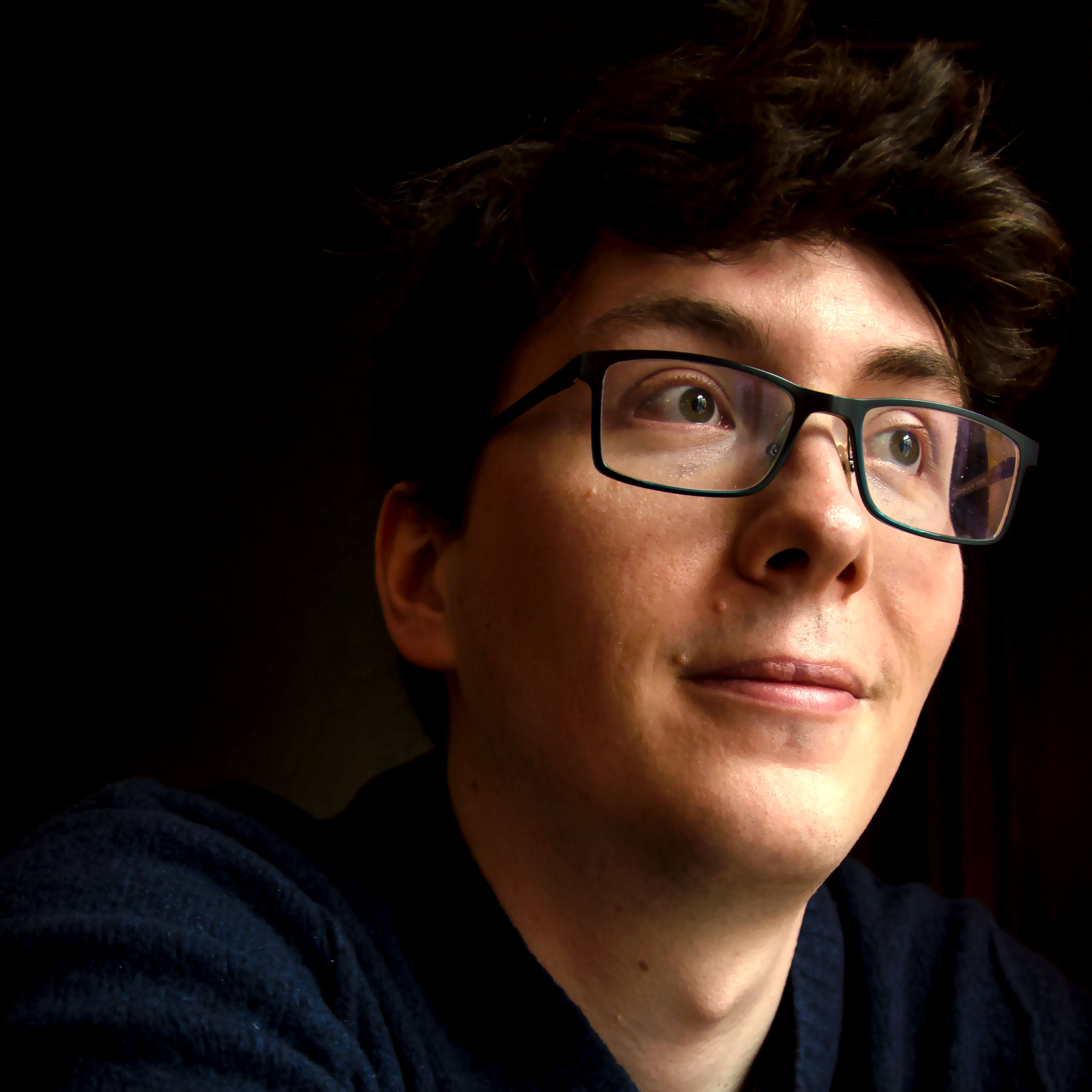
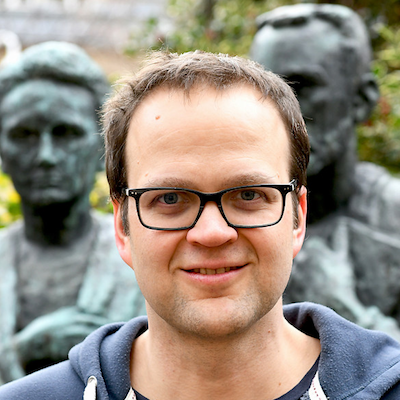
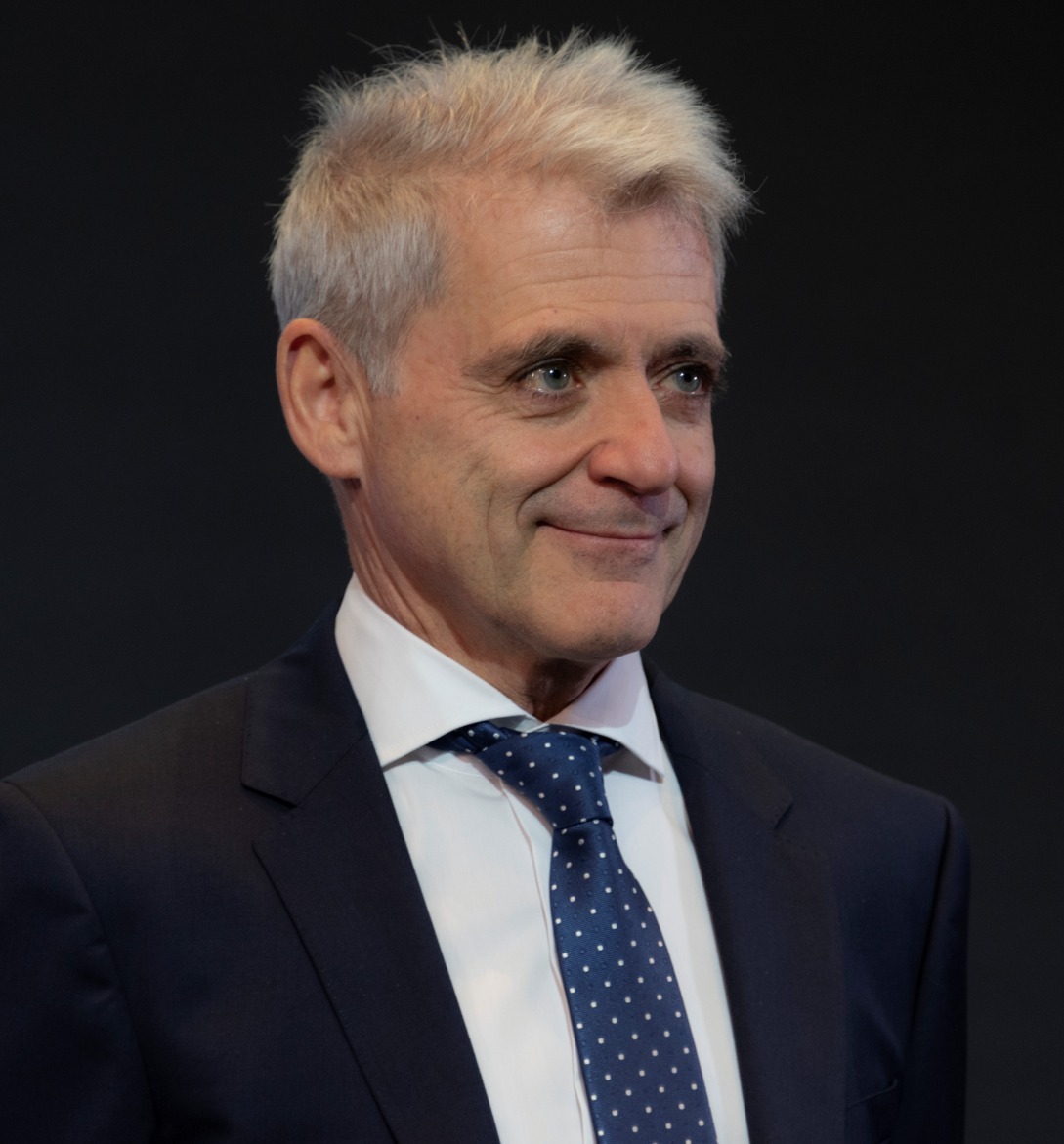
Christian Rupprecht is an Associate Professor at the Department of Computer Science, University of Oxford, specializing in computer vision and machine learning. His research focuses on unsupervised learning, 3D reconstruction, and visual understanding. His work includes contributions to conferences such as GCPR'25, ICCV'25, and CVPR'25, with papers spanning topics like correspondence estimation, animal pose modeling, and synthetic data generation. He leads projects within the prestigious Visual Geometry Group (VGG). Notably, his paper VGGT received the Best Paper Award at CVPR'25. His research integrates deep learning and geometric modeling, emphasizing robustness and generalization in visual systems. Best Paper Award at CVPR'25
Laurent Tapie is a Senior Lecturer at Paris Descartes University with a focus on Biomedical Engineering, Mechanical Engineering, and CAD/CAM . As Deputy Director of the URB2i research unit and manager of the PlatiNum platform , he coordinates the 3d4care.org consortium . His academic background includes a Doctorate in Mechanical Engineering from École Normale Supérieure de Cachan and authorization to direct research (HDR) from Université Paris 13. Research Interests: Mechanical Engineering, Biomedical Engineering, Medical Devices, CAD/CAM, Shaping of Biomaterials Theses Supervised: 3D evaluation of dento-prosthetic joints, impact of CAD/CAM on dental prosthesis integrity, and metrological evaluations of prostheses. Publications: His work spans dental CAD/CAM systems, surface integrity of prostheses, additive manufacturing, and 3D printing applications during the COVID-19 pandemic . Recent articles focus on data dispersion in CAD/CAM chains, tool-material influence on roughness, and numerical workflow standardization . Scientific Award: Prix du comité scientifique de la session recherche (2019). Projects: Currently leads initiatives like ProGéoMéca (Labex LaSIPS), Bio-Dents (CNRS Biomimicry), and additive process development for multi-material dental aligners .
National Institute of Science and Technology (INSA)France
Thomas Grenier is an Associate Professor in the Department of Electrical Engineering at INSA Lyon and a member of the CREATIS laboratory (CNRS UMR 5220, INSERM U1294). He obtained his HDR (Habilitation à Diriger des Recherches) in 2023 and his Ph.D. in Image Processing from INSA Lyon in 2005. His research focuses on medical image segmentation, clustering, and filtering using feature space, scale-space, and deep learning approaches. Doctoral School: EEA (Electronics, Energy, and Automatics) Research Affiliation: CREATIS Lab (CNRS/INSERM/INSA Lyon/Université Lyon 1/Université Jean Monnet Saint-Etienne) He has contributed to 20 papers and co-supervised 5 PhD students, including Léo Dumortier and Florent Guépin. Grenier leads the annual Deep Learning for Medical Imaging (DLMI) school, which he co-founded, and has organized five editions across Lyon and Montreal since 2019. The school emphasizes practical deep learning applications in medical imaging for participants of all expertise levels. His work spans interdisciplinary domains such as medical imaging , deep learning , and image processing , with recent publications on generative AI for MRI synthesis, explainable networks, and segmentation of neurological pathologies in preclinical models. He manages pedagogical platforms, coordinates LabEx PRIMES project activities, and oversees lab room infrastructure for 200 hours/year across 10 training programs. Grenier also leads the MUSIC transversal project on Multiple Sclerosis since 2019.
Clément Mallet is a Senior Researcher and Director of the LASTIG laboratory at Université Gustave Eiffel, IGN, and École Nationale des Sciences Géographiques (ENSG) in Champs-sur-Marne, France. He leads research in geospatial computer vision, focusing on the intersection of remote sensing, computer vision, and machine learning. His responsibilities include overseeing 75 laboratory members and directing the STRUDEL research team focused on spatio-temporal information modeling. Education: Habilitation (HDR) in Geographical Information Science, Université Paris-Est (2016) PhD in Image and Signal Processing, Télécom ParisTech (2010) Engineering Degree in Geographical Information Science, ENSG (2005) Master's in Remote Sensing, Université Paris 6 (2005) Research Interests: Dr. Mallet specializes in multi-modal land-cover mapping, change detection, geohistorical image analysis, and airborne lidar processing. His work integrates deep learning with geospatial data analysis to solve complex problems in environmental monitoring, urban studies, and historical geography. Current research explores foundation models for earth observation and semantic change detection using hybrid data generation techniques. Publication Trends: Mallet's recent articles (2021-2025) demonstrate strong focus on deep learning applications for geospatial challenges: 40% address land-cover mapping innovations, 30% develop novel change detection methodologies, 20% advance lidar data processing, and 10% explore historical map analysis. His work consistently bridges computer vision theory with operational remote sensing applications. Awards and Recognition: Schwidefsky Medal from ISPRS (2016) 5x Outstanding Reviewer awards (CVPR/ECCV/ICCV 2017-2024) Best Paper Awards at GEOBIA 2016 and ISPRS 2014 Young Researcher Award from GDR ISIS (2010) EuroSDR Best PhD Thesis supervision (2020) Research Leadership: Directs multiple national and international projects including MAESTRIA (ANR-funded multi-modal EO analysis) and HIATUS (historical image analysis). Supervised 14+ PhD students in geospatial AI topics. Secured funding from ANR, CNES, EU H2020 (VOLTA, LandSense), and industrial partners. Leads the STRUDEL team developing cutting-edge methods for territory dynamics analysis. Professional Service: Editor-in-Chief of ISPRS Journal of Photogrammetry and Remote Sensing (2021-present). Organized major conferences including ISPRS Congress (2020-2022 Program Chair) and JURSE events. Active in ISPRS working groups since 2008, currently leading initiatives in large-scale machine learning applications for geospatial data.
Gül Varol is a permanent researcher at École des Ponts ParisTech's IMAGINE group, an ELLIS Scholar, and Guest Scientist at Max Planck Institute. She holds a PhD from Inria Paris/ENS with awards from ELLIS and AFRIF. Her academic service includes Program Chair at ECCV'24 and Area Chair roles at major conferences. Current affiliations: IMAGINE group (École des Ponts ParisTech), Max Planck Institute Previous roles: Postdoctoral researcher at University of Oxford Her research focuses on vision-language applications, particularly in 3D human motion synthesis, sign language technology, and audio description generation. Key techniques include text-conditioned diffusion models, temporal context modeling, and synthetic data utilization. Scientific contributions recognized through: Google Research Scholar award (2023) ELLIS PhD Award (2020) AFRIF PhD thesis award (2020) Best application paper at ACCV'20 Recent publications demonstrate expertise in: Text-driven 3D motion editing (MotionFix, 2024) Cross-dataset generalization studies (TMR++, 2024) Temporal action composition frameworks (TEACH, 2022) Sign language dense annotation methods (BOBSL, 2022) Zero-shot audio description generation (AutoAD-Zero, 2024) She actively contributes to dataset development including BOBSL (British Sign Language corpus) and SURREACT synthetic action dataset, while pioneering new evaluation metrics for audio description quality and motion retrieval benchmarks.
Chao Liu is a Research Scientist at CNRS (French National Center for Scientific Research) since 2008, affiliated with the DEXTER team and the Department of Robotics, LIRMM at University of Montpellier, France. He earned his Ph.D. in Electrical & Electronic Engineering from Nanyang Technological University, Singapore (2006). Current research focuses on surgical robotics , haptics , teleoperation , and nonlinear control theory with applications in computer vision. His work addresses challenges in robotic-assisted telesurgery, including: Stable and transparent human-robot interaction through wave variable compensators and passivity filters Physiological motion compensation using spatio-temporal LSTM and dual Kalman filters EMG-based motion recognition for surgical skill assessment 3D soft-tissue reconstruction with stereo-endoscopes and deep learning Dr. Liu leads European and French projects like: TS2RT (CNRS-funded): Safer teleoperation with motion compensation ROBACUS (ANR-funded): Needle positioning with MPC control HaTUMoCo (CNRS-funded): Haptic teleoperation with uncertainty handling ARAKNES (EU-funded): Microrobotic systems for endoluminal surgery Scientific honors include Senior Member of IEEE and Member of Sigma Xi . He supervises Ph.D. and Master's students working on topics such as concentric tube robot optimization, haptic teleoperation, and EMG-based force estimation. Dr. Liu serves on IEEE Technical Committees for Telerobotics and Haptics , and as Technical Editor of IEEE/ASME Transactions on Mechatronics.
Hirokatsu Kataoka serves as Chief Senior Researcher at the National Institute of Advanced Industrial Science and Technology (AIST) in Japan, with multiple academic affiliations including Academic Visitor at the Visual Geometry Group (VGG) at University of Oxford, Visiting Associate Professor at Keio University, and Adjunct Associate Professor at Tokyo Denki University. He is Principal Investigator of both cvpaper.challenge and LIMIT.Lab, and serves as Research Advisor for SB Intuitions. Dr. Kataoka earned his Ph.D. in Engineering from Keio University (April 2011 - March 2014), where he received the Fujiwara Prize in 2014 as valedictorian equivalent. His research primarily focuses on innovative pre-training methodologies that eliminate dependency on natural image datasets, with his Formula-Driven Supervised Learning (FDSL) framework being particularly influential in the field. Kataoka's research interests center around representation learning with limited data resources, including zero-shot, unsupervised, and synthetic learning approaches. His work explores how visual/multimodal models can be effectively trained with minimal real-world data, addressing critical ethical concerns related to large-scale datasets. He has pioneered methods using fractal geometry, mathematical formulas, and procedural generation to create effective pre-training frameworks that rival traditional ImageNet-based approaches. His publication record shows a clear trajectory toward solving the challenges of learning with limited resources, with recent work expanding FDSL to audio processing, microfossil analysis, and visible-to-infrared translation. His papers consistently address the core challenge of building robust visual recognition systems without relying on massive annotated datasets, with increasing focus on practical applications across diverse domains. Scientific Awards & Recognition ACCV 2020 Best Paper Honorable Mention Award for 'Pre-training without Natural Images' AIST Best Paper Award (2019, 2022) BMVC 2023 Best Industry Paper Finalist Featured in MIT Technology Review His 3D ResNets paper ranks among the top 0.5% most-cited CVPR papers over a five-year period Dr. Kataoka actively advises numerous researchers across multiple institutions, with his research team comprising Ph.D. and Master's students from various universities. He has served as Area Chair for CVPR 2024 and 2025, will serve as IEEE TPAMI Associate Editor beginning in 2025, and organizes the LIMIT Workshop series at major computer vision conferences. His LIMIT.Lab, established in June 2025, serves as a collaboration hub focused on building multimodal AI models under constrained resources including compute, data, and labels.
Thomas Walter is a Professor at Mines ParisTech and Director of the Centre for Computational Biology (CBIO) , a research group affiliated with the Institut Curie and INSERM . His work focuses on applying Machine Learning and Computer Vision to biomedical image analysis, particularly in high-content screening and computational pathology . He also serves as Deputy Director of the Computational Oncology (U1331) unit and leads the Statistical Learning and Modeling of Biological Systems team. PhD in Medical Image Analysis (2003, Mines ParisTech) Postdoctoral work at EMBL (European Molecular Biology Laboratory) Director of CBIO since 2018 Holder of a PRAIRIE Chair (Paris Artificial Intelligence Research Institute) since 2019 Dr. Walter's research bridges biomedical imaging , machine learning , and cancer genomics . Key areas include: Statistical reconstruction of biological networks Prediction of tumor progression at genomic/transcriptomic levels Development of deep learning methods for cell cycle analysis Integration of multi-omics data for precision oncology Tools for spatial transcriptomics (e.g., autoFISH, RNA2seg) Recent publications highlight his work in spatial transcriptomics , immunotherapy outcome prediction , and deep learning for digital pathology . His team has developed open-source tools like FISH-quant and pyHiM for single-molecule RNA imaging analysis. Scientific Honors: PRAIRIE Chair (2019) for AI research in life sciences Dr. Walter actively contributes to teaching deep learning for image analysis in multiple graduate programs across France, including courses at Mines ParisTech , Université Paris-Saclay , and Institut Curie . His software tools (FISH-quant, pyHiM) and methodological frameworks (e.g., Cut-Detector, PointFISH) have become standard resources in bioimage informatics.
Jean Ponce is a Professor at Ecole Normale Supérieure - PSL and a Global Distinguished Professor at New York University's Courant Institute and Center for Data Science. He serves as Scientific Director of PRAIRIE Interdisciplinary AI Research Institute and co-founded Enhance Lab, commercializing super-resolution imaging software. His research focuses on computer vision, machine learning, robotics, and image processing. Ponce has held roles at Inria, MIT, Stanford, and the University of Illinois, and is an IEEE and ELLIS Fellow. He has served as chair of major conferences like CVPR, ECCV, and ICCV, and authored the textbook 'Computer Vision: A Modern Approach.' Research interests include statistical models for exoplanet detection, neural networks for 3D reconstruction, and self-supervised learning. His work combines theoretical foundations with practical applications in astrophysics, robotics, and imaging. Notable awards include the IEEE CVPR Longuet-Higgins Prize (2016, 2020) and ICML Test-of-Time Award (2019). Key projects include Enhance Lab's high dynamic range imaging and PRAIRIE's interdisciplinary AI initiatives. Ponce's articles explore cutting-edge topics like neural object priors, geodesic motion planning, and satellite image analysis. His contributions bridge academic research and industrial applications, emphasizing both fundamental theory and real-world impact.
Thierry Badard is an Associate Professor at the Department of Geomatics Sciences , Université Laval, where he also serves as Director of the Center for Research in Geospatial Data and Intelligence (CRDIG) . With over 28 years of experience in geospatial science, he leads research initiatives at the intersection of GeoAI , LiDAR processing , and smart city technologies . Director, CRDIG (2016-2022) Steering Committee Member, Big Data Research Centre (CRDM) Researcher, Institute for Intelligence and Data (IID) Research Expertise spans geospatial big data, GeoNLP, and IoT applications for digital twins. His work addresses flood risk modeling , 3D urban analytics , and environmental monitoring through AI-driven solutions. Recent publications focus on contrastive learning for LiDAR segmentation and geospatial ontologies for early warning systems. Grant Leadership includes collaborative projects on smart insurance analytics (2018-2025), Arctic bioaerosol research (2019-2025), and Quebec-Morocco digital twin partnerships (2022-2023). He has advised 15+ graduate students in geomatics and related fields.
Higher School of Economic and Commercial SciencesFrance
Overview Prof. Harris Kyriakou is an Associate Professor and Chair Holder of the Media & Digital Chair at ESSEC Business School. His research focuses on leveraging artificial and collective intelligence to enhance organizational value creation, digital strategy, and data-driven decision-making. He has advised multinational firms like Airbnb, Facebook, and Yelp, and his work is supported by grants from NSF and the Spanish government. Education Ph.D. in Management Sciences (Stevens Institute of Technology, 2016) M.S. in Engineering & Technology Innovation Management (Carnegie Mellon University, 2010) B.Sc. in Digital Systems (University of Piraeus, 2007) Research Focus His research explores intersections between AI/collective intelligence, blockchain, sharing economy regulations, and platform governance. Key themes include data network effects, algorithmic regulation, and digital transformation. Recent work on ChatGPT vs. Google examines AI-driven competitive dynamics in search markets. Recognition Awarded the 2024 Case Centre Triple Award, 2022 Early Career Award (AIS), and multiple best paper awards (AoM, INFORMS). Recognized as a 40-Under-40 MBA Professor by Poets & Quants. Teaching & Leadership Co-leads the 'Algorithmic Governance in Platform Economy' thesis Teaches courses on AI, digital strategy, and IT management at ESSEC and IESE Former Assistant Professor at IESE Business School (2016–2021) Professional Contributions Serves as a European Commission advisor on digitalization, reviewer for top journals (MIS Quarterly, Academy of Management Review), and mentor for doctoral candidates.
Gianni Franchi is an assistant professor at ENSTA Paris , affiliated with the Computer Science and Systems Engineering Unit (U2IS) . His work focuses on theoretical deep learning , with a strong emphasis on uncertainty quantification, robustness, and explainability in machine learning models. Current affiliation: ENSTA Paris (U2IS) Academic rank: Assistant Professor Key collaborators: David Filliat, Emanuel Aldea, Andrei Bursuc, Antoine Manzanera His research spans uncertainty quantification , explainable AI , and reliable machine learning . He investigates methods like Bayesian neural networks, ensemble approaches, and deterministic uncertainty models. His work also addresses domain adaptation , self-supervised learning , and autonomous systems , particularly in trajectory forecasting and semantic segmentation for autonomous driving. Recent publications analyze probabilistic modeling for robustness, symmetry-aware Bayesian methods , and multi-modal datasets like InfraParis. He develops frameworks like Torch-Uncertainty and benchmarks such as MUAD for uncertainty types in autonomous driving. Key themes: Uncertainty Quantification Deep Learning Theory Autonomous Systems Explainable AI Dataset Creation Bayesian Methods
Pierre Alliez is a Senior Researcher and Team Leader at Inria Sophia Antipolis – Méditerranée, leading the TITANE project-team. He holds roles such as President of the Inria Evaluation Commission and Scientific Coordinator of the Inria-DFKI partnership. His research focuses on Geometry Processing, including mesh compression, surface reconstruction, and optimal transportation. Alliez has authored numerous scientific publications and book chapters, receiving accolades like the Eurographics Young Researcher Award (2005) and ERC grants (IRON, TITANIUM). His academic activities include supervising over 50 PhD students and postdoctoral researchers, and leading projects like GRAPES (Learning and Processing Shapes) and BIM2TWIN (digital twin construction). He has served on editorial boards for Computer Graphics Forum and ACM Transactions on Graphics , and organized major conferences like Pacific Graphics and Eurographics. His work bridges computational geometry, computer graphics, and applied mathematics, with practical applications in 3D printing, cultural heritage, and urban modeling. Education: No specific educational details provided, but has authored a textbook on Polygon Mesh Processing (AK Peters, 2010). Research Interests: Geometry Processing, Mesh Generation, Surface Reconstruction, Optimal Transport, and 3D Data Analysis. Grants & Projects: ANR Pisco, ERC IRON, BIM2TWIN, GRAPES, and collaborations with industries like Dassault Systèmes and Dorea Technology. Labs/Teams: Leads the TITANE team at Inria, contributing to software like CGAL and advancing open-source tools for geometric processing.
ICAM - Catholic Institute of Arts and CraftsFrance
Paul-Eric DOSSOU is a Researcher at ICAM’s Grand Paris Sud campus, specializing in Societal and Technological Transitions of Companies. His work focuses on Industry 5.0, decision-aided systems, logistics optimization, and digital twin applications. He leads projects like Plateforme Life, Urban Logistics, and Healthcare 4.0, aiming to enhance SME efficiency through sustainable digital transformation. Expertise includes AI-driven supply chain management, cybersecurity for legacy systems, and robotic solutions for archaeology. He collaborates with industry partners to bridge theoretical research and practical applications, emphasizing human-centric automation and environmental sustainability. Contact: paul-eric.dossou@icam.fr | Mobile: +33 6 17 81 33 43 Research contributions span over 30 peer-reviewed articles since 2003, addressing topics from energy audits in the nautical industry to multi-agent systems in supply chain optimization.
Eric TOTEL is a Professor at Telecom SudParis, specializing in cybersecurity and network security. His research focuses on intrusion detection systems, graph-based anomaly detection, machine learning applications in security, and data confidentiality in distributed systems. He has contributed to projects such as DAMS (DDoS mitigation using deep reinforcement learning), Sec2Graph (novelty detection on graph-structured data), and DAEMON (dynamic autoencoder-based anomaly detection). His work emphasizes scalable solutions for multi-step attack detection and privacy-preserving infrastructure for encrypted DNS logs. Key contributions include developing correlation engines for distributed systems, formalizing invariant-based attack detection in web applications, and exploring static analysis for information flow control. He has authored over 50 peer-reviewed publications and served on program committees for conferences like RAID, CRiSIS, and EuroS&P. His HDR (2012) formalized error-detection techniques applied to intrusion detection. Advising and grants: He collaborates on projects funded by French national research agencies and has mentored students in cybersecurity, AI for defense (CAID conferences), and cloud infrastructure security. His research often bridges theoretical models and practical implementations, with tools like STARLORD for 3D graph visualization of security data.