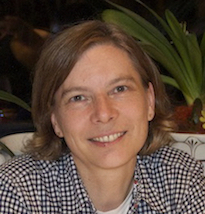
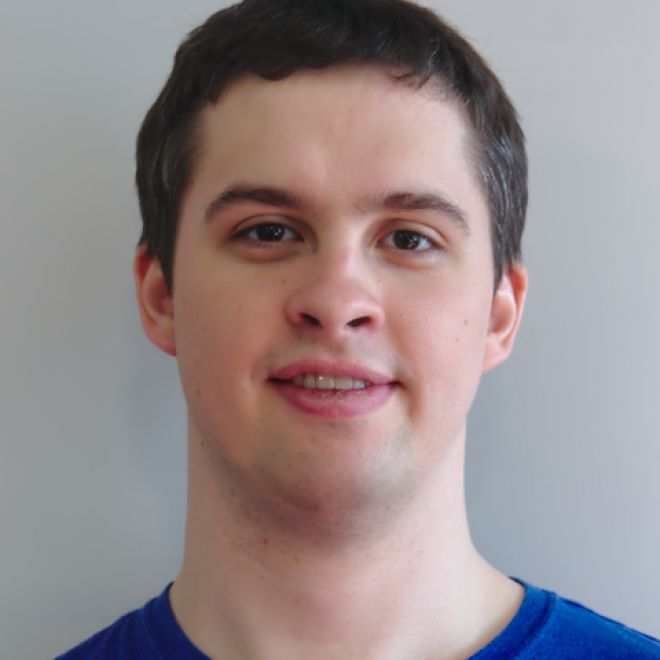
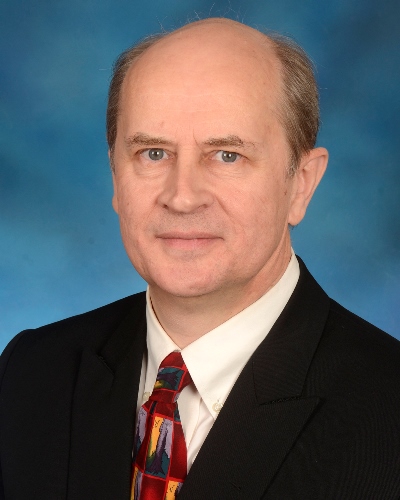
Dr. Thanh-Son Pham is an ARC DECRA Research Fellow in the Geophysics Department at The Australian National University’s Research School of Earth Sciences. His research focuses on using seismic waves to study Earth’s interior structures, from polar ice sheets to the inner core. He has pioneered methods like teleseismic P-wave coda autocorrelation and coda correlation wavefield analysis, leading to breakthroughs such as detecting J-waves in the inner core and identifying an innermost inner core layer. His work has been featured in Science , Nature Communications , and international media. He holds a PhD from ANU (2019) and has supervised research projects on Antarctic seismology and earthquake source physics. Awards include the 2024 Zatman lectureship from SEDI. Current projects include probing Antarctic ice sheets via correlation seismology and advancing machine learning tools for deep Earth studies. Education: PhD in Geophysics (ANU, 2019), Graduate Diploma in Earth System Physics (ICTP, 2015), BSc in Applied Mathematics (Hanoi University, 2013) Research interests span seismic source inversion, Antarctic ice dynamics, and inner core anisotropy. His 2024 articles address Hunga Tonga eruption mechanics and PKIKP wave analysis using deep learning. Media highlights include BBC, NYT, and ANU press releases.
Nicola Marzari is a Professor of Theory and Simulation of Materials at EPFL, where he also serves as Director of the National Centre for Computational Design and Discovery of Novel Materials (NCCD). He is Chairman of Psi-k, an international network for advanced materials' computational design. Previously, he held the Toyota Chair of Materials Engineering at MIT and leadership roles at the University of Oxford, including Director of the Materials Modeling Laboratory and a Statutory Chair in Materials Modeling. His education includes a Laurea in Physics (summa cum laude) from the University of Trieste, a PhD in Physics from the University of Cambridge under Prof. Michael C. Payne, and postdoctoral work at Rutgers University with Prof. David Vanderbilt. Marzari's research focuses on computational materials science, electronic structure theory, and high-throughput simulations. He develops methods for predicting material properties using first-principles approaches, machine learning, and quantum espresso software. Key areas include energy materials (batteries, thermoelectrics), magnetic materials, and optoelectronic systems. His work bridges fundamental physics and practical material design, emphasizing reproducible workflows and open-source tools like koopmans and AiiDA . His recent articles highlight advancements in machine learning for materials interfaces, dynamical Hubbard functionals, and thermal conductivity modeling. He actively contributes to EuroHPC initiatives for exascale materials design and OPTIMADE standards for materials data exchange. Marzari leads interdisciplinary teams at EPFL and collaborates globally on projects ranging from defect engineering in semiconductors to AI-driven materials discovery. His research aims to accelerate the development of sustainable energy and electronic technologies through computational innovation.
Dr. Tim Oates is a Professor in the Department of Computer Science and Electrical Engineering at the University of Maryland, Baltimore County . His research spans machine learning, artificial intelligence, and brain-machine interfaces, with a focus on weakly supervised methods, human-in-the-loop reinforcement learning, and grounded policy development for robotics. Ph.D., Computer Science, University of Massachusetts, Amherst, 2000 M.S., Computer Science, University of Massachusetts, Amherst, 1997 B.S., Computer Science and Electrical Engineering, 1989 Current research threads include: Developing non-invasive brain injury severity assessment via medical time series Modeling human brain development through computational frameworks Designing algorithms for autonomous robotic learning Recent publications highlight AI security mechanisms (backdoor detection via tensor decomposition, matrix factorization) Medical applications (3D artery reconstruction, skin lesion diagnosis, EEG denoising) Neuro-symbolic integration (holographic representations, language-guided reinforcement learning) Mathematical reasoning (schema-based problem solving, subitizing algorithms) Contact: oates@cs.umbc.edu | Office: 336 Information Technology and Engineering (ITE) Building
Prof. Dr. Jens Eisert is a Professor at the Free University of Berlin, where he leads the Quantum Many-Body Theory, Quantum Information Theory, and Quantum Optics research group (Eisert AG) within the Institute of Theoretical Physics at the Dahlem Center for Complex Quantum Systems. His office is located at Arnimallee 14, Room 1.3.06 in Berlin-Dahlem. His research focuses on the intersection of quantum information theory and condensed matter physics, specifically exploring what information processing tasks are possible using individual quantum systems as information carriers. His group develops mathematical-theoretical foundations of quantum information, particularly in entanglement theory and tomography, while also investigating quantum optical implementations using light modes or cold atoms in optical lattices. A major emphasis of their work is on quantum many-body systems, including static properties, efficient numerical simulation methods like tensor networks, and non-equilibrium quantum dynamics. Recent publications highlight significant contributions in thermalization of quantum systems (Communications Physics 2025), quantum thermodynamics (Nature Physics 2025), and quantum error correction (PRX Quantum 2025). The group's work is characterized by combining the rigor of mathematical physics with physically motivated applicability, frequently leading to direct collaborations with experimental groups. Quantum Information Theory Quantum Many-Body Theory Quantum Optics Entanglement Theory Tensor Networks Quantum Error Correction Prof. Eisert maintains active supervision of numerous PhD students and postdoctoral researchers, with research positions regularly available in areas including quantum error correction, quantum information theory, tensor networks, and quantum simulation. His group has published extensively in top journals including Nature Physics, PRX Quantum, and Physical Review series.
Ralf Peeters is a Full Professor in Mathematics of Knowledge Engineering at Maastricht University's Faculty of Science and Engineering , Department of Advanced Computing Sciences. He serves as Vice-Dean of Research and Director of the STEM Graduate School, while leading the university's team at the inter-university research school DISC and co-chairing the Mathematics Centre Maastricht. Education: PhD in Mathematics (Free University, Amsterdam, 1994) Technical Mathematics (Delft University of Technology, 1988) Research Interests span applied mathematics, systems and control theory, signal/image processing, artificial intelligence, and biomedical engineering applications. His work bridges mathematical techniques with real-world challenges in healthcare and industrial systems. Recent Publications highlight advancements in deep learning for cardiac signal reconstruction, tensor-based signal decomposition, and recurrence plot analysis. These works integrate machine learning with clinical diagnostics, particularly in electrocardiographic imaging and arrhythmia characterization. Key Collaborations: Mathematics Centre Maastricht Dutch Mathematics Platform Dutch Institute of Systems and Control Leadership Roles: Vice-Dean of Research (FSE), Director of STEM Graduate School, Head of DISC-affiliated team, and Co-Chair of Mathematics Centre Maastricht. He has supervised over 25 PhD projects, emphasizing applied research across health and industrial domains.
Alla Sheffer is a Professor and Associate Head of Faculty Affairs in the Department of Computer Science at the University of British Columbia, Faculty of Science. She is affiliated with multiple research centers including CAIDA (Centre for Artificial Intelligence Decision-making and Action), the Institute of Applied Mathematics, and ICICS (Institute for Computing, Information and Cognitive Systems). B.Sc., Hebrew University, Jerusalem (1991) M.Sc., Hebrew University, Jerusalem (1995) Ph.D., Hebrew University, Jerusalem (1999) Postdoctoral Research Associate, University of Illinois, Urbana-Champaign (1999-2001) Assistant Professor, Technion, Israel (2001-2003) Assistant Professor, University of British Columbia (2003-2008) Associate Professor, University of British Columbia (2008-present) Professor Sheffer's research focuses on geometry processing, addressing algorithmic challenges in digital shape modeling and manipulation. Her work primarily deals with discrete geometry representations, specifically meshes (polygonal model representations), with applications in computer graphics and computer-aided engineering. She utilizes tools from computational and differential geometry, discrete mathematics, and graph theory to generate, manipulate, and edit discrete geometric models. Her research spans virtual and augmented reality, visual computing, and 3D modeling, with significant contributions to sketch-based modeling, mesh processing, and cloth simulation. The 15 most recent publications reveal a consistent research trajectory in geometry processing, with recent work focusing on vector sketch processing, VR drawing tools, and advanced mesh manipulation techniques. Her work demonstrates a strong connection between human perception and computational methods, particularly in the interpretation of freehand sketches and the generation of perceptually-accurate geometric representations. The recurring themes across her publications include flowlines, curve networks, mesh parameterization, and the application of perceptual studies to improve algorithmic outputs. Eurographics Fellow ACM Fellow IEEE Fellow Royal Society of Canada Fellow SIGGRAPH Academy Member UBC Killam Research Prize NSERC Discovery Accelerator Supplement IBM Faculty Award Professor Sheffer has supervised numerous doctoral and master's students, with recent theses focusing on geometric mesh processing, vector sketch interpretation, VR drawing tools, and garment modeling. Her research group maintains strong connections with industry through various partnerships and has received substantial grant funding to support their innovative work in geometry processing and computer graphics. She teaches courses in computer graphics, geometric modeling, and video game programming, contributing significantly to both undergraduate and graduate education in computer science.
Maurits Haverkort is a Professor at the Institute for Theoretical Physics, Heidelberg University (Germany). His research focuses on quantum many-body systems , strongly correlated electrons , and X-ray spectroscopy of complex materials under strong fields. University of Cologne (PhD in Physics, 2005) University of Groningen (M.Sc. in Physics, 2002) Research Interests : He investigates orbital and magnetic properties in heavy fermion systems , actinide materials , and correlated oxides using resonant inelastic X-ray scattering (RIXS) , ARPES , and computational tools like Quanty . His work spans crystal field theory , spin-orbit coupling , and ultrafast electron dynamics . Scientific Awards & Activities : 2018 – Editorial Board Member, Physical Review Letters 2017 – Beam Time Allocation Panel, ESRF Grenoble 2016–2018 – Swedish Research Council Panel NT-4 2012–2016 – Scientific Selection Panel, Helmholtz-Zentrum Berlin Recent Publications highlight 5f electron counting , photon-modulated bonding , and precision neutrino mass experiments , reflecting his expertise in quantum materials and advanced spectroscopy .
Géza Giedke is an Ikerbasque Research Professor at the Donostia International Physics Center (DIPC) in Donostia-San Sebastián, Spain. His research focuses on quantum information theory and its implementation in solid-state and quantum optical systems, with particular emphasis on entanglement, quantum channels, and the dynamics of open quantum systems. His educational background includes a Dr. rer. nat. (Doctor of Natural Sciences) from the University of Innsbruck, Austria. Prior to his current position, he has held research positions at the University of Innsbruck (Austria), Max Planck Institute of Quantum Optics in Garching and Technical University of Munich (Germany), and ETH Zurich (Switzerland). Dr. Giedke's research interests span multiple areas of quantum physics and quantum information science. His work explores the theoretical foundations of quantum information processing while also addressing practical implementation challenges in solid-state systems. He has made significant contributions to understanding entanglement in fermionic systems, quantum channels, and the application of quantum information concepts to condensed matter physics. His recent work has increasingly focused on quantum phenomena in graphene-based nanostructures and their potential for quantum information processing applications. His publication record demonstrates a strong trajectory from fundamental quantum information theory to more applied work connecting quantum information concepts with condensed matter physics, particularly in the realm of graphene nanostructures and quantum transport phenomena. Dr. Giedke has secured significant research funding, including the recently granted GRAFIQ project (2023-2027) on 'Harnessing quantum spin states, dynamics, and transport in graphene-based nanostructures' and the TENINT project (2023-2025) on 'Tensor network methods for interacting electrons in quasi-1d graphene nanostructures.' He actively mentors PhD students and postdoctoral researchers, currently supervising several researchers working on various aspects of quantum information in solid-state systems. Dr. Giedke also organizes major scientific events, including the Basque Quantum Science and Technology Workshops and the Nanotechnology meets Quantum Information Summerschool.
Sean Holman is a Senior Lecturer in Applied Mathematics at The University of Manchester, specializing in inverse problems, geometry, and partial differential equations. His research focuses on advancing theoretical frameworks and computational methods for imaging and material analysis, with applications in medical imaging, geophysics, and engineering. He is affiliated with the Industrial and Applied Mathematics and Inverse Problems research groups, contributing to the Digital Futures research beacon. His work integrates advanced mathematical techniques such as Radon transforms, tensor field analysis, and microlocal analysis to solve challenging inverse problems. Recent collaborations include studies on elastic strain reconstruction, electromagnetic parameter recovery, and agent swarm coordination under communication constraints. Dr. Holman has organized significant academic events like the 'Rich and Nonlinear Tomography' conference (2023) and the 'Microlocal Analysis meets Data Science' workshop (2018), fostering interdisciplinary research. His contributions span theoretical developments and practical applications in imaging modalities like SPECT and proton therapy range verification.
Mark A Iwen is an Associate Professor at Michigan State University, holding dual appointments in the Department of Mathematics and the Department of Computational Mathematics, Science and Engineering (CMSE) . His research focuses on computational harmonic analysis, mathematical data science, signal processing, and algorithms for analyzing high-dimensional datasets. He has contributed to advancements in sparse Fourier transforms, compressive sensing, and sublinear-time algorithms for large-scale data. Key research themes include: Efficient algorithms for high-dimensional PDEs and spectral methods Phase retrieval and inverse problems in imaging Optimization of tensor decompositions and dimensionality reduction techniques Development of sparse approximation methods with theoretical guarantees His recent work emphasizes applications in: Sublinear-time algorithms for function approximation Terminal embeddings for manifold data Fast JL embeddings with bi-Lipschitz properties Tensor completion and low-rank approximations Notable contributions include: Development of Sparse Harmonic Transforms for functions of many variables Advancements in distributed SVD algorithms for large networks Empirical and theoretical analysis of phase retrieval techniques Efficient sparse FFT implementations (e.g., DMSFT, GFFT) Iwen collaborates on open-source code projects, including sparse FFT libraries and phase retrieval tools. His work bridges mathematical theory with practical applications in engineering and computational science.
François-Xavier Coudert is a Senior Researcher at CNRS and Professor at PSL University. His work focuses on computational and experimental studies of metal-organic frameworks (MOFs) , nanoporous materials , and machine learning applications in material discovery. He leads an active research group and collaborates internationally, including with Shinshu University on graphene oxide nanosheets. Academic Roles: Professor (PSL University), Senior Researcher (CNRS) Key Research Areas: MOFs, Adsorption/Diffusion in Nanopores, Elastic Properties, Topology Analysis His team develops open-source software like CrystalNets for topology identification and ELATE for elastic tensor analysis. Recent publications highlight AI-driven MOF discovery, hybrid glasses, and diffusion coefficient prediction. He was recognized as a pioneer in hybrid glass research via the 2025 Dalton Horizon Prize . Former students include PhD graduates Nicolas Castel , Emmanuel Ren , and Lionel Zoubritzky .
Gerlind Plonka is a Professor of Applied Mathematics at the University of Göttingen, specifically within the Institute for Numerical and Applied Mathematics (NAM). Her research focuses on Numerical Fourier Analysis Wavelet Theory Regularization and Nonlinear Diffusion Methods Fast Algorithms and Numerical Stability Signal and Image Processing Applications Her recent publications emphasize structured subsampling in Fourier domains, Prony-type methods for exponential sum recovery, and deep learning integration in medical imaging. She supervises active PhD candidates including Benjamin Kocurov, Anahita Riahi, Yannick Nicola Riebe, and Janina Schmidt, with a legacy of advising over 50 graduates across diverse topics like Sparse FFT Algorithms Phase Retrieval Constraints Wavelet-Based Image Compression Nonlinear Diffusion Filters High-Dimensional Data Approximation
Luke Schaeffer is an Assistant Professor at the University of Waterloo, affiliated with the Cheriton School of Computer Science and the Institute for Quantum Computing (IQC). His academic journey includes a BMath and MMath from Waterloo, a PhD from MIT under Scott Aaronson, and postdoctoral positions at Waterloo and UMD. His research bridges quantum computing and theoretical computer science, with focuses on quantum circuit complexity, classical simulation of quantum systems, and combinatorics on words. Notable projects include studying the Clifford group's structure, low-depth quantum vs. classical circuits, query complexity of regular languages, and fermion-to-qubit encodings. He also explores non-quantum areas like combinatorial game theory and cellular automata. His work on interactive quantum advantage protocols demonstrated separations between quantum and classical circuit models, including results against AC⁰[p] and NC¹ classes. He co-developed sample-optimal classical shadow algorithms for pure states and classified Clifford gates over qubits into 57 distinct classes. Education: BMath and MMath, University of Waterloo PhD in Computer Science, MIT (advisor: Scott Aaronson) Key Research Themes: Quantum advantage and circuit complexity Automata and combinatorics on words Classical simulation techniques for quantum systems Algorithmic foundations of quantum computing He advises students in the Cheriton School of Computer Science, emphasizing quantum computing and theoretical computer science. His contributions include foundational results in quantum-classical separations and decidability of word properties via first-order logic.
Professor Andreas Geiger leads the Autonomous Vision Group (AVG) at the University of Tübingen , heading the Department of Computer Science and serving as core faculty at the Tübingen AI Center . He is Principal Investigator in the ML in Science cluster of excellence and CRC Robust Vision , while coordinating the ELLIS PhD program . Develops machine learning models for computer vision, NLP, and robotics Focus on 2D/3D representations, geometry/material reconstruction, and robust AI Applications in autonomous vehicles, VR/AR, and document analysis His research has produced hundreds of publications with significant impact, including multiple best paper awards at top venues. The Scholar Inbox platform he co-created revolutionizes academic paper discovery, winning business model awards at Tübingen AI Center spinoff events. Key research areas include: Neural rendering and 3D scene understanding Self-driving perception and planning systems Simulation frameworks for autonomous validation Efficient reinforcement learning architectures Recent awards include: CVPR 2024 Best Paper Sage 10-Year Impact Award 2024 IEEE PAMI Young Researcher Award 2018 Active in CyberValley and ELLIS Institute Tübingen , he maintains strong industry collaborations through initiatives like the ML ⇌ Science Colaboratory . His group's work appears in journals like TPAMI and conferences including SIGGRAPH 2025.
Dr. Thomas M. Ernst is a Professor in the Department of Diagnostic Radiology and Nuclear Medicine at the University of Maryland School of Medicine. He serves as Technical Director of the Center for Advanced Imaging Research (CAIR) and leads multi-institutional research programs in magnetic resonance imaging (MRI) and spectroscopy (MRS), focusing on prospective motion correction and pediatric neuroimaging. His work spans clinical applications in HIV, drug abuse, and post-COVID-19 brain effects. Education : PhD in Physics (University of Freiburg, Germany), Post-Doctoral Fellowship in MR Spectroscopy (HMRI/Caltech) Research Interests : Dr. Ernst specializes in advanced MRI/MRS techniques to study brain development, motion correction in neuroimaging, and neurological impacts of HIV, methamphetamine abuse, and post-COVID-19 conditions. His lab develops real-time adaptive MRI methods to eliminate motion artifacts. Recent Publications highlight trends in genome-wide association studies of visceral fat , neurovirology of long-term COVID-19 effects , and innovations in diffusion-weighted imaging . Scientific Awards : Fellow, International Society for Magnetic Resonance in Medicine (2011); Deputy Editor, Magnetic Resonance in Medicine (2013). Grants : He leads NIH/NIDA-funded projects including the Adolescent Brain Cognitive Development (ABCD) Study and neural correlates of working memory training in HIV patients. Past grants include a Bioengineering Research Partnership (BRP) for motion correction techniques. Labs : Dr. Ernst directs the Center for Advanced Imaging Research (CAIR) at UMB, collaborating with institutions like Johns Hopkins and the University of Freiburg. His lab works on commercializing motion correction technologies via KinetiCor Inc.