Zhongpeng Lyu is an Academy Research Fellow in the Department of Applied Physics, specializing in advanced materials science. He holds a doctoral degree (2016) and bachelor's degree (2008) in Natural Sciences from Nanjing University. Research Focus Dr. Lyu's research centers on functional nanomaterials with emphases on: MXene-based composites for energy applications Electrocatalysis (hydrogen/oxygen evolution reactions) Smart hydrogels with self-healing properties Terahertz shielding technologies Nanomaterial design for sensors and photonics His work significantly contributes to sustainable materials innovation. Research Output Recent publications (2024-2025) demonstrate strong focus on electrocatalytic nanomaterials, MXene engineering, and functional hydrogels, with publications in high-impact journals including Nature Materials , ACS Catalysis , and Advanced Science . Active Projects MXTTF (2024-2028): MXene nanocomposites for tunable photonics CH2S (2023-2024): Biodegradable hydrogen sensors Plasmonics of 2D nitrides (2020-2023): Fundamental properties of transition metal nitrides
Xiang Wang serves as an Associate Professor in the Department of Chemistry at Xiamen University's College of Chemistry and Chemical Engineering, maintaining his office in Room 434 of the Chemical Building since 2020. His research program bridges experimental nanoscience and electrochemistry with strong institutional ties to Xiamen University's PCOSS research group. His academic journey began with BS (2007) and PhD (2013) degrees from Xiamen University, followed by research assistantship (2014-2016) and postdoctoral training (2016-2020) at the same institution. This continuous affiliation demonstrates deep integration within Xiamen's chemical research ecosystem. Dr. Wang's research centers on advanced nanoscale spectroscopic techniques , particularly Tip-enhanced Raman spectroscopy (TERS) and Surface-enhanced Raman spectroscopy (SERS) . His work explores Nano-optics , Nanospectroelectrochemistry , and Nanoscale in-situ characterization to investigate 2D materials, electrocatalytic processes, and biomolecular structures at unprecedented resolution. This interdisciplinary approach merges physical chemistry with materials engineering to solve fundamental interface science problems. Analysis of his 2019-2024 publications reveals dominant themes in nanoscale characterization of 2D materials (particularly MoS 2 ), electrocatalyst evolution monitoring , and novel spectroelectrochemical methodologies . His work consistently appears in high-impact journals including Nature Catalysis , Chemical Society Reviews , and Advanced Materials , demonstrating significant contributions to nanospectroscopy and materials characterization fields.
Budapest University of Technology and EconomicsHungary
GÖRÖG Péter is an Associate Professor at the Department of Engineering Geology and Geotechnics , part of the Faculty of Civil Engineering at Budapest University of Technology and Economics . His research focuses on geotechnical engineering, rock mechanics, and structural stability analysis, particularly in historic masonry structures and underground cavities. He has taught courses such as Engineering Geology, Rock Mechanics, and Hydrogeology, and has contributed to projects involving numerical modeling and seismic risk assessment. Email: gorog.peter@emk.bme.hu Research Trends : His recent work emphasizes creep modeling in soft rocks, stability analysis of underground structures, and the impact of geological parameters (e.g., GSI, joint dip) on engineering projects. Publications from 2025-2024 highlight advancements in fractional derivative-based models, seismic load effects, and failure mode simulations for masonry bridges. Scientific Awards : Építő250 Scholarship Academic Contributions : Active in both theoretical and applied geotechnics, GÖRÖG Péter has led field investigations in Hungary and Croatia, analyzed historic stone bridges, and developed models for porous limestone stability. His work bridges material science and civil engineering challenges.
Jian-Bin Lin is an Associate Professor in the Department of Chemistry at Xiamen University's College of Chemistry and Chemical Engineering. His research focuses on supramolecular chemical sensing, molecular recognition, and organic self-assembly. Education : BSc (Nankai University, 2004), PhD (Shanghai Institute of Organic Chemistry, 2009), Postdoc (Eindhoven University of Technology, 2011), Postdoc (Institute for Molecular Science, 2013) Lin's research explores supramolecular chemical sensing through organic molecule self-assembly and π-conjugated systems. His work includes designing chiral radical anions with NIR absorption, developing ambipolar semiconductors for light detection, and engineering stimuli-responsive smart windows. Publications highlight applications in optoelectronics, molecular architecture, and covalent frameworks. Recent articles show expertise in perylenediimide derivatives , heteroatom-doped nanohoops , and 2D anisotropic materials . Key themes include π-stacking, donor-acceptor systems, and responsive material design. Scientific Awards : JACS virtual issue (2020), Angewandte Chemie VIP & back cover (2021) Lin's collaborations span institutions including Eindhoven University of Technology and Institute for Molecular Science. While no student advisement list appears in the data, his laboratory's work impacts molecular electronics, optical materials, and sustainable technologies.
Professor Yuerui Lu is a distinguished academic at the Australian National University (ANU), holding a position in the School of Engineering. He serves as a Program Manager and Chief Investigator in the ARC Centre of Excellence for Quantum Computation and Communication Technology, demonstrating leadership in quantum research and technology development. Professor Lu received his Ph.D. degree from Cornell University in 2012 and his B.S. degree from the University of Science and Technology of China. His educational background has provided a strong foundation for his interdisciplinary research spanning quantum technologies, nanomaterials, and biomedical devices. Professor Lu's research focuses on cutting-edge areas at the intersection of quantum physics, materials science, and engineering. His work explores 2D quantum materials and optoelectronic devices, MEMS sensors and actuators, quantum sensors, and novel biomedical devices. With a particular emphasis on translating fundamental discoveries into practical applications, his research bridges the gap between theoretical concepts and real-world implementations. His team has made significant breakthroughs in understanding and manipulating the properties of atomically thin materials for next-generation electronic and photonic devices. Analysis of his recent publications reveals a strong trend toward quantum communication technologies, nonlinear optical phenomena in 2D materials, and the development of practical applications for quantum sensors and biomedical devices. Professor Lu's exceptional contributions to science have been recognized with numerous prestigious awards: Walter Boas Medal from the Australian Institute of Physics (2025) Fellow of Optica (2025) Fellow of Australian Institute of Physics (2024) Prime Minister's Prizes for Science - Malcolm McIntosh Prize for Physical Scientist of the Year (2023) Pawsey Medal from Australian Academy of Science (2023) NHMRC Investigator Award (2022) Professor Lu has demonstrated exceptional mentorship, guiding numerous PhD and honors students to success. Several of his students have received prestigious awards, including Dean's Awards for Excellent PhD Theses and winners of the 3MT (3 Minute Thesis) Competition. His former students have gone on to positions at leading institutions including University of Cambridge, Harvard, and MIT. His research is supported by multiple competitive grants, including ARC Research Hubs focused on quantum technologies, energy efficiency, and zero-emission power generation. Professor Lu leads a dynamic research group at ANU that combines expertise in nanofabrication, optical characterization, and quantum device engineering. His team collaborates extensively with international partners and industry stakeholders to advance quantum technologies and develop innovative solutions for healthcare, communications, and energy applications.
Ivan Sanchez Esqueda is an Associate Professor in the School of Electrical, Computer and Energy Engineering at Arizona State University. His research focuses on nanoelectronics, 2D materials, and neuromorphic computing, with significant contributions to radiation effects in semiconductor devices. Education: Ph.D. Electrical Engineering, Arizona State University (2011) M.Sc. Electrical Engineering, Arizona State University (2006) B.Sc. Electrical Engineering, University of Arizona (2004) Dr. Esqueda's research interests span nanoelectronics, two-dimensional (2-D) and one-dimensional (1-D) materials, device nanofabrication, characterization, analysis, and modeling. He explores new device functionalities for novel computing, sensing, and memory applications, particularly hardware implementation of neuromorphic computing and machine learning. His work includes fundamental understanding of nanoscale electronics, confinement and scattering effects in low-dimensional electronic systems, computational nanoelectronics, and modeling of semiconductor devices. A significant portion of his research focuses on defect-related mechanisms and their impact on performance, variability, and reliability of devices and circuits, including radiation and aging effects in commercial CMOS and emerging nanotechnologies. His publication record shows a clear trend toward neuromorphic computing applications using 2D materials, particularly hexagonal boron nitride memristors, and continued investigation of radiation effects in advanced semiconductor technologies. Recent work demonstrates increasing focus on practical implementations of neural networks and machine learning hardware using novel materials. As an educator, Dr. Esqueda teaches courses including EEE 436 (Fundamentals of Solid-State Devices) and EEE 531 (Semiconductor Device Theory I), and mentors numerous graduate students through thesis and dissertation research. His research team at ASU focuses on the fabrication, characterization, and modeling of advanced electronic technologies, developing novel devices based on low-dimensional materials for computing, sensing, and memory applications. They particularly investigate device behavior in extreme environments including radiation and cryogenic conditions.
Hassan Raza is a Senior Lecturer in the Department of Electrical and Computer Engineering at Clemson University. He joined the faculty in 2020 and has previously taught at the University of Iowa, Rowan University, and Georgia Southern University. Dr. Raza focuses on nanoscale device modeling, simulation, and education, with expertise in graphene nanoelectronics, spintronics, and computational methods. Ph.D. in Electrical and Computer Engineering (2007), Purdue University M.S. in Electrical and Computer Engineering (2002), Purdue University M.S. in Operations Management (2016), University of Arkansas B.S. in Electrical Engineering (2001), University of Engineering and Technology, Lahore, Pakistan His research spans nanoscale materials and devices, emphasizing theoretical, computational, and experimental approaches. He has contributed to understanding transport phenomena in graphene systems, molecular electronics, and memory devices. Recent work involves electric-field modulation, misalignment effects, and bandgap engineering in 2D materials. Dr. Raza’s publications reveal a strong focus on graphene nanoelectronics, molecular memory, and low-voltage transistor design. Key subfields include Dirac fermion dynamics, nanoribbon properties, and quantum transport modeling. His 2019 textbooks on nanoelectronics and nanotechnology further solidify his educational contributions. Presidential Faculty Fellowship (University of Iowa, 2010) Old Gold Fellowship (University of Iowa, 2011) As Undergraduate Assessment Coordinator and Chair of the ECE Laboratory Committee, Dr. Raza shapes curriculum and lab infrastructure. He edited the 2012 book Graphene Nanoelectronics and developed interactive seminars for freshman nanotechnology education.
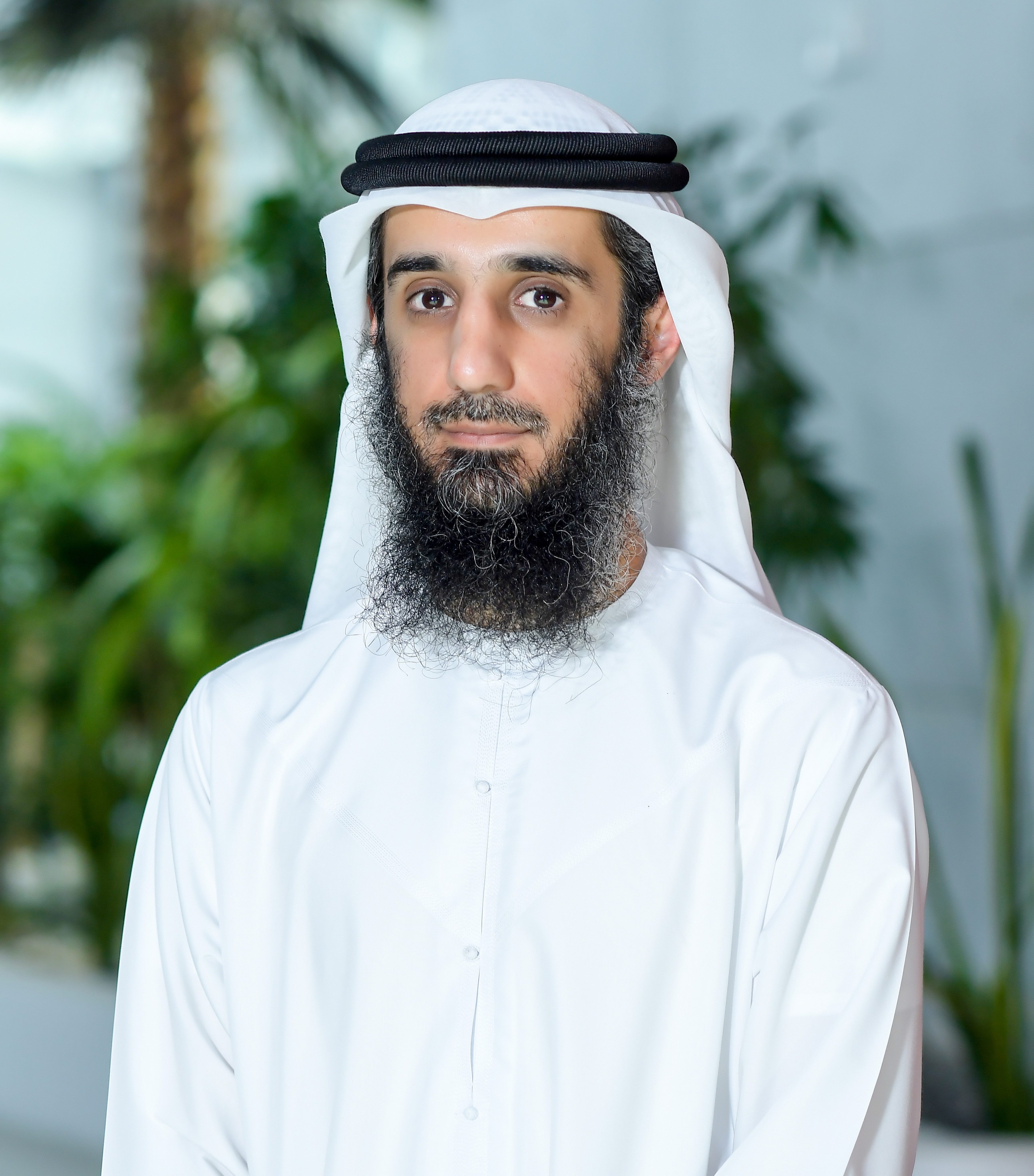
Dr. Faisal Almarzooqi is an Associate Professor in the Chemical & Petroleum Engineering Department at Khalifa University. He serves as Deputy Director of the Center for Membranes and Advanced Water Technology (CMAT) and is an Editorial Board Member of Elsevier's Desalination journal. PhD from Masdar Institute/MIT (2015) MSc from Imperial College London (2009) His research focuses on Membrane Technology and Solar Water Treatment for energy applications, including: Solar desalination Membrane distillation Hydrogen generation Battery technology 2D materials Current research projects include: Direct Solar Desalination Devices Photothermal Heavy Metals Removal from Water Solar Brine Treatment Integrated Photo-electrochemical Carbon Dioxide Conversion to Clean Fuel He has received the Lonza Award for his research on ionic liquids in surface energy determination.
Jin Han is a Doctoral Researcher at the Department of Computer Science, Aalto University, focusing on advanced metasurface technologies and their applications in electromagnetic engineering, cryptography, and biosensing. His work bridges theoretical computer science with experimental materials engineering. Research interests span: Graphene-based and carbon nanotube metasurfaces Dynamic polarization and wavefront manipulation Terahertz/microwave device fabrication Physical-layer encryption and biosensors Article trends reveal expertise in: Multi-band electromagnetic modulation Stealth and cloaking technologies Nonlinear physics in 2D materials Programmable and tunable devices Scientific awards and honors are not publicly listed in available records. Jin Han's collaborative network includes researchers like Talal Rahwan and Petter Holme, with grants likely supporting his work in computational and materials engineering, though specific project details remain unlisted in this dataset.
Professor Harri Lipsanen leads cutting-edge research in nanotechnology and nanoscience at Aalto University's Department of Electronics and Nanoengineering, School of Electrical Engineering. His work focuses on advanced nanomaterials for optoelectronic and photonic devices, including graphene, 2D materials, and semiconductor nanostructures. Expertise in nanofabrication techniques: atomic layer deposition (ALD), MOCVD, electron beam lithography Research encompasses quantum effects in nanostructures and functional surfaces Recent publications highlight breakthroughs in miniaturized spectral sensing, broadband photodetectors, and polymorphic engineering of 2D materials. His work has been recognized with the prestigious Aalto Research Impact Award (2019) and the Knight, First Class, of the Order of the White Rose of Finland (2021) . Academy of Finland Flagship PREIN award recipient Active collaborator in nanomaterials characterization Contributor to wearable carbon nanotube photodetectors
Sylvain Nascimbene is a Professor at Ecole Normale Supérieure (ENS-PSL) in Paris since 2023, affiliated with the Laboratoire Kastler Brossel at Collège de France. His research focuses on experimental quantum physics with ultracold Dysprosium and Rubidium atoms, particularly in topological matter simulation and quantum-enhanced sensing. 2023–present: Professor at ENS 2011–2023: Assistant Professor at ENS 2022: Junior member of Institut universitaire de France 2020: Habilitation à diriger des recherches 2010–2011: Postdoc at Max Planck Institute for Quantum Optics 2006–2010: PhD under C. Salomon and F. Chevy at Laboratoire Kastler Brossel His research includes: Quantum-enhanced sensing with ultracold Dysprosium Simulation of quantum Hall effect and topological phases Studies of 2D Bose gases and spin mixtures Notable projects: TOPODY (2018–2023): ERC-funded exploration of topological matter MAFAG (2016–2017): Investigation of Majorana fermions Scientific Awards: ERC Starting Grant (TOPODY) Junior member of Institut universitaire de France He teaches courses at ENS including classical optics, quantum optics, and ultracold atom physics, and has contributed to curriculum development and exam materials.
David B. Brown serves as Assistant Professor in the Department of Mechanical and Aerospace Engineering at the University of Virginia's School of Engineering and Applied Science, located in MEC Room 307 at 122 Engineer's Way, Charlottesville. Holding both B.S. and Ph.D. in Mechanical Engineering from Georgia Institute of Technology, his career includes thermal design work at Raytheon Intelligence and Space, followed by postdoctoral fellowships at UCLA and University of Michigan. Education: B.S., Mechanical Engineering, Georgia Institute of Technology Ph.D., Mechanical Engineering, Georgia Institute of Technology His research centers on experimental and theoretical studies of energy transport mechanisms across multiple length scales, with primary focus on thermal management for hypersonic vehicles and electronic systems. Key interests include two-dimensional material properties, thermal boundary conductance, and hypersonics, addressing critical challenges in aerospace thermal control and nanoscale heat transfer. Recent publications (2023-2025) demonstrate a clear trajectory toward hypersonic thermal management solutions, featuring integrated multimode cooling systems for high-speed leading edges and advanced plasma sheath modeling. Earlier work (2018-2019) established foundational insights into thermal transport at metal-2D material interfaces, while his initial research (2013-2015) developed thermoelectric generator technologies for on-chip cooling applications. Selected honors: University of California Chancellor’s Postdoctoral Fellowship (2021) IEEE ITherm Outstanding Paper Award (2018) Alfred P. Sloan Foundation Minority Ph.D. Fellowship (2015) National Science Foundation Graduate Research Fellowship (2013) Dr. Brown's research is supported by competitive federal fellowships and industry partnerships, with current projects focused on next-generation thermal management systems for hypersonic flight. He teaches MAE 2100 (Thermodynamics) and MAE 6100 (Thermomechanics), mentoring students in thermal-fluid sciences while advancing experimental methodologies for extreme environment applications. He leads an active research group at UVA developing novel thermal characterization techniques and computational models for energy transport in engineered systems, with particular emphasis on bridging nanoscale material properties to macroscopic thermal management solutions for aerospace and electronics industries.
Natalie Stingelin is a Professor at the Georgia Institute of Technology, holding the chair of the School of Materials Science and Engineering since 2022. She is also affiliated with the University of Bordeaux (since 2017) and Imperial College London (since 2009). Her work spans organic electronic materials, bioelectronics, and hybrid systems, focusing on microstructure-property relationships and advanced processing techniques. PhD in Materials Science from ETH Zurich (2001), awarded ETH Medal Her research explores organic photovoltaics, thin film transistors, and inorganic-organic frameworks. She develops models linking charge transport to polymer disorder and investigates materials for sustainable energy and flexible electronics. Her recent publications highlight innovations in polymer characterization, photovoltaic efficiency, and light-matter coupling. Stingelin serves as Editor-in-Chief for the Journal of Materials Chemistry C and Materials Advances . She has secured major grants including ERC Starting and Proof-of-Concept Grants, and led the Marie Curie INFORM network. Fellow of the Materials Research Society (2019) Fellow of the Royal Society of Chemistry (2012) National Academy of Inventors Fellow (2021) Rosenhain Medal (2014) Suffrage Science Award (2021) Her contributions to polymer science, optoelectronics, and sustainable materials are recognized globally, including participation in the World Economic Forum (2016) and editorial leadership roles.
Fabio Priante is a Postdoctoral Researcher at the Department of Chemistry and Materials Science , Aalto University , specializing in Atomic Force Microscopy (AFM) , Molecular Dynamics (MD) , and Machine Learning . His research focuses on nanoscale surface interactions, particularly in lignocellulosics , chitin interfaces , and ice-water systems . Active in UN Sustainable Development Goals (SDGs) related to renewable materials and surface science. Key collaborations with RCF Academy Project , HACMAT , and LIBER Sammalkorpi II . Research Trends include: Structure determination of biomolecules on 2D nanomaterials (2025). AFM and MD simulations for hydration layer analysis (2024). Application of machine learning to AFM imaging (2024). Adsorption dynamics of lignocellulosic molecules (2023). Historical work on graphene and MoS2 exfoliation (2017-2021). His work appears in Small , ACS Nano , and Journal of Chemical Theory and Computation , with datasets hosted on Zenodo .
Dr. Cristina BESLEAGA STAN is a Scientific Researcher II at the National Institute of Materials Physics (NIMP) since 2019, where she has been working since 2012. She leads research at the Laboratory of Complex Heterostructures and Multifunctional Materials, focusing on micro-electronics, opto-electronics, and solar cells development with significant contributions to semiconductor physics and device fabrication. Dr. Besleaga Stan earned her PhD in Solid-State Physics from the University of Bucharest in 2013, following a Master's degree in Solid-State Physics (2010) and undergraduate studies in Physics with specialization in Medical Physics (2007), all from the University of Bucharest. Her educational background established the foundation for her expertise in materials science and semiconductor physics. Her research spans micro-electronics, transport phenomena in semiconductors, and halide perovskite materials. She possesses extensive expertise in physical vapor deposition processes, particularly magnetron sputtering for thin film synthesis, and comprehensive characterization techniques including structural (XRD, XRR), morphological (AFM), optical (UV-Vis-IR), and electrical (resistivity, Hall effect) analysis. Her work bridges fundamental materials science with practical applications in energy harvesting and electronic devices. Dr. Besleaga Stan's publication record demonstrates consistent high-impact research across multiple domains including perovskite solar cells, thin film transistors, and self-cleaning surfaces. Her work shows a clear progression from fundamental semiconductor physics to applied device development, with recent publications emphasizing sustainable materials processing and advanced characterization techniques. Her scientific achievements have been recognized with numerous prestigious awards: "Ștefan Procopiu" prize from Romanian Academy (2018) Gold medal from EUROINVENT, Iași (2018) "Excellence" prize and gold medal from "Ștefan cel Mare" University (2018) Multiple "Excellence" prizes from ProInvent Exhibition Third prize "Young Researchers in Science and Engineering" (2019) Best poster presentation award at the "10th International Conference on Physics of Advanced Materials" (2014) Dr. Besleaga Stan has demonstrated exceptional leadership as principal investigator of multiple national research projects including PN-II-RU-TE-2014-4-1122, PN-III-P1-1.1-PD-2016-1546, PN-III-P1-1.1-TE-2019-0688, and PN-III-P2-2.1-PTE-2021-0150. She has secured substantial research funding and contributed to more than 16 national and international scientific projects, demonstrating strong grant-writing and project management capabilities. She leads a dynamic research team within the Laboratory of Complex Heterostructures and Multifunctional Materials at NIMP, collaborating extensively with international partners including University Nova de Lisboa (Portugal), University of Oslo (Norway), ARPES facility (Switzerland), and CVD/ALD AnnealSys company (France). Her laboratory specializes in clean room fabrication of electronic and optoelectronic devices and advanced materials characterization.