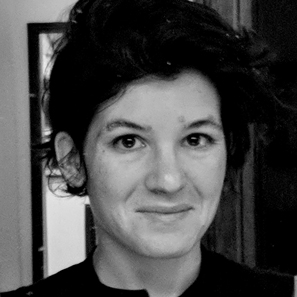
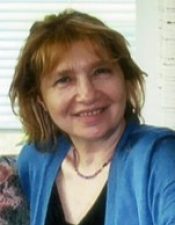
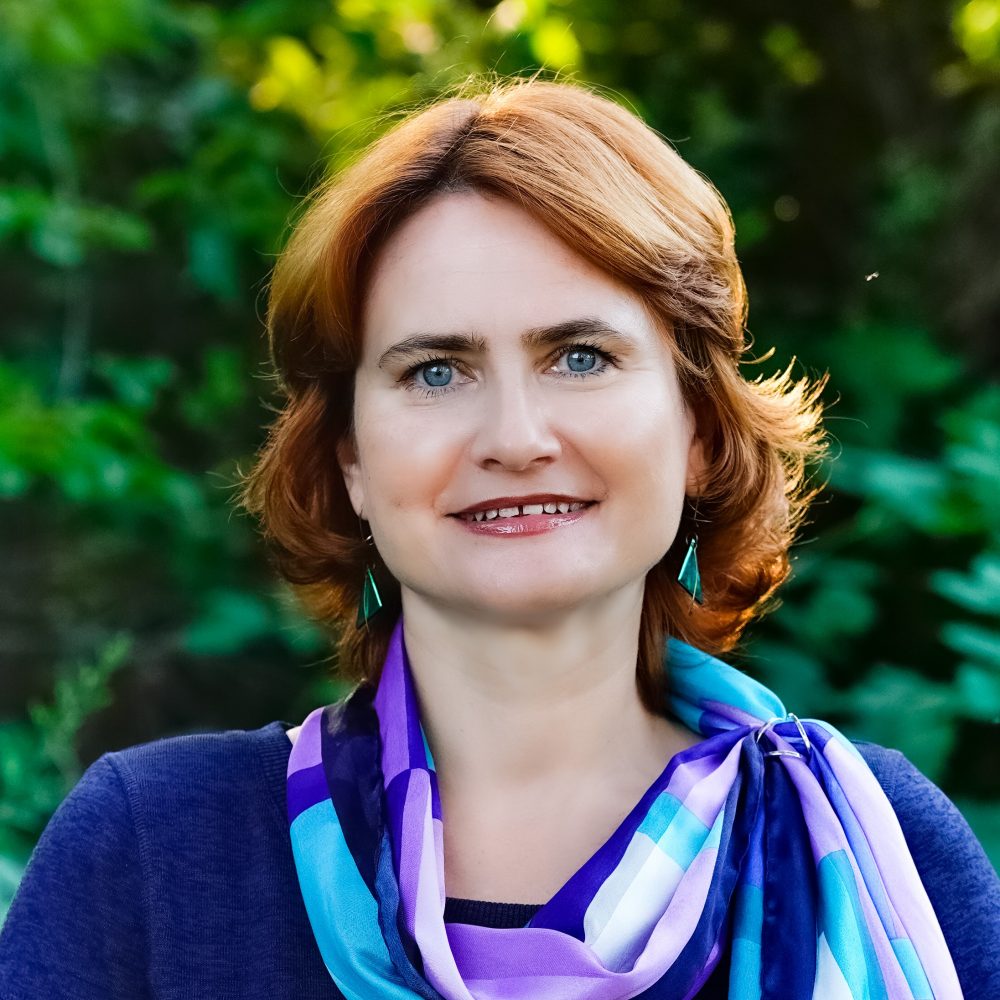
Gina Stamm is an Associate Professor of French at the University of Alabama, Department of Modern Languages & Classics. Her work bridges environmental humanities, speculative literature, and queer/feminist theory, focusing on 20th-21st century French and francophone Caribbean literature. PhD in French, Emory University (2016), with certificates in Psychoanalytic Studies and Comparative Literature MA in French, Miami University (2010) Stamm specializes in ecocritical analysis , examining how surrealism, feminist utopias, and post-exotic literature engage with ecological crises. Her research spans topics like queer ecology , vegetal transhumanism , and postcolonial environmental trauma , often through interdisciplinary lenses combining psychoanalysis and postcolonial theory. Recent publications explore intersections of racial capitalism , intergenerational trauma , and botanical agency in francophone Caribbean contexts. She actively translates works like Antoine Volodine's Songes de Mevlido and participates in podcasts such as ASLE EcoCast, discussing plant-oriented critical theory and speculative narratives. Her scholarship contributes to evolving frameworks in ecopoetics , nonhuman subjectivity , and decolonial environmentalism , with affiliations to academic institutions in France and the Caribbean.
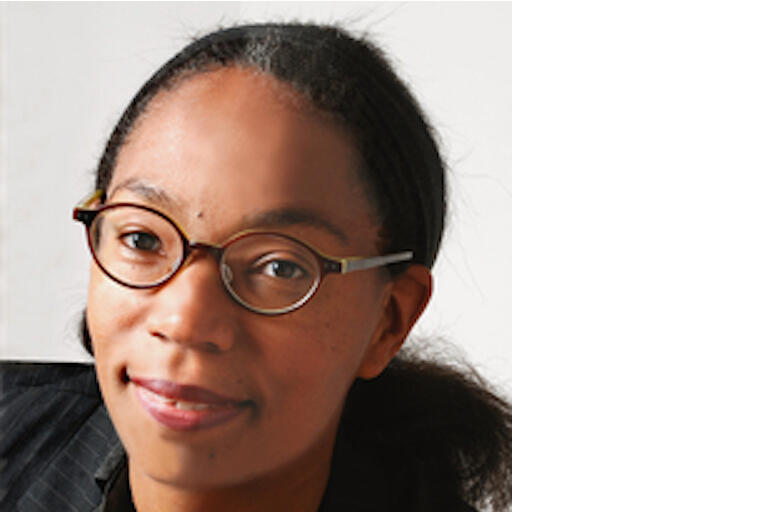
Hanan Elsayed is an Associate Professor specializing in French and Francophone Studies and African Studies. Her academic work explores intersections of French and Francophone literatures from Africa and the Mashreq, Sufi thought, Islamic historiography, race and identity in France, and colonial legacies. Research Interests 20th- and 21st-century French and Francophone literatures (Africa/Mashreq) Sufi poetics in French and Arabic contexts Early Islamic historiography Race and identity in France French colonial discourse and its global impacts Publications highlight her focus on postcolonial theory, Islamic narratives in literature, and critical analyses of race and identity. Her monograph L’Histoire sacrée de l’Islam dans la fiction maghrébine (2016) and co-edited volume Balibar and the Citizen Subject (2017) are central to her contributions. Articles span topics like Camus’s The Stranger , Ibn Arabi’s subversive poetics, and Qur'anic reinterpretation in Francophone works.
Sara Kippur is Professor and Chair of the Department of French, Francophone, and Italian Studies at Wellesley College. Her scholarship bridges translation theory, book history, and media studies to examine 20th- and 21st-century French and Francophone literature. She has held prestigious fellowships at the Suzy Newhouse Center (2020-2021) and the Camargo Foundation (Spring 2024), and serves on the Modern Language Association's PMLA editorial board (2022-2024) and executive committees. Education: B.A., Princeton University M.A., Harvard University Ph.D., Harvard University Research Interests: Sara explores how self-translation reshapes national literary boundaries, the transatlantic influences on postwar French literature, and the cultural history of wartime artists' colonies in France. Her pedagogy emphasizes students' role as cultural translators through close textual analysis. Awards: Newhouse Faculty Fellow Camargo Foundation Fellow (2024) Suzy Newhouse Center Fellow (2020-2021) Current Projects: Her forthcoming book, New York Nouveau (Stanford University Press, 2025), redefines French literary history through U.S.-based editorial interventions. She is also developing a cultural history of an artists’ community in Oppède, France, using transatlantic archival research.
Donna V. Jones is an Associate Professor at the University of California, Berkeley, affiliated with the Department of Comparative Literature. She serves as Core Faculty for the Designated Emphasis in Critical Theory and the Science, Technology and Society Center, and is part of the Gender and Women's Studies program. Her research focuses on African Caribbean Critical Theory, narrative structures, and 20th- and 21st-century British biography, with recent projects exploring race, biopolitics, and historical pessimism in the Great War era. Jones' work bridges philosophy, literature, and postcolonial studies, examining themes like vitalism, temporality, and colonial discourse. Her publications include The Racial Discourses of Life Philosophy (2010) and articles in ELH , Journal of French and Francophone Philosophy , and Critical Theory . Key talks include discussions on 'Race, Time, and Difference' and 'The Poetics of Pessimism.' Jones advocates interdisciplinary approaches, blending literary analysis with cultural and scientific critique. She actively participates in global academic networks, engaging with institutions like Columbia University and Brown University.
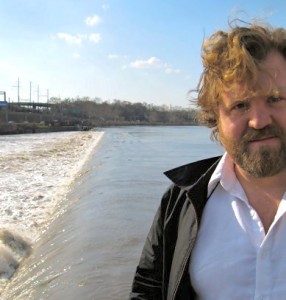
Jonathan P. Eburne is a Professor of Comparative Literature, English, and French and Francophone Studies at Pennsylvania State University, serving as Director of Undergraduate Studies in Comparative Literature. He holds a Ph.D. from the University of Pennsylvania and an A.B. from Dartmouth College. His research explores experimental artistic movements, 20th/21st-century literature, transnational intellectual relations, and literary/cultural theory. He is author of Outsider Theory (2018), which won the MLA’s James Russell Lowell Prize, and Surrealism and the Art of Crime (2008). Eburne co-edits books such as Leonora Carrington and the International Avant-Garde (2017) and serves as series editor for 'Refiguring Modernism' and 'International Surrealism.' His editorial roles include founding co-editor of ASAP/Journal and former President of ASAP and ISSS. He collaborates on interdisciplinary projects, including the nonprofit bookstore The Print Factory. Key awards include the 2020 James Russell Lowell Prize. His work bridges avant-garde studies, cultural theory, and surrealist scholarship, emphasizing speculative inquiry and marginalized intellectual traditions.
Lia Brozgal is Professor of French and Francophone Studies in the Department of European Languages and Transcultural Studies at the University of California, Los Angeles (UCLA), specializing in 20th and 21st-century French and North African literary and cultural studies. Her research examines intersections of literature, film, and history with particular focus on postcolonial narratives, memory studies, and cultural identity formation. Key thematic areas include representations of racial dynamics in French cinema, Algerian fiction in French, documentary film practices, and memoirs of occupation in French Tunisia. Her scholarly contributions feature monographs such as Against Autobiography: Albert Memmi and the Production of Theory and Absent the Archive: Cultural Traces of a Massacre in Paris (17 October 1961) , alongside co-edited volumes including Being Contemporary: French Literature, Culture and Politics Today and the translated work Ninette of Sin Street . Her scientific recognition includes: National Jewish Book award (finalist) for translation of A Jewish Childhood in the Muslim Mediterranean She teaches advanced courses on Francophone memory and history, including A365/565 La francophonie entre mémoire(s) et histoire(s) , integrating transnational perspectives into contemporary cultural analysis.
Oana Sabo is an Associate Professor of French in the Department of French and Italian at Tulane University. Her academic work focuses on 20th- and 21st-century French and Francophone literature and culture, with particular expertise in migration, diaspora, and refugee studies. She maintains an active research agenda examining the intersection of literature, digital technologies, and cultural production. Dr. Sabo earned her Ph.D. from the University of Southern California. Her academic journey has led to significant contributions in the field of contemporary French literary studies, particularly through her examination of how migrant literature has evolved from a marginal genre to a central component of French literary culture. Sabo's research interests span multiple interconnected domains of contemporary literary studies. She investigates 20th- and 21st-century literature with particular attention to migration and refugee narratives, exploring how these texts function within broader cultural and economic contexts. Her work on photography history and theory connects visual culture with literary production, while her interest in book history examines the material conditions of literary circulation. Most recently, she has turned her attention to digital technologies and their impact on the production and reception of contemporary literature, investigating how new media platforms are reshaping authorship and reading practices. Analysis of Sabo's recent publications reveals a consistent focus on migration literature, digital humanities, and the evolving nature of literary production in the 21st century. Her work demonstrates how digital platforms have transformed traditional literary consecration processes, how humanitarian narratives intersect with political and market forces, and how translingual practices are being reshaped by new technologies. She has also produced significant scholarship on the cultural reception of Nobel Prize winners like Annie Ernaux, examining the complex processes through which literary legitimacy is constructed. Dr. Sabo is the author of the influential monograph The Migrant Canon in Twenty-First-Century France (University of Nebraska Press, 2018), which examines the evolution of 'migrant literature' from a marginal genre in 1980s France to a genre that has become central to criticism and publishing. Her current research investigates new literary practices in the digital age, particularly focusing on authorship construction on self-publishing platforms. Her scholarly work has been published in prestigious journals including French Cultural Studies, French Forum, Studies in Twentieth & Twenty-First Century Literature, The French Review, and Crossings: Journal of Migration & Culture. She has also contributed chapters to edited collections such as 'The Routledge Companion to Migration Literature' and 'L'écrivain national par temps de mondialisation/The National Writer in a Global Context.'
Ludovic Cortade is an Associate Professor of French Literature, Thought, and Culture at New York University (NYU), affiliated with the College of Arts & Science. He specializes in French film theory, literature, and interdisciplinary cultural studies. Cortade has held visiting positions at institutions including the University of Toronto, Brown University, and the Sorbonne. His research explores film aesthetics, landscapes in cinema, and the interplay between social sciences and film theory. He co-organized the 2014 20th-21st French Francophone International Conference, attracting scholars globally. Education: Ph.D., M.A. (Cinema Studies), M.A. (Aesthetics), and B.A. (History) from the University of Paris Panthéon-Sorbonne and École Normale Supérieure. Research Interests: French film theory, literature-film interactions, André Bazin’s criticism, and the influence of geography/sociology/history on film theory. His current project investigates transdisciplinary dialogues between social sciences and film criticism. Publications: Cortade has authored books like Le Cinéma de l’immobilité and co-edited volumes such as Penser l’espace avec le cinéma et la littérature . His peer-reviewed articles span journals like French Forum and French Cultural Studies , addressing topics from Godard’s philosophy to Renoir’s landscapes. Awards: Recipient of NYU’s Global Research Institute grant (2015), Harvard’s Arthur Sachs Fellowship (2003-2005), and the SCMS Best Anthology Award (2011). Teaching: Courses include History of French Cinema, French Film Theory, and Cinema and the 19th-Century Novel. He teaches in both French and English, emphasizing interdisciplinary approaches.
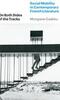
Morgane Cadieu is an Associate Professor of French with tenure at Yale University's Department of French. She specializes in 20th- and 21st-century French and Francophone literature, focusing on experimental fiction, materialist philosophies (atomism and feminism), social mobility narratives, and postcolonial memory. Her research integrates interdisciplinary approaches to analyze urban spaces, migration, and literary aesthetics. Education: Ph.D., Cornell University, 2014 M.A., Université Rennes 2, 2008 Research Interests: Randomness in literature and theory Materialist feminism Narratives of social emancipation and migration Aesthetics of trains in literature Urban studies and spatial theory Her major works include On Both Sides of the Tracks: Social Mobility in Contemporary French Literature (2024) and Marcher au hasard: clinamen et création dans la prose du XXe siècle (2019). She co-edited special issues on Lesbian Materialism (2023) and Beaches and Ports (2021). Collaborative projects include a 3D-printed train inspired by Émile Zola's La Bête humaine . Teaching: Courses span experimental literature, social mobility, and French cultural studies, including interdisciplinary modules combining literature with design and technology.
Catherine Perry is an Emerita Associate Professor of French at the University of Notre Dame. She previously served as President of the Centre International d’Études Francophones (CIÉF) and Editor-in-Chief of Nouvelles Études Francophones . A Chevalier of the Ordre des Palmes Académiques, she specializes in French literature from the late 19th century to the present, European intellectual history, Gender Studies, French Orientalism, and Maghrebi literature in French. Education : MA in French (Indiana University), PhD in French (Princeton University). Her research explores intersections between gender, colonialism, and literary form. Notable works include Persephone Unbound (2003) and Femmes d'islam (2019), analyzing women’s authorship and cultural identity. Courses taught include studies on Marcel Proust, French literature of the fin de siècle, and contemporary Francophone cinema. Awards : Kaneb Teaching Excellence Award, Distinguished Notre Dame Woman Award, Edmund P. Joyce Award, and fellow of the Nanovic Institute for European Studies. Her publications bridge literary analysis with historical and cultural critique, reflecting her commitment to interdisciplinary scholarship and pedagogy.
Gerald Prince is a distinguished Professor of Romance Languages at the University of Pennsylvania's School of Arts & Sciences. He holds a Ph.D. from Brown University (1968) and is internationally recognized for his pioneering contributions to narratology. His research focuses on 20th-century French literature, critical theory, and narrative structures, with particular emphasis on authors like Proust, Genette, and contemporary Francophone writers. Prince’s work bridges structuralist and poststructuralist approaches, examining narrative form, spatial dimensions, and intertextuality. His analyses often address questions of narrative voice, temporal frameworks, and the interplay between fiction and reality. Prince’s scholarly output includes foundational texts in narratology and critical analyses of French literary classics. His recent work explores modern and postmodern narrative trends, including degenerative realism and the evolving role of language in contemporary storytelling. He has engaged with interdisciplinary debates on spatial narratology, the rhetoric of beginnings, and the transnational reception of French theory. Active in scholarly discourse, Prince frequently reviews contemporary works and participates in international academic dialogues. His influence extends to guiding discussions on narrative theory’s applicability across disciplines, from literature to media studies. Despite no formal awards listed, his sustained academic contributions mark him as a cornerstone of modern narratological thought.
University of California, Los AngelesUnited States
Laure Murat is a Distinguished Professor of French and Francophone Studies at UCLA's Department of European Languages and Transcultural Studies. She holds a Ph.D. in History from the École des hautes études en sciences sociales (EHESS). Her research focuses on 19th-21st century literature, cultural history, the history of psychiatry, and queer studies. She has been a member of the School of Social Science at the Institute for Advanced Study in Princeton (2005-2006) and received the Guggenheim Fellowship (2012-2013). Her works explore intersections of madness, gender, and power, including award-winning books like The Man Who Thought He Was Napoleon (Femina Prize for non-fiction) and Une révolution sexuelle? Réflexions sur l’après-Weinstein . She teaches courses on French literature, contemporary culture, and queer theory. Her research interests blend historical analysis with literary criticism, addressing topics such as gender performativity, cultural memory, and the politics of representation. She has written extensively on Marcel Proust, exploring his works' queer and social dimensions. Her articles span from voyeurism in literature to critiques of cancel culture, reflecting her commitment to interdisciplinary inquiry. Laure Murat has held multiple academic roles, including membership on UCLA's LGBTQ Studies and CSW advisory boards. Her honors include the Prix Médicis Essai (2023) and the Goncourt Prize of Biography (2001). She actively engages in public intellectual work, contributing op-eds on French elections and cultural movements. Her academic contributions bridge scholarly rigor with public relevance, making her a leading voice in French studies and queer theory.
Monique Yaari is a Professor of French Studies at The Pennsylvania State University's Department of French and Francophone Studies within the College of the Liberal Arts. She earned her Ph.D. from the University of Cincinnati in 1981. Her research focuses on 20th/21st-century literary and cultural studies, avant-garde theories, urban space analysis, and Eastern European Francophonie. Yaari has received grants from Fulbright, IREX, and the Camargo Foundation. Her work bridges literature, architecture, and visual arts, particularly in exploring spatial theory and transnational cultural exchanges. Education: Ph.D., University of Cincinnati, 1981 Her interdisciplinary research emphasizes modernism/postmodernism dynamics, the contemporary French city, and identity expressions in art. Key contributions include advancing the 'spatial turn' in French studies and shaping cultural studies methodologies. Recent publications explore Dada/Surrealism intersections in Romania and post-1968 urban architecture. Awards: Fulbright Program Research Grant IREX Program Research Grant Camargo Foundation Research Grant Teaching & Advising: Advises graduate students in modernism/postmodernism and French urban studies. Teaches courses like 'The Contemporary French City' and 'Introduction to French Civilization.'
Matthew Moyle is an Associate Professor of French at Emory University specializing in 20th and 21st century Francophone literature. He teaches across the French curriculum from elementary language courses (101-102) to advanced seminars on classical/modern literature, place-based writing, and specialized topics including Martinican heritage and Les Misérables. His educational background: BA, Bemidji State University, 1998 MA, University of Wisconsin-Madison, 2000 PhD, University of Wisconsin-Madison, 2008 Dr. Moyle's research centers on literary topography and memory studies , examining how spatial representation conveys historical trauma in authors like Sylvie Germain and Albert Camus. His work bridges geocriticism with religious studies , analyzing silence as theological expression and urban spaces as palimpsests of Holocaust memory. This interdisciplinary approach connects literary analysis with philosophical and geographical frameworks. His publication trajectory reveals consistent focus on place-writing dynamics, evolving from Camus studies to contemporary memorialization practices. Recent work demonstrates sophisticated engagement with urban cartography and traumatic memory, particularly in French Holocaust narratives and postcolonial Caribbean contexts. No scientific awards or major fellowships were documented in the source material. Dr. Moyle maintains active scholarly engagement through frequent presentations at international colloquia including the 20th/21st-Century French and Francophone Studies conferences and MLA conventions. His conference organization (e.g., 'Sylvie Germain in Dialogue' at 2012 MLA) indicates leadership in specialized research communities, though specific grant funding or student advising details remain unreported. Research infrastructure details including laboratories or dedicated teams were not referenced in available documentation.
University of Wisconsin-Stevens PointUnited States
Vera Klekovkina is an Associate Professor in the Department of World Languages at the University of Wisconsin-Stevens Point, where she joined in 2011. She serves as Department Chair since 2021 and coordinates the French Study Abroad program. Her research spans French and Francophone Studies from the 19th to 21st centuries, focusing on Marcel Proust’s A la Recherche du temps perdu , first-person discourse, autobiography, women’s writing, memory, psychology, technology, and cinematic adaptation. Ph.D., French, University of California-Los Angeles (UCLA) M.A., French, UCLA B.A., French Studies, Butler University Her scholarly work explores intersections of literature, visual theory, and cultural studies, particularly analyzing Proust’s text through a multimedia lens. She has presented at the MLA convention and the 20th/21st Century French and Francophone Studies International Colloquium. Key awards include the Natalie Limonick Distinguished Teaching Assistant Award and Collegium of University Teaching Fellows at UCLA (2004-2005). She is currently developing a manuscript titled Visual Proust , reinterpreting Proust’s work via cinematic analysis.