Junko Yamazaki is an Assistant Professor of Japanese Media Studies at Princeton University, specializing in postwar Japanese cinema, media aesthetics, and cultural mediation. Her research interrogates the intersection of film spectatorship, sensory politics, and historical reckoning in 20th-century Japan. Ph.D. in Cinema & Media Studies & East Asian Languages and Civilizations, University of Chicago (2016) M.A. in Humanities with emphasis in Cinema & Media Studies, University of Chicago (2013) B.A. in Film Studies & Cognitive Psychology, University of California, Santa Barbara (2010) Her work critically examines: Jidaigeki films as contested cultural artifacts in postwar Japan Role of film music in shaping emotional and historical consciousness Intellectual debates around media's capacity for social transformation Postwar sensory politics and democratic reconstruction Recent publications analyze: 1950s Toei jidaigeki's aesthetic innovations Tsurumi Shunsuke's media theory through autobiographical criticism Ichikawa Kon's musical integration strategies in early postwar cinema She co-founded the interdisciplinary working group Gender and Criticism Workshop: Japan in the Trans-Pacific World (2019-), fostering transnational academic collaboration.
Tyran K. Steward is an Assistant Professor of History at Williams College, specializing in African-American and Modern U.S. History. His research intersects political, labor, and social history with analyses of popular culture and sport, particularly focusing on racial dynamics in the North during the early twentieth century and the American Interwar Period. Education: B.A., Morehouse College (2000) M.A., Eastern Michigan University (2009) Ph.D., Ohio State University (2013) Steward’s forthcoming book, The Benching of Willis Ward , examines the 1934 racist benching of a Black football player at the University of Michigan, using this incident to trace the emergence of black conservatism and northern Jim Crow structures. His work highlights how sports serve as critical sites for racial hierarchy and political reimagining. His publications include analyses of racial liberalism in academia, Black women's citizenship struggles, and reviews of seminal works in African-American Studies. Steward has advised senior theses on topics like reparations and Black internationalism, and previously held a Mellon Postdoctoral Fellowship at Carleton College.
David Der-Wei Wang serves as Edward C. Henderson Professor of Chinese Literature and Comparative Literature at Harvard University, holding dual appointments in the Department of East Asian Languages and Civilizations. He directs the CCK Foundation Inter-University Center for Sinological Studies and holds prestigious Academician positions at both Academia Sinica and the American Academy of Arts and Sciences. His distinguished career includes prior faculty roles at National Taiwan University (1982-1986) and Columbia University (1990-2004), with continuous Harvard affiliation since 1986. His academic credentials include: B.A. in Foreign Languages and Literature, National Taiwan University M.A. in Comparative Literature, University of Wisconsin-Madison (1978) Ph.D. in Comparative Literature, University of Wisconsin-Madison (1982) Wang's research pioneers interdisciplinary approaches to Modern and Contemporary Chinese/Sinophone Literature, Late Qing fiction, and colonial Taiwanese studies. His work critically examines historical trauma , cultural identity formation , and transnational literary networks , particularly through the lens of political upheaval and diasporic experiences. Special attention is given to mid-20th century Chinese intellectuals navigating ideological crises, with methodologies blending comparative literary theory and historical analysis. His eight major publications (1997-2020) reveal consistent thematic evolution toward global frameworks for Chinese literary studies. Early works like Fin-de-Siècle Splendor established foundations in Late Qing modernities, while later volumes including A New Literary History of Modern China and Why Fiction Matters expand into transnational Sinophone networks and contemporary sociopolitical relevance. The corpus demonstrates increasing emphasis on diasporic perspectives and decolonizing methodologies across Chinese literary historiography. Wang's scholarly recognition includes: Academician, Academia Sinica Academician, American Academy of Arts and Sciences Changjiang Scholar Award (2008) Humanitas Visiting Professorship at CRASSH, Cambridge (2013-14) As Director of the CCK Foundation Inter-University Center for Sinological Studies, Wang coordinates international research initiatives connecting North American and Taiwanese institutions. This leadership role facilitates collaborative projects in digital humanities and comparative Sinology, supporting emerging scholars through cross-institutional fellowships and academic exchanges focused on reimagining Chinese studies through global perspectives.
Adrien Carbonnet serves as Associate Professor at KU Leuven's Faculty of Arts, where he concurrently holds leadership positions as Head of Japanese Studies and Director of the Centre for Korean Studies. He maintains an external affiliation as Fellow of the Institut Français de Recherche sur l’Asie de l’Est (INALCO/Université de Paris/CNRS). His academic profile centers on East Asian diplomatic history with specialized focus on Belgium's historical engagements with Korea and Japan during the imperial era. Carbonnet's research investigates 19th-20th century international relations in East Asia, particularly Belgian-Korean diplomatic history culminating in the 1901 treaty, Japan-Belgium relations during the Russo-Japanese War, and Korean minority experiences in Japan. His current sabbatical project (2024-2025) at the University of Tokyo's Center for Korean Studies aims to produce a monograph on Belgium-Korean relations during imperialism (1876-1919). He also actively translates works by Korean-Japanese writer Kin Kakuei and examines disease perception in early 20th century Korea through Belgian diplomatic archives. Analysis of his recent publications reveals consistent emphasis on archival-driven diplomatic history, with recurring themes of European imperial influence in Korea, cross-cultural disease perception, and contemporary implications for inter-Korean relations. His work bridges historical scholarship with current diplomatic practices, frequently contextualizing modern Korean affairs through historical precedents while maintaining rigorous archival methodology. Carbonnet's research portfolio includes significant grants: a 2024-2025 sabbatical monograph project on Belgium-Korea imperialism relations, the ongoing 2019-2025 study of Nippon Victor's role in global jazz history (as Co-promotor), and the concluded 2007-2024 Kansai University cooperation agreement. He contributes to academic governance as senior member of the Faculty of Arts Council and the POC Taal- en regiostudies committee. As academic leader, Carbonnet directs the Centre for Korean Studies while heading the Japanese Studies unit, overseeing curriculum development for Korean language programs (reading, writing, grammar, conversation) and modern Japanese courses. His teaching extends to specialized seminars on East Asian international relations history, directly informing his research on Belgian diplomatic engagements in the region.
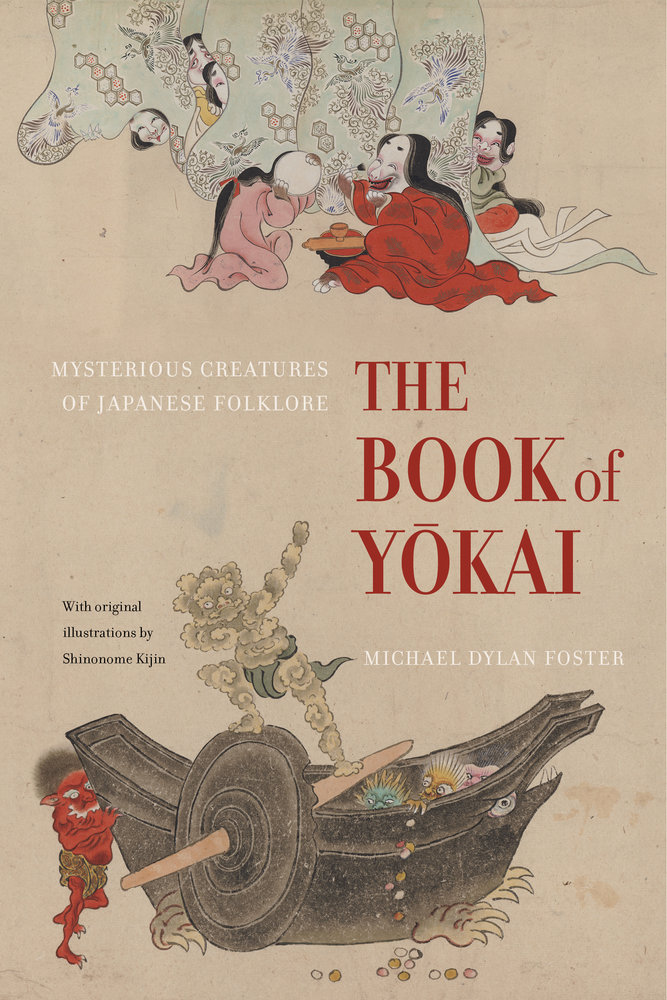
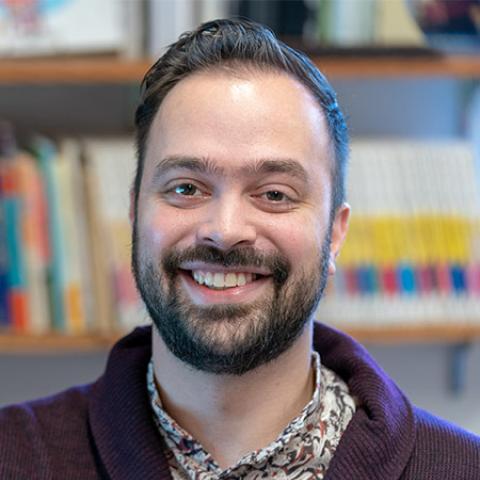
Michael Dylan Foster is a Professor of Japanese at the University of California, Davis, affiliated with the Department of East Asian Languages and Cultures. His research focuses on Japanese folklore, monsters/yōkai, festivals, and intangible cultural heritage. He holds a Ph.D. from Stanford University and has taught at multiple institutions including Indiana University and UC Riverside. Education includes a B.A. in English from Wesleyan University, M.A. in Asian Studies from UC Berkeley, and Ph.D. in Japanese from Stanford. His work bridges folklore studies, literature, and popular culture, with a focus on how supernatural beliefs and cultural heritage are mediated through media and ritual. Recent projects include co-editing volumes on disaster narratives and Japanese festivals, as well as ongoing ethnographic research on masked rituals and UNESCO heritage practices. His media appearances include serving as a cultural expert for NHK World's 'Yōkai' documentary series and interviews with France 24 and podcasts. Honors include the Chicago Folklore Prize for his book Pandemonium and Parade and multiple teaching awards. Current research includes a monograph on masked deities and a project on early 20th-century spiritual practices in Japan.
Andrew Campana is an Assistant Professor of Asian Studies at Cornell University's College of Arts and Sciences, specializing in modern and contemporary Japanese literature and media. His research explores the possibilities and limitations of expression during media transitions, with particular focus on poetry, digital media, and disability studies. His academic journey includes a Ph.D. in East Asian Languages and Civilizations from Harvard University and an Honors B.A. in East Asian Studies from the University of Toronto. Campana's first book, Expanding Verse: Japanese Poetry at the Edge of Media , published by the University of California Press in 2024 as an open access work, examines Japanese poetic practice from the 1920s to the present as poets engaged with evolving media technologies including film, tape recording, television, and the internet. As a researcher, Campana's work bridges literary studies, media studies, game studies, and disability studies, with current projects exploring how poetry became a key site of digital experimentation in Japan. His research methodology combines traditional literary analysis with hands-on creative practice, informed by his experiences at MIT's Trope Tank laboratory. His scholarly interests span Japanese media history, disability representation in literature and gaming, digital poetics, and gender studies. His research has received significant media attention, including features in the Cornell Chronicle ('Poets in Japan Experiment at the Edge of Media' and 'Japanese Poets Open New Ways of Thinking About Media'), The Statesman, and interviews on NPR's Academic Minute and the Curiosity Daily podcast discussing his work on gaming and accessibility. As an educator, Campana teaches courses including 'Introduction to Japan,' 'Japanese Poetry,' and 'The Glitch: Errors, Disability, and the Edges of Digital Media' (ASIAN 4703/6703), guiding students through interdisciplinary explorations of Japanese literature, media, and digital culture. His teaching reflects his commitment to understanding media transitions through both theoretical and practical lenses.
Vladimir Tikhonov is a Professor at the Department of Culture Studies and Oriental Languages, Faculty of Humanities, University of Oslo. Specializing in Korean history, his research focuses on Korean Buddhism, nationalism, modernity in East Asia, and labor movements. He holds a PhD from Moscow State University (1996) and has taught at KyungHee University (1997-2000). Current roles include co-leadership of the 'Militarism and Religions in Modern Asia' project and responsibility for the MA program in East Asian Culture and History. Research interests span colonial-era Korean perceptions of Japan and Russia, religious militarism, and the intersection of nationalism with Buddhist thought. Notable works include Buddhism and Violence (2012) and Modern Korea and Its Others (2015). Ongoing projects explore Korean communist movements and critical biographies of nationalist figures like Han Yongun. Teaching covers East Asian culture, history, and politics, with courses like EAST4510 and KOR4504. His publications combine historical analysis with transnational perspectives, addressing topics from colonial-era intellectual debates to contemporary South Korean military chaplaincy dynamics.
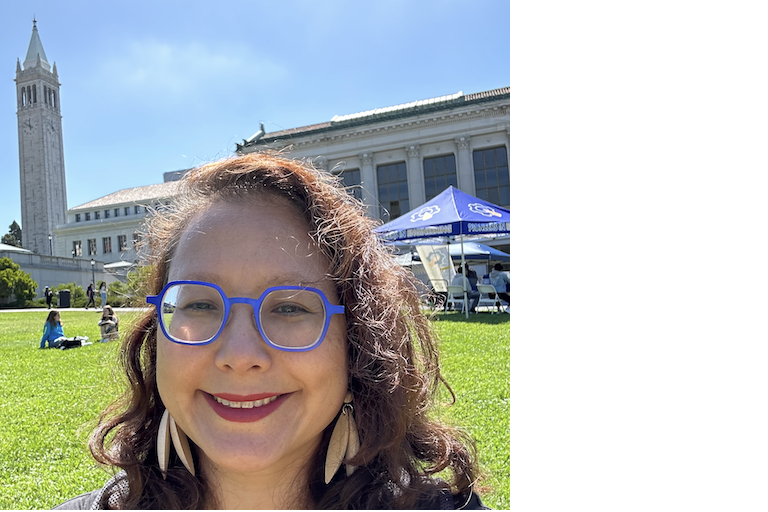
Dr. Rebecca Rainof is a Lecturer in the Department of English at the University of California, Berkeley, and an Associate Researcher. Her research focuses on Victorian and Modernist literature, interdisciplinary studies of literature and visual arts, and gender studies. She has held positions at Princeton University and the Catholic University of America. Her work explores topics such as midlife narratives in Victorian novels, Van Gogh’s engagement with Victorian literature, and Japanese American incarceration through familial memory. Her book The Victorian Novel of Adulthood (2015) examines alternative novelistic traditions. Her recent research includes contributions to the Santa Barbara Museum of Art’s 2022 exhibition Through Vincent’s Eyes: Van Gogh and his Sources . She has published on George Eliot, Woolf, and the intersections of art and literature. Her writings on her mother’s experience during WWII Japanese American incarceration appear in Hyphen: Asian America Unabridged and Literary Imagination . Rainof’s grants and fellowships include the Princeton Mellon Fellowship (2018) and the Curran Fellowship (2015). Her teaching and writing emphasize creative nonfiction, feminist literary theory, and pedagogical innovation. Her current projects include a book manuscript on Van Gogh’s literary adaptations and a family memoir rooted in Heart Mountain’s history.
Steven Lee is an Associate Professor at the University of California, Berkeley, affiliated with the Department of Slavic Languages and Literatures. He is a leading scholar in comparative ethnic studies, Soviet/post-Soviet studies, and 20th-21st century American literature, with a focus on transnational intellectual networks and revolutionary cultural movements. His work bridges Asian American, African American, and Slavic literary traditions while exploring intersections between global communism and cultural production. Lee’s research interests include the far left and far right ideologies in Northeast Asia during WWII, their influence on Asian American literature, and the role of manifestos as lived experiences. His current book project examines ideological imprints on Asian Anglophone writing. He is also affiliated with the Asian American Research Center, the Center for Korean Studies, and the Center for Race and Gender at Berkeley. His seminal work, The Ethnic Avant-Garde: Minority Cultures and World Revolution (2015), won the MLA’s Scaglione Prize, and he co-edited the award-winning Comintern Aesthetics (2020). Recent publications explore topics like Viktor Tsoi’s cultural impact, the Popular Front in Asian American writing, and transnational revolutionary manifestos. Lee’s research integrates methodologies from postcolonial theory, comparative literature, and political history. His sabbatical in AY 2024-25 focuses on finalizing his current manuscript while continuing to advise students through scheduled appointments.
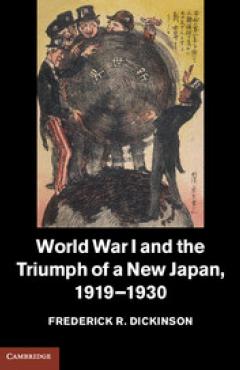
Frederick R. Dickinson is a Professor of Japanese History and Director of the Center for East Asian Studies at the University of Pennsylvania’s College of Arts & Sciences. He specializes in Modern Japan, East Asian diplomacy, and World History, with a focus on imperialism, nationalism, and transnational dynamics. Born in Tokyo, Dickinson holds a Ph.D. from Yale University and has authored seminal works including War and National Reinvention: Japan in the Great War, 1914–1919 and World War I and the Triumph of a New Japan, 1919–1930 . His research examines Japan’s global entanglements during WWI, postwar diplomacy, and the Meiji Restoration’s global implications. He has held visiting professorships at Kyoto University, Swarthmore College, and others. Dickinson’s work bridges cultural, diplomatic, and political histories, emphasizing Japan’s role in shaping 20th-century Asia-Pacific relations. His grants include support from the Japanese Ministry of Education, Fulbright Commission, and Japan Foundation, alongside fellowships at Stanford’s Hoover Institution and Kyoto’s International Research Center for Japanese Studies. His courses include Modern Japanese History, East Asian Diplomacy, and Global History frameworks. Education: Ph.D. and M.A. in History (Yale University), M.A. in International Politics (Kyoto University). His research interests span Japanese imperialism, transnational networks, and the interplay between domestic politics and international relations. Current projects include a global history of modern Japan. Professional service includes co-directing the Lauder Institute of Management and International Studies (2012–2019) and advising on East Asian studies initiatives. Professional contributions include over 50 peer-reviewed articles and book chapters, focusing on WWI’s impact on Japan, Meiji constitutionalism, and interwar diplomacy. His work highlights Japan’s contested path to modernity and its global connections. Office locations include College Hall and Williams Hall at Penn.
Dr. Amanda Hsieh is an Assistant Professor of Musicology in the Department of Music at Durham University. Her research examines the intersection of music and politics, with a particular focus on global music history and transnational exchanges between East Asia and Central/Western Europe during the 19th-20th centuries. Her current book project, 'The Japanese Empire's German Art Music, 1910–1945', investigates musico-political networks connecting Germany, Japan, and Taiwan. Hsieh employs interdisciplinary approaches including global history, biography, and infrastructure theory to analyze how Western art music influenced Japanese state-building initiatives. Dr. Hsieh actively builds equitable scholarly networks as co-founder of the Asian-German Studies in Music Working Group and former co-chair of the AMS Global East Asian Music Research Study Group. She serves as Reviews Editor for the Journal of the Royal Musical Association, where she promotes linguistic and geographical diversity in music scholarship. Her recent publications explore themes of gender representation in opera, cultural diplomacy through music, and methodological challenges in global music history. She has received prestigious awards including the Kurt Weill Prize and Jerome Roche Prize for her contributions to music scholarship. Dr. Hsieh currently supervises PhD research on women opera singers in 19th-century Britain and welcomes doctoral applicants interested in music and mobility, music and politics, and global music history.
Gabriel P. Weisberg is a distinguished Professor of Art History at the University of Minnesota, specializing in 19th and Early 20th Century European Art with particular expertise in graphic art, design history, and visual culture from 1780-1920. His career spans over forty years, during which he has curated major international exhibitions, published extensively, and mentored numerous PhD students who have gone on to academic positions. Professor Weisberg's research focuses primarily on Art Nouveau, Japonisme (Japanese influence on Western art), Naturalist painting, and the intersection of photography and painting. His scholarly work has significantly contributed to the reappraisal of late 19th century art historical issues, particularly through his examination of artists like Jules Adler, Albert Besnard, and Art Nouveau figures. His recent work includes major exhibitions such as 'Illusions of Reality: Naturalist Painting, Photography and Cinema, 1875-1918' and 'The Orient Expressed: Japanese Influence on Western Art, 1854-1918.' His publications reveal consistent engagement with Japonisme, Art Nouveau, and Naturalist painting across decades. The trend shows deepening specialization in Japanese influence on Western art, with numerous publications on Japonisme from 2014-2021, including serving as managing editor of the Journal of Japonisme. His work bridges art historical scholarship with museum practice through major exhibition catalogues. Member of the Institute for Advanced Study (Princeton) Guggenheim Foundation Fellowship Senior Fellowship at CASVA (National Gallery of Art) Regents Professor, National Museum of American Art Van Gogh Museum and University of Amsterdam Visiting Fellow (2010) Professor Weisberg has mentored numerous PhD students who have contributed to exhibition catalogues and scholarly publications. His research has been supported by major institutions including the Van Gogh Museum, Smithsonian Institution, and National Gallery of Art. He has organized international symposia and study programs, including a notable two-week course in Dutch museums for University of Minnesota students. As Reviews Editor for Nineteenth Century Art Worldwide and co-founder of the Journal of Japonisme, he continues to shape scholarly discourse in his fields of expertise.
Tim Harper is a Professor of the History of Southeast Asia at the University of Cambridge, serving as Head of the School of the Humanities and Social Sciences. He is a Fellow of Magdalene College and Director of the Centre for History and Economics. His research focuses on Southeast Asian colonial and postcolonial history, with a particular emphasis on anti-imperial movements, nationalism, and the British Empire's decline. He has authored seminal works such as Underground Asia: Global Revolutionaries and the Assault on Empire (2020) and co-authored Forgotten Armies (2004) and Forgotten Wars (2007) with Christopher Bayly. His articles explore themes like colonial resistance, diaspora networks, and the socio-political dynamics of decolonization in Southeast Asia. Harper's scholarship challenges traditional narratives of empire, highlighting grassroots movements and transnational networks. His work bridges academic rigor with accessible storytelling, as seen in Underground Asia , which reinterprets 20th-century imperialism through the lens of radical underground networks. His research also examines education, state governance, and environmental politics in colonial contexts. He actively contributes to interdisciplinary initiatives at the Centre for History and Economics, fostering collaboration between historians and economists.
Ho Lok Victor Fan is a Research Professor in Film and Media Philosophy at King's College London's Department of Film Studies. He previously served as Assistant Professor at McGill University's Department of East Asian Studies (2010–2012), where he also chaired the Equity Subcommittee on Queer People. His expertise spans Chinese cinema (including Shanghai, Hong Kong, and Cantonese film histories), queer theory, Hollywood studies, and Buddhist film philosophy. His work contributes to UN Sustainable Development Goal 4 (Education) through academic research and pedagogy. Education: PhD: Film Studies, Yale University (2010) MFA: Film & TV Production, USC (1999) Bachelor of Music: University of Rochester (1996) Research Interests: Fan explores comparative world cinemas, Chinese film theory, Sino-Hollywood co-productions, queer theories, and Buddhist media philosophy. His work interrogates spatiality in Chinese cinema and the intersections between film and Buddhist thought. Recent talks include lectures on 'Karma: Cinematic Technicity-Consciousness' and 'Extraterritorial Life in Hong Kong Cinema.' Notable Works: His 2000 thesis film The Well won international acclaim. His 2022 book Cinema Illuminating Reality redefines media philosophy through Buddhist frameworks. Recent articles analyze Hong Kong's media politics and labor narratives in hybrid film-anime forms. Awards: Third Prize, Fort Lauderdale International Film Festival (2000) Grants/Advising: Supervised 8 academic works (details omitted). Active in editorial and peer-review roles for film studies journals. Engaged in interdisciplinary projects bridging media philosophy and cultural studies. Labs/Teams: Collaborates with King's College's Queer@King's initiative and global film studies networks. Research focuses on East Asian cinematic histories and transnational media dynamics.
Angelina Chin is Professor of History and Co-Coordinator of Asian Studies at Pomona College, where she has been a faculty member since 2006. Her research centers on modern East Asia, with a focus on colonialism, migration, diaspora, gender, sexuality, and disability in Hong Kong, Taiwan, China, and Japan. Institution: Pomona College Department: Department of History Role: Professor; Co-Coordinator of Asian Studies Location: Mason Hall 114, Claremont, CA Email: angelina.chin@pomona.edu Education: Ph.D., History (Feminist Studies), University of California, Santa Cruz M.A., History, University of California, Santa Cruz B.A., University of California, Berkeley Her research interests include modern East Asian history, gender and sexuality, disability studies, political movements, and transregional networks. She is especially known for her work on urban citizenship, women’s emancipation, and the social histories of marginal communities. Her scholarship bridges historical analysis with interdisciplinary engagement in feminism, postcolonial theory, and disability justice. Her recent publications, including Unsettling Exiles (2023) and Bound to Emancipate (2012), explore themes of exile, labor, gender, and identity formation in 20th-century East Asia. Her articles span journals such as Modern Asian Studies and Journal of Women’s History , reflecting a consistent trajectory in social and cultural history with strong attention to marginalized voices. Scientific Awards and Honors: Stanford Center for Advanced Study in the Behavioral Sciences (CASBS) fellowship (2024–2025) Abe Foundation Collaborative Grant (2023–24): 'History and Future of Care Robots' Japan Foundation Global Partnership Grant (2023–25): 'Sustainable Futures: Overcoming Disparities' (Co-PI) Abe Research Fellowship (2019): 'Assistive Technologies for the Elderly and the Disabled in China and Japan' Chiang Ching Kuo Foundation Scholar’s Grant (2015–16) Andrew W. Mellon Postdoctoral Fellowship (2006–2008) She has secured multiple research grants and collaborates with scholars and engineers in Japan, including at Ritsumeikan University, ATR, and Osaka Institute of Technology. She advises and mentors students in historical research and interdisciplinary projects, particularly those focused on social justice, identity, and transnational movements. Her recent courses include 'Chinese Diaspora,' 'Gender and Feminisms in Modern East Asia,' and 'Studying East Asian History through the Archives.' She is currently leading two disability-focused research projects: one on blind workers’ labor movements in Hong Kong since the 1960s, and another on assistive technologies, reflecting her commitment to inclusive and socially engaged scholarship.