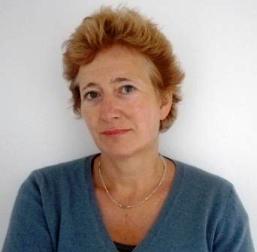
Michael Kinski serves as Professor of Japanese History of Thought and Japanology at Goethe University Frankfurt within the Faculty of Languages and Cultural Studies, concurrently leading the Institute for East Asian Philologies as Acting Director since 2013. His academic trajectory spans prestigious German institutions including Humboldt University Berlin (1998-2009) and Tuebingen University (1991-1998), with prior research engagement at Japanese universities including Tokyo University and Ritsumeikan. He completed his doctoral studies at Tuebingen University in 1991 following an M.A. at Bochum University (1987), with formative research periods in Japan at Nagoya University, Tokyo University, and Ritsumeikan University. His scholarly foundation centers on Japanese intellectual history, particularly the Edo period. Kinski's research program systematically examines Japanese societal structures through interconnected domains: Historical conceptions of childhood and developmental frameworks Formalized etiquette systems as cultural expression Material culture studies focusing on food practices and consumption Scientific knowledge transmission via Rangaku (Dutch Studies) Social value systems reflected in travel literature Intellectual history of Early Modern Japan No scientific awards were documented in source materials. Information regarding student supervision, research grants, laboratory facilities, or collaborative teams was not provided in the available texts.
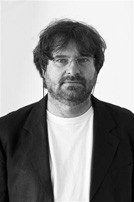
Rebekka Habermas was a Full Professor of History at Georg-August Universität Göttingen (2000–2023) and previously held positions including Substitute Full Professor at Ruhr-University Bochum (1998–2000) and Associate Professor at Universität Bielefeld (1992–1997). Her research focused on the History of Crime, 19th Century History, Modern Colonial History, and Religious History. She passed away on December 21, 2023. Education PhD in History (1990) from the University of the Saarland Habilitation in History (1998) from Universität Bielefeld Studies in Romanic Literature and History at the University of Konstanz (1979–1985) Research & Honors Honors include the Theodor Heuss Professorship (2016), Preis Geisteswissenschaften International (2011), and fellowships at Oxford University (2013–2014) and Göttingen’s Lichtenberg-Kolleg (2014–2015). Her work explored intersections of social history, religious belief, and colonial dynamics. Professional Activities Co-Spokeswoman, DFG Graduiertenkolleg 1599 (Dynamics of Space and Gender) Editor of Historische Anthropologie Co-editor of the series Historische Studien
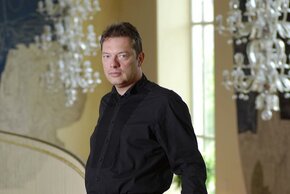
Roger Luckhurst is Professor of Modern Literature and currently holds the prestigious Geoffrey Tillotson Chair of Nineteenth Century Studies at Birkbeck College, University of London. A leading scholar in Gothic literature, science fiction, and trauma studies, he has been affiliated with Birkbeck for over 25 years, contributing significantly to interdisciplinary literary and cultural studies. Education and Career Trajectory: 2020-present: Geoffrey Tillotson Chair of Nineteenth Century Studies, Birkbeck College 2008-2020: Professor of Modern and Contemporary Literature, Birkbeck College 2004-2008: Senior Lecturer, Birkbeck College 1994-2004: Lecturer, Birkbeck College 1992-1994: Lecturer, University of Hull Research Interests and Scholarly Contributions: Luckhurst's research spans multiple interconnected fields, establishing him as a preeminent voice in literary and cultural studies. His work on late 19th century English literature examines the intersections of Victorian culture with emerging scientific discourses. His expertise in science fiction studies encompasses both literary analysis and cultural theory, exploring how speculative fiction reflects and shapes contemporary anxieties. In Gothic studies , he investigates the persistence of Gothic aesthetics and themes across different media and historical periods. His groundbreaking work in trauma studies has contributed significantly to understanding how literature and culture process collective trauma. Publications and Scholarly Impact: His extensive publication record demonstrates a remarkable breadth of scholarly inquiry. From his early work on J.G. Ballard to his recent comprehensive study of Gothic culture, Luckhurst has consistently produced influential scholarship. His books have been translated into multiple languages including French, Japanese, Turkish, and German, indicating significant international impact. His forthcoming The Gothic: An Illustrated History (2021) promises to be a definitive work in the field. Honors and Awards: 2009: Visiting Research Fellow, University of Birmingham 2009: Visiting Research Fellow, Flemish Academic Centre for Science and the Arts (VLAC), Brussels January-June 2011: AHRC Fellowship, Birkbeck College Spring 2016: Mellon Distinguished Visiting Professor, Department of English, Columbia University, New York Public Engagement and Media Presence: Beyond academia, Luckhurst has demonstrated exceptional commitment to public scholarship. He has served as a broadcaster for BBC radio, bringing literary criticism to wider audiences. His journalism has appeared in leading British newspapers, bridging the gap between academic research and public discourse. This dual role as academic and public intellectual exemplifies Birkbeck's tradition of making scholarship accessible to broader communities. Interdisciplinary Approach and Institutional Contributions: At Birkbeck College, Luckhurst has been instrumental in fostering the institution's renowned culture of interdisciplinary studies. His work seamlessly integrates literary analysis with cultural theory, film studies, architectural history, and scientific discourse. This approach has influenced generations of students and scholars, establishing Birkbeck as a leading center for innovative literary and cultural research.
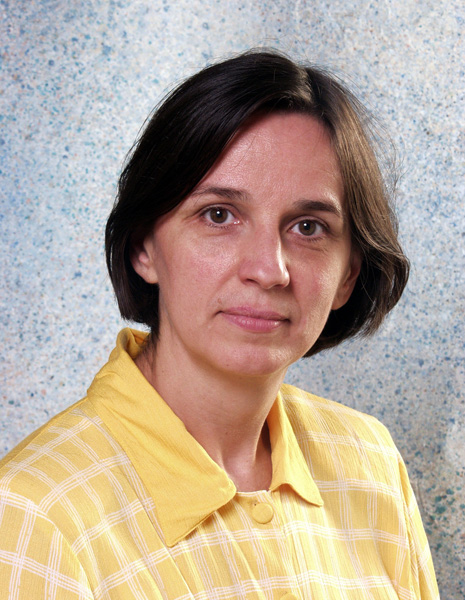
Andreas Eckert is Professor and Chair of African History at Humboldt University Berlin, where he also serves as Director of the International Research Centre "Work and Human Life Cycle in Global History" since 2009. Previously, he was Head of Department at the Institute of Asian and African Studies (2008-2009) and Dean of the Faculty of History and Philosophy at the University of Hamburg (2004-2006). His academic career includes visiting professorships at Harvard University, Maison des Sciences de l'Homme in Paris, and Indiana University. Professor Eckert's research focuses on African history in the 19th and 20th century , with particular emphasis on the history of the state, urbanization, and historiography. His scholarly work extends to comparative history of colonialism , history of work/labour history , and global history . His approach combines deep regional expertise in African contexts with transnational and comparative perspectives that challenge traditional historical narratives. Eckert's publication record demonstrates a consistent engagement with themes of state formation, labor relations, urban development, and historical methodology in African contexts. His work spans from detailed case studies of specific regions like Douala and Tanzania to broader conceptual explorations of how Africa fits into world historical narratives. A notable trend in his scholarship is the examination of entangled histories that connect local African experiences with global processes of colonialism, decolonization, and postcolonial state formation. His notable achievements include: 2012 Guest Fellowship at Freiburg Institute of Advanced Study Election as chairperson of "Forum Transregionale Studien" (2011) Major Grant from the German Ministry for Research and Education for the Institute "Work and Human Life Cycle in Global History" (2009) Election as chairperson of "Arbeitskreis für Moderne Sozialgeschichte" (2007) Managing Editor of the Journal of African History (2004-2011) Fellowship in the Royal Historical Society (2000) As Director of the International Research Centre "Work and Human Life Cycle in Global History," Eckert has secured significant funding including a major grant from the German Ministry for Research and Education (2009-2015). He has also served on the Board of the International African Institute in London and has been actively involved in scholarly organizations including the "Forum Transregionale Studien" and "Arbeitskreis für Moderne Sozialgeschichte." Under Eckert's leadership, the International Research Centre "Work and Human Life Cycle in Global History" brings together scholars from multiple disciplines and countries to examine the historical dimensions of work and human life cycles from a global perspective. The center serves as a hub for innovative research that transcends traditional geographic and disciplinary boundaries.
Private University of Music and Arts of the City of ViennaAustria
Andreas Stoehr is a renowned Austrian conductor and professor at the Music and Arts Private University of the City of Vienna, leading the conducting department and symphony orchestra since 2013. His career spans prestigious engagements including the Paris Opéra Comique, Deutsche Oper am Rhein, and St. Gallen Theatre, focusing on operatic repertoire from Monteverdi to modernism. He is celebrated for reviving neglected works like Meyerbeer’s Emma di Resburgo and Gluck’s Ezio , emphasizing historical performance practices. His research explores stylistic transitions in music history, blending baroque precision with modern innovation. Education: Trained at Vienna's former Conservatory (now University of Music and Performing Arts), studying piano under Alfred Kremela, conducting with Gennadij Rozhdestvenskij, and musicology at the University of Vienna. Key mentors included David Lutz (accompaniment) and Reinhard Schwarz (conducting). Research Interests: Explores interdisciplinary connections between diverse musical eras, such as Bach’s influence on Schoenberg, and advocates for vocal-orchestral balance in historical repertoires. Projects include CD recordings of Amanda Maier-Röntgen and Andrea Tarrodi’s works, nominated for Swedish Grammis. Awards: Grammy nomination (2016) for Amanda Maier-Röntgen’s Violin Concerto recording. Recognized for innovative stagings of operas like Berg’s Wozzeck and Debussy’s Pelléas et Mélisande . Teaching & Leadership: As professor and symphony orchestra director, Stoehr mentors young conductors. Notable collaborations include the Langenlois Castle Festival (2012–2019) and interdisciplinary projects like Heart and Mouth, and Deed and Life blending Bach with sociological texts. His teaching emphasizes 21st-century conductorship as collaborative architecture, prioritizing emotional engagement over technical authoritarianism. Labs/Ensembles: Leads the MUK Symphony Orchestra, collaborating with ensembles like the Aarhus Symphony Orchestra and Orchestre Philharmonique de Liège. His work bridges academic research with performance practice through projects like the Styriarte Festival’s Schubert revival.
Ágnes Deák is a Professor at the Department of Modern Hungarian History, Faculty of Humanities and Social Sciences, University of Szeged. She has held key academic leadership roles including Head of Department (2019-2022) and Vice-Chairperson of the Historical Committee at the Hungarian Academy of Sciences. Her research focuses on 19th-century Habsburg Monarchy, Hungarian nationalism, and state police systems. Education: BA/MA in History and Literature from József Attila University (1979-1985), PhD (2000), DSc (2014) from Eötvös Loránd University and Hungarian Academy of Sciences. Research interests include the political career of Ferenc Deák, secret police operations, and press policies. She has led major research projects on topics like the Protestant Patent Movement (2021–2024) and political press dynamics (2016–2021). Awards include Soros Foundation scholarships and multiple Hungarian research grants. Editorial roles: Editor-in-Chief of Aetas historical journal since 1991.
Katharine Ellis is the 1684 Professor of Music at the University of Cambridge (since 2017) and a cultural historian specializing in French music of the 19th and early 20th centuries. She previously held lectureships at the Open University and Royal Holloway, and chairs at the Universities of London and Bristol. Director of the Institute of Musical Research, School of Advanced Study, University of London (2006) Elected to Academia Europaea (2010) Fellow of the British Academy (2013) Member of the American Philosophical Society (2017) Her research spans three major monographs: Music Criticism in Nineteenth-Century France (1995), Interpreting the Musical Past (2005), and The Politics of Plainchant in fin-de-siècle France (2013). Current projects examine provincial perspectives in French musical life. Her work bridges canon formation, early music revival, and political-religious intersections in musical historiography. Key themes in her publications include: 19th-century French musical culture Historical performance practices Church-state dynamics in music Music criticism and media Regional musical histories Interdisciplinary methodologies Scientific Awards: Fellow of the British Academy (2013) Member of the American Philosophical Society (2017) Academia Europaea membership (2010)
Markus A. Denzel is a Full Professor and Head of the Chair of Social and Economic History at the University of Leipzig since 2002. He also holds a Contract Professorship in Economic History at the Free University of Bolzano since 2000. He served as Dean (2005-2008) and Dean of Studies (2003-2005) at the Faculty of History, Arts and Oriental Studies in Leipzig. His research focuses on Economic History , Financial Systems , and Medieval/Early Modern Commercial Practices , with a particular emphasis on payment systems, merchant networks, and trade integration across Europe and its colonies. His work spans from the 13th century to the early 20th century , analyzing historical financial instruments like bills of exchange, marine insurance, and cashless transactions. 2009 : The Merchant Family in "Oberdeutsche Hochfinanz" 2008 : Latin America's cashless payments system 2007 : Munich's pre-modern financial systems 2006 : Marine insurance in the Mediterranean 2005 : Italian merchants in late Byzantium He received the Heinz Maier-Leibniz Prize (1998) for outstanding contributions to research in economic history.
Professor Richard Bellamy is a leading scholar in political science and constitutional theory at University College London (UCL) and serves as a Senior Fellow at the Hertie School, Berlin. He holds a PhD from the University of Cambridge and has held visiting positions across Europe and Australia. Doctor of Philosophy , University of Cambridge (1983) MA Cantab , University of Cambridge (1979) His research spans democratic theory , republicanism , constitutionalism , and EU studies , with a focus on Italian political thought and global ethics . His recent articles explore rule of law , data ethics , and EU differentiated integration . He has authored over 150 publications and 11 monographs, including the acclaimed Political Constitutionalism . Key awards include: Fellow of the British Academy (2022) 2016 PADEMIA Research Award Serena Medal (2012) David and Elaine Spitz Prize (2009) Fellow of the Academy of Social Sciences (2008) Member, Academia Europaea (2024) Bellamy has supervised 24 PhD students and led major Leverhulme , ESRC , and European Commission projects. His current work includes Defending the Political Constitution (Oxford UP) and The Democratic Prince (political leadership study). He co-edits The Cambridge Companion to Constitutional Theory and The Cambridge Dictionary of Political Thought .
Dr. Birgitta Bader-Zaar is an Assistant Professor at the Institute of History, University of Vienna , affiliated with the Faculty of History and Cultural Studies. Her work spans legal and constitutional history, women's and gender history, and transnational comparative studies of democracy and slavery. Education : University of Vienna (Mag. phil. 1985, Dr. phil. 1994), University of Minnesota (MA 1987) Research Focus : Constitutional development, suffrage history, migration law, and American slavery testimonies Recent Publications analyze democratization in Europe post-WWI, electoral reforms in Habsburg Austria, and legal status of foreigners in the 18th–19th centuries. She co-edits the Gerald Stourzh Lectures on Human Rights and Democracy . Scientific Awards : Fulbright Study Scholarship (1985/86), Karl von Vogelsang Promotion Prize (1995), Fulbright Research Fellowship (2002), UNIVIE International Award (2019) Professional Memberships : Editorial Board of Austrian History Yearbook and Women's History Review , Board Member of Democracy Center Vienna, American Society for Legal History
Tatjana Marković is an Austrian Academy of Sciences researcher and Adjunct Professor at the University of Music and Performing Arts Vienna, where she leads the FWF project on music historiography at the Habsburg Monarchy's southern borders (1750–1914). As editor of TheMA journal and chair of the IMS Study Group Music and Cultural Studies, she specializes in reconstructing pluricultural musical life along the Austro-Ottoman frontier. Adjunct Professor, University of Music and Performing Arts Vienna Head, FWF Discourses on Music project Editor, TheMA – Theatre, Music, Arts Chair, IMS Study Group Music and Cultural Studies Her research intertwines musicology with cultural studies, focusing on Southeast European musical traditions and their representation in Habsburg and Ottoman contexts. Key areas include diplomatic music exchanges, military border cultural dynamics, and gendered perspectives in regional music history. Recent publications address microregional musical networks, operatic diplomacy, and 19th-century battlefield commemorations through music. She contributes to international conferences on Balkan musicology and Austro-Ottoman cultural interactions, with editorial roles in multiple academic series.
François Hartog is a distinguished historian and current Directeur d'Études at the École des hautes études en sciences sociales (EHESS), holding the Chair of Historiography Ancient and Modern since 1987. He previously taught at Université de Metz (1985-1987) and Université de Strasbourg (1975-1985). His scholarly work bridges ancient and modern historiography, focusing on intellectual history, historical theory, and the philosophy of history. Education: Ecole Normale Supérieure graduate, Agrégé d'histoire, Docteur ès Lettres Research Interests: Hartog's scholarship interrogates how societies conceptualize time and history, with a particular emphasis on presentism, historical regimes, and the representation of otherness in antiquity. His work explores the intersection of cultural history, philosophical reflection, and methodological rigor. Publications Trends: His seminal works examine historiographical paradigms, the construction of historical evidence, and comparative cultural frameworks. Key themes include temporal consciousness, ancient-modern parallels, and the epistemology of historical writing. Scientific Awards: Chevalier de la Légion d'Honneur (2013) Chevalier de l'Ordre National du Mérite (2001) Grand prix Gobert de l'Académie française (2021) Prix Broquette-Gonin (1981) Leadership Roles: Hartog has served as President of the Board of Directors of the Ecole Normale Supérieure (2014-present), interim President of EHESS (2012), and advisor to EHESS's President (2012-present). He was an ERC panel member (SH6) from 2008-2015.
Johannes Grave is Professor of Early Modern Art History at Friedrich Schiller University Jena (since 2019), having previously held professorships at Bielefeld University (2012-2019) and deputy directorship at the Centre allemand d'histoire de l'art in Paris (2009-2012). He earned his PhD from the University of Jena with a dissertation on Goethe's print collection. His research explores art theory, European Romanticism, and historical image studies, with emphasis on: Temporality in visual perception Comparative practices in art analysis German/French/Italian painting traditions The intersection of aesthetics and social imagination His publications demonstrate consistent focus on Romantic landscapes (especially Caspar David Friedrich), Renaissance aesthetics, and redefinitions of the sublime. Recent works critically engage with art historiography, copyright debates, and exhibition politics. Notable scientific recognition includes: Gottfried Wilhelm Leibniz Prize (2020) Hans Janssen Prize for European Art History (2012) Fellowships at DFG research groups in Berlin, Bielefeld, and Greifswald He leads doctoral projects on Romantic art, image comparison, and museology, supervising 18+ PhD candidates. As speaker for the cluster initiative Imaginamics and CRC 1288 'Practices of Comparing', he coordinates interdisciplinary teams exploring social imagination dynamics.
Melanie Wald-Fuhrmann is a leading academic in musicology and empirical aesthetics. She serves as the founding director of the Music Department at the Max Planck Institute for Empirical Aesthetics in Frankfurt am Main since 2013. Her career includes professorships at Humboldt University Berlin (2011–2013) and Musikhochschule Lübeck (2010–2011), preceded by academic roles at the University of Zürich (2003–2010). Education: MA in Musicology and Classics (Greek) from Freie Universität Berlin (2002); PhD (2005) and Habilitation (2009) from the University of Zürich. Her research spans the aesthetics of music from historical and empirical perspectives, music sociology and anthropology , Renaissance to early 19th-century music practices , the history of musicology , and music and meaning . She has contributed to interdisciplinary studies linking music with cultural and social contexts. Wald-Fuhrmann has received prestigious honors, including the Marsilius Medal (2015), the Max Weber Prize (2009), and the Hermann Abert Prize (2009). She is a member of multiple academic institutions, such as the Wissenschaftliche Gesellschaft at Goethe-Universität Frankfurt and the Akademie der Wissenschaften und der Literatur, Mainz.
Randall Lesaffer is a Professor of Legal History at KU Leuven and a part-time Professor at Tilburg University. He served as Campus Dean of Law and Criminology at KU Leuven (2023-2024) and Chairperson of the Department of Roman Law and Legal History (2018-2023). He is General Editor of The Cambridge History of International Law and Editor-in-Chief of multiple academic series. PhD in Law, KU Leuven (1998) Studied Law and History at Ghent and Leuven Universities Randall Lesaffer's research focuses on the history of international law since 1500, with emphasis on legal history, laws of war, constitutional history, and diplomatic history. His work explores the evolution of international legal doctrines, peace treaties, and the influence of Roman law on modern international law. He has authored a textbook on European legal history and is currently writing a political history of international law during the Cold War's end. His recent publications span the history of international law, analyzing topics such as aggression, reprisals, and peace-making from early modern to 20th-century contexts. These works reflect his interdisciplinary approach to legal history, bridging political, cultural, and doctrinal perspectives. Scientific Awards: Sarton Medal for Intellectual History, Ghent University (2013) Randall Lesaffer has held significant editorial roles, including Editor-in-Chief of the Studies in the History of International Law book series (since 2007) and Editor of the Journal of the History of International Law (since 2015). He has also led institutional initiatives like the Law Schools Global League and the 600th anniversary of KU Leuven's Faculty of Law.