About
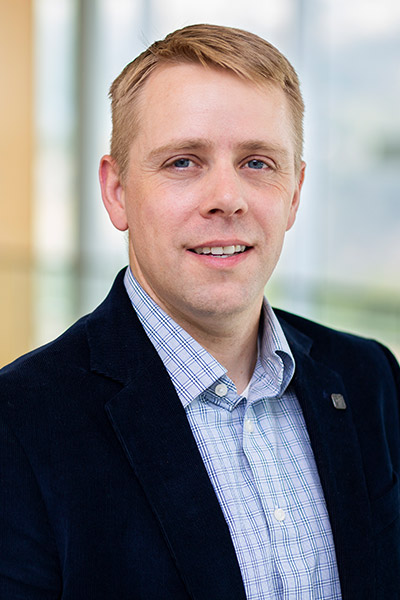
Dr. Zac Sharp is a faculty member in the Department of Civil and Environmental Engineering at Utah State University's College of Engineering, where he conducts research and teaching in hydraulics and fluid mechanics. He is based at the Utah Water Research Laboratory (UWRL), a leading center for water-related research.
- PhD in Civil Engineering (Fluid Mechanics and Hydraulics), Utah State University, 2016
- MS in Civil Engineering (Fluid Mechanics and Hydraulics), Utah State University, 2009
- BS in Civil Engineering (Fluid Mechanics and Hydraulics), Utah State University, 2008
Dr. Sharp's research focuses on numerical and physical hydraulic modeling, with special emphasis on open channel and closed conduit flows, flow measurement, and the impact of non-ideal piping configurations on system performance. His work bridges computational fluid dynamics (CFD) and real-world engineering applications, particularly in dam spillway design and flow calibration.
His recent research projects include physical scale modeling of the McCloud Dam, Lower Baker Dam, Ituango Diversion Tunnel, and Orville Dam spillways, often in collaboration with international partners and engineering firms. These studies support critical infrastructure design and safety assessments.
Dr. Sharp has been recognized with a CEE Faculty Service Excellence Nomination in 2023. His teaching includes graduate courses such as CEE 5550/6550: Hydraulics of Closed Conduits, offered regularly since 2021.
- Jake Douglas
- Shelby Koldewyn
- Taylor Keslor
- Patrick Campana
- Simon Barth
- Patrick Compana
- Drew Stock
He advises a cohort of graduate students in Civil & Environmental Engineering, guiding research in hydraulic systems and modeling. While no grants are explicitly listed, his involvement in multiple high-profile projects suggests active funding and collaboration. Dr. Sharp is also a licensed Professional Engineer in Utah, enhancing the practical relevance of his academic work.
His primary research lab is the Utah Water Research Laboratory (UWRL), where he utilizes both physical modeling facilities and advanced numerical simulation tools to conduct comprehensive hydraulic studies.