About
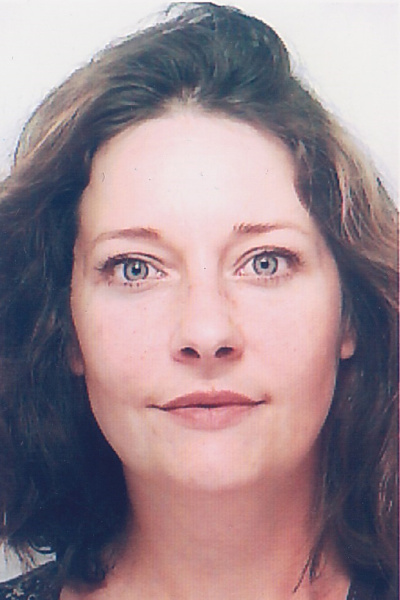
Vera Slaveykova is a full professor in Environmental Biogeochemistry and Ecotoxicology at the Department of F.A. Forel for Environmental and Aquatic Sciences and the Institute for Environmental Sciences at the University of Geneva. She has held leadership roles including Director of the Department and President of the School of Earth and Environmental Sciences. She currently serves on the National Research Council of the Swiss National Science Foundation and represents the University of Geneva in the UNEP Global Mercury Partnership. She is also the Specialty Chief Editor for Biogeochemical Dynamics in Frontiers in Environmental Science.
Research Interests: Her work centers on the behavior and impacts of trace elements, nanoparticles, and microplastics in aquatic systems. Key areas include:
- Speciation and bioavailability of trace elements and nanoparticles
- Aquatic toxicology of inorganic contaminants, nanoparticles, and microplastics
- Transcriptomics and metabolomics in environmental stress responses
- Community ecotoxicology and biodiversity in aquatic ecosystems
Publication Trends: Her recent articles (2023–2025) show a strong focus on mercury speciation and transformations, nanoplastic and nanoparticle toxicity, eco-corona formation, and advanced analytical techniques like single-cell Raman spectroscopy and asymmetric flow field-flow fractionation. There is a clear emphasis on mechanistic understanding of pollutant-organism interactions across multiple biological levels.
Scientific Leadership: She plays a major editorial and advisory role in environmental science, particularly in mercury research and nanoparticle ecotoxicology.
Advising and Grants: She has supervised numerous doctoral students whose theses focus on mercury cycling, nanoparticle bioaccumulation, and ecotoxicological methods. Her research is likely supported by Swiss and international funding bodies, given her leadership in national science councils and global partnerships.
Labs and Teams: She leads a research group focused on biogeochemical dynamics and ecotoxicology, collaborating with experts in analytical chemistry, microbiology, and environmental engineering, particularly through the Institute for Environmental Sciences and the F.A. Forel Department.
Research fields