
About
Todd A. Thompson is a Professor in the Department of Astronomy at The Ohio State University, where he has been a faculty member since 2007. His research spans theoretical astrophysics, with a focus on core-collapse supernovae, gamma-ray bursts, starburst galaxies, and the role of radiation pressure in galactic evolution. He is renowned for developing the millisecond magnetar model for gamma-ray burst central engines and for proposing that galaxy-black hole co-evolution is regulated by radiation pressure on dust.
- Education: Ph.D. in Physics (2002, University of Arizona); B.A. in Physics and Philosophy (1997, Lawrence University)
Research Interests: Theoretical astrophysics, including supernovae mechanisms, r-process nucleosynthesis in neutron star formation, magnetar spindown, starburst galaxies, and the feedback processes linking AGN and star formation. His work integrates analytic, semi-analytic, and numerical methods to study high-energy phenomena and galactic dynamics.
Scientific Contributions: He has published extensively on protoneutron star winds, magnetic field amplification in supernova remnants, cosmic ray emission, and triple compact star systems. His 15 most recent articles reflect expertise in radiation-driven starburst disks, magnetar-powered GRBs, and the FIR-radio correlation in galaxies.
- 2014: Alumni Award for Distinguished Teaching at OSU
- 2009: Alfred P. Sloan Fellowship
Teaching: Has taught courses like Atomic and Radiative Processes in Astrophysics and Electromagnetic Radiation since joining OSU. His pedagogical approach blends advanced coursework with research mentorship.
Research fields
Find Todd A. Thompson elsewhere
Related Searches
You Might Also Like
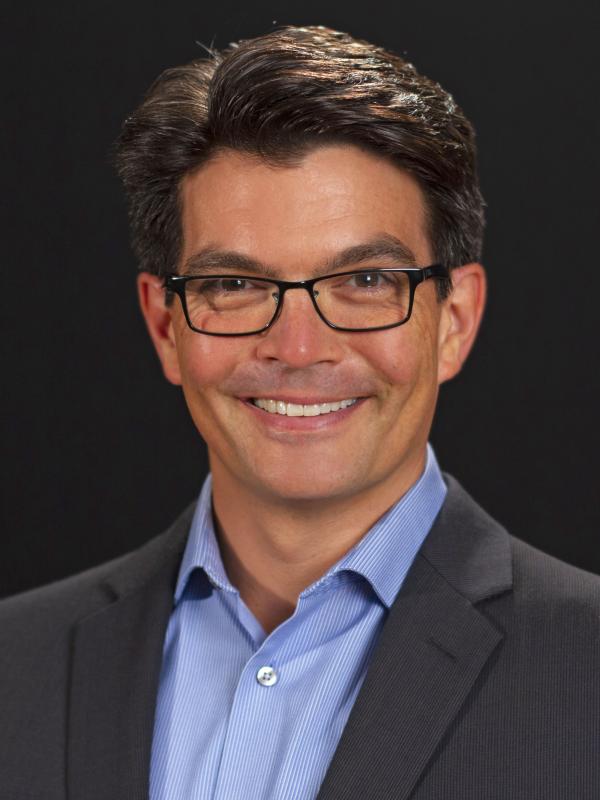 Todd ThompsonOhio State University · Professor
 Laura LopezOhio State University · Associate Professor
 Dave GreenUniversity of Cambridge · Researcher
 Paz BeniaminiCalifornia Institute of Technology (Caltech) · Associate Professor
 Matthew G. BaringRice University · Professor
 Chryssa KouveliotouGeorge Washington University · Professor