
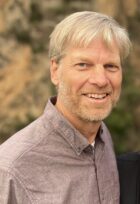
About
Thomas D. Varberg serves as DeWitt Wallace Professor of Chemistry at Macalester College, where he has taught physical and general chemistry since 1993. His research focuses on high-resolution electronic spectroscopy of metal-containing free radicals using advanced laser techniques.
His educational background includes:
- BA in Chemistry from Hamline University (1985)
- PhD in Physical Chemistry from MIT (1990)
- Postdoctoral training at NIST Boulder (1990-92) and University of Oxford as NATO Fellow (1992-93)
Varberg's research centers on unraveling electronic structures of gas-phase transition metal molecules through hyperfine-resolved spectroscopy. His group pioneered the first detection of vanadium hydride spectra, providing critical data for astronomical searches. Current projects investigate VH, VF, TaH, and TaO systems using molecular beam sources and pulsed lasers, with emphasis on spin-orbit coupling and perturbation analysis. His work bridges fundamental chemical physics with potential applications in stellar spectroscopy.
Analysis of his 15 most recent publications reveals dominant themes in transition metal hydride/oxide spectroscopy, hyperfine structure characterization, and educational laboratory development. Over 80% focus on vanadium, tantalum, and gold compounds, with consistent methodology emphasizing high-resolution gas-phase techniques and astronomical relevance.
Scientific recognition includes:
- Henry Dreyfus Teacher-Scholar Award (1998-2003)
- NATO Postdoctoral Fellowship (1992-93)
- Cottrell College Science Award (1994-96)
Varberg has secured over $1.4 million in research funding, primarily through continuous NSF support since 1992. His current $264k RUI grant (2021-2025) supports undergraduate researchers in vanadium and niobium hydride studies. He has mentored more than 35 Macalester students, with undergraduate co-authors appearing on 28 research articles. His sabbaticals in Oxford, Boulder, Vancouver, Sydney, Zurich, Florence, and Cape Town reflect extensive international collaborations.
The Varberg Lab operates advanced molecular beam apparatus with laser ablation sources, hollow cathode discharges, and high-resolution detection systems. The group maintains active collaborations with institutions including Arizona State University and international spectroscopy teams, particularly through the High Resolution Molecular Spectroscopy conference series.
Find Thomas D. Varberg elsewhere
Related Searches
You Might Also Like
- EEric JohnsonGeorgia Southern University · Senior Lecturer
- SStefan TruppeImperial College London · Senior Lecturer
 Phillip SheridanCanisius University · Professor
 Alireza ShayestehState University of New York at Oswego · Assistant Professor
- DDavid AntonelliLancaster University · Professor
- VVladimir BondybeyTechnical University of Munich · Professor