About
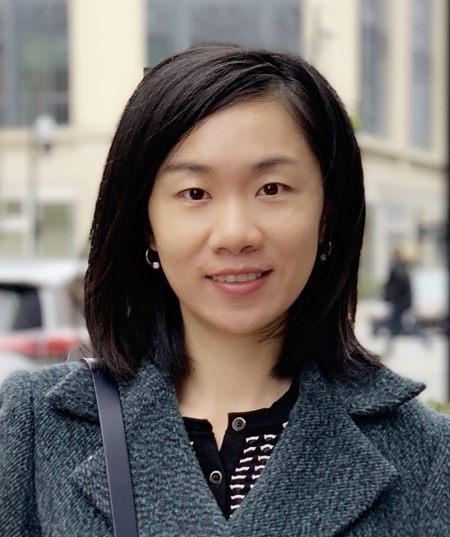
Dr. Shuo Zhang is an Assistant Professor in the Department of Physics & Astronomy at Michigan State University's College of Natural Science. Her research focuses on observational high-energy astrophysics and particle astrophysics, with particular emphasis on supermassive black holes, Galactic cosmic-ray origins, and large dataset analysis. As a member of the Event Horizon Telescope collaboration, she leads X-ray observation campaigns of the Galactic center supermassive black hole and its vicinity.
Dr. Zhang received her educational training at prestigious institutions:
- Ph.D. in Physics, Columbia University, 2016
- B.S. in Engineering Physics, Tsinghua University, 2010
Her research interests span observational high-energy astrophysics and particle astrophysics, focusing on supermassive black holes including Sgr A* flaring activities, outburst history, and radiation in quiescence. She investigates Galactic cosmic-ray origins and exotic physics, particularly TeV electrons and PeV protons pointing to Galactic PeVatrons. Her work constrains MeV-GeV proton/electron populations in the central 1 kpc of the Galaxy and examines supernova remnant and molecular cloud interaction sites.
Dr. Zhang's recent publications reveal a strong emphasis on multi-messenger astronomy, combining neutrino, X-ray, and radio observations to understand cosmic particle acceleration. Her work spans from Galactic center studies of Sgr A* to extragalactic investigations of active galactic nuclei like M87. The research demonstrates increasing sophistication in analyzing complex datasets from multiple observatories including IceCube, ALMA, NuSTAR, and Chandra.
Her notable scientific achievements include:
- NASA Hubble/Einstein Fellowship at Boston University (2019-2020)
- Heising-Simons Fellowship at MIT (2016-2019)
- NASA Earth and Space Science Fellowship for research on Galactic center supermassive black hole
Dr. Zhang's career path demonstrates a steady progression from her doctoral work at Columbia University through prestigious postdoctoral fellowships to her current faculty position. She has developed significant expertise in X-ray observations using the NuSTAR space telescope and has been instrumental in Galactic plane survey campaigns. Her research group combines high-energy photon and neutrino signals from PeVatron candidates to address fundamental questions about cosmic-ray origins and particle acceleration mechanisms.
As a member of the Event Horizon Telescope collaboration, Dr. Zhang contributes to cutting-edge research on black hole physics, utilizing multi-wavelength observations to understand accretion, feedback, and particle acceleration mechanisms around supermassive black holes. Her work bridges observational astronomy with theoretical astrophysics to address some of the most fundamental questions in modern astrophysics.