
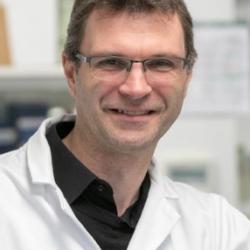
About
Dr Richard Hayward serves as a University Associate Professor in the Microbiology Division of the Department of Pathology at the University of Cambridge and holds the position of Director of Studies and Fellow in Medical Sciences at Trinity College. His research focuses on the molecular mechanisms of bacterial infections, particularly obligate intracellular pathogens.
His work centers on Chlamydia trachomatis, the leading bacterial cause of sexually transmitted diseases globally and trachoma-induced blindness in developing nations. Key research areas include:
- Intracellular biology of pathogen-host interactions
- Type III secretion system (T3SS) effector proteins
- Inclusion biogenesis and membrane compartment reprogramming
- Structural mimicry of eukaryotic functions by bacterial effectors
- Cellular processes subverted during infection (cytoskeletal dynamics, intracellular trafficking)
Hayward employs biochemical, cell biology, and advanced bio-imaging approaches alongside emerging genetic techniques to investigate these processes. His laboratory operates within the Microbiology and Parasitology Division, with active research on Chlamydia's virulence mechanisms involving >50 putative effector proteins.
No scientific awards were explicitly documented in the source materials.
As Director of Studies at Trinity College, Hayward supervises PhD students and contributes to undergraduate medical sciences education. His group maintains active research collaborations within the Department of Pathology's specialized facilities including the Pathogen Cryo-Imaging Facility (PaCIFiC). Current research priorities include deciphering effector protein functions and identifying novel therapeutic targets against neglected tropical diseases.
The Hayward Group operates within the Department of Pathology's Microbiology and Parasitology Division, utilizing advanced imaging and genomic facilities. Current research focuses on characterizing anonymous chlamydial proteins (comprising ~35% of the genome with no homology to known proteins) and their role in pathogenesis.
Find Richard Hayward elsewhere
Related Searches
You Might Also Like
 Irina Saraiva FrancoNOVA University Lisbon · Assistant Professor
 Jaime MotaNOVA University Lisbon · Associate Professor
 Vassilis KoronakisUniversity of Cambridge · Professor
 Agathe SubtilPasteur Institute · Researcher
 Ken FieldsUniversity of Kentucky · Professor
 Joanne EngelUniversity of California, San Francisco · Professor