
About
Raphael Rodriguez serves as a CNRS Research Director and Deputy Director of the Research Unit at Institut Curie in Paris, France, where he leads the Chemical Biology team within the Chemistry Biology of Cancers research unit (UMR3666/UMR1143). His laboratory adopts a 'small molecule approach' to study cell biology at the molecular level, combining synthetic organic chemistry with molecular biology techniques to investigate pathological processes in cancer, inflammation, and aging.
Dr. Rodriguez completed his PhD at the University of Marseille and Oxford, followed by postdoctoral training at Cambridge. His research has revealed fundamental mechanisms of metal ion signaling in cellular processes, particularly focusing on how CD44-mediated uptake of copper and iron regulates cell adaptation. His laboratory discovered that lysosomal iron triggers ferroptosis in cancer cells and that mitochondrial copper sustains NAD(H) redox cycling, promoting epigenetic alterations that influence cell identity. These findings have opened new therapeutic avenues for targeting drug-tolerant cancer cells and inflammatory processes.
His recent publications demonstrate a clear trajectory toward understanding metal ion homeostasis as a central regulator of cellular states. The 2025 Nature paper on lysosomal iron triggering ferroptosis represents a breakthrough in understanding cancer cell vulnerability, while his Chemical Reviews article synthesizes the broader implications of metal ion signaling across biomedical disciplines. His work consistently bridges fundamental chemical principles with biological applications, revealing how universal chemical processes govern cellular behavior in pathological states.
Among his numerous accolades, Dr. Rodriguez received the CNRS Silver Medal (2024), Liliane Bettencourt Prize for Life Sciences (2023), and Klaus Grohe Prize (2022), recognizing his pioneering work at the intersection of chemistry and biology. Previous honors include the Tetrahedron Young Investigator Award, Prix Lacassagne, and Grand Prix Charles Defforey.
As head of his research team, Rodriguez has mentored numerous scientists and developed several novel therapeutic compounds including remodéline (targeting chromatin organization in aging), marmycine, and ironomycine. His laboratory's approach of 'exploiting universal principles of chemistry to impact human medicine' has led to multiple patent applications and the scientific co-founding of several biotechnology companies. Current research focuses on developing first-in-class small molecules that selectively interfere with metal-catalyzed processes in cells to modulate cell adaptation and induce ferroptosis in cancer.
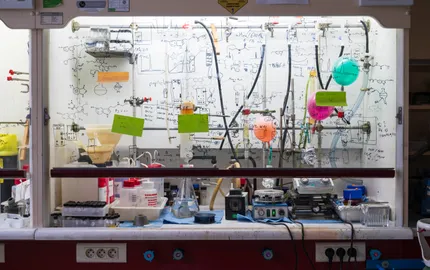
The Chemical Biology laboratory at Institut Curie operates at the forefront of chemical biology research, with state-of-the-art facilities for organic synthesis, cellular imaging, and multi-omics analysis. The team includes chemists, biologists, and pharmacologists working collaboratively to translate fundamental discoveries into therapeutic applications. Their work on metal ion signaling has established a new paradigm for understanding cellular adaptation processes in cancer and inflammation, with several compounds currently in preclinical development.
Find Raphael Rodriguez elsewhere
Related Searches
You Might Also Like
- RRaphael RodriguezInternational Institute of Molecular and Cell Biology · Research Professor
- RRaphaël RodriguezInternational Institute of Molecular and Cell Biology · Research Professor
- RRachid SkoutaUniversity of Massachusetts Amherst · Adjunct Associate Professor
- DDharmaraja AllimuthuIndian Institute of Technology Kanpur (IITK) · Assistant Professor
- TThomas O’HalloranMichigan State University · Professor
- TThomas O'HalloranMichigan State University · Professor