About
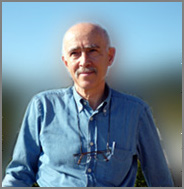
Rachid Alami is a Senior Scientist at CNRS and holds the Academic Chair of Cognitive and Interactive Robotics at the Artificial and Natural Intelligence Toulouse Institute (ANITI) since 2019. He has been with CNRS since 1984, founding and leading the Robotics and InteractionS (RIS) team at LAAS for 10 years and serving as head of the LAAS Robotics Department for 8 years. His extensive career includes coordinating LAAS's Ambient Intelligence initiative and co-chairing the Interactive Robotics SIG at the French Research Group in Robotics for 6 years.
Professor Alami's research focuses on cognitive robotics with emphasis on human-aware motion planning, combined task and motion planning, and multi-robot coordination. His work integrates symbolic reasoning with geometric constraints to create robots capable of operating safely and effectively in human-centered environments. His team has made significant contributions to social navigation algorithms, theory of mind for robots, and human-robot joint action frameworks.
Analysis of his recent publications shows a strong trend toward integrating cognitive models with practical robotics applications, particularly in developing robots that can anticipate human actions and adapt their behavior accordingly. His work increasingly incorporates machine learning approaches to predict action feasibility while maintaining the formal guarantees of traditional planning systems.
- Senior Scientist at CNRS since 1984
- Academic Chair at ANITI since 2019
- Founder of Robotics and InteractionS (RIS) team
- Former head of LAAS Robotics Department
- Member of numerous thesis committees including INSA Lyon (2023)
Professor Alami actively supervises PhD students and leads multiple research projects focusing on human-aware robotics. His lab collaborates extensively with international partners through European research initiatives, providing students with opportunities for international exchanges and collaborative research. The lab maintains strong connections with industry partners to ensure research relevance to real-world applications.
His research group, the Robotics and InteractionS team at LAAS-CNRS, develops advanced algorithms for human-robot interaction, with particular expertise in navigation systems that respect social norms, task planners that anticipate human actions, and multi-robot coordination frameworks for collaborative tasks in shared environments.