About
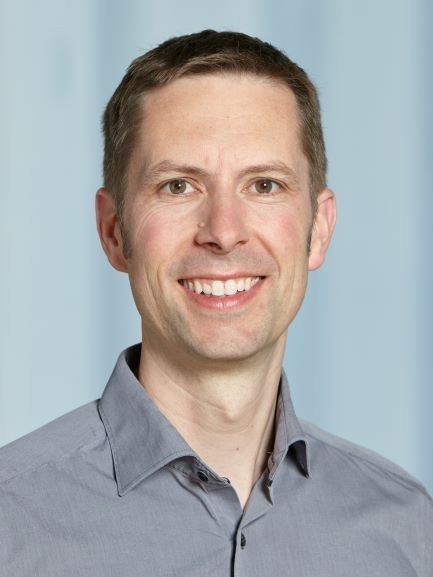
Philipp Simka is a Lecturer at ETH Zurich's Department of Information Technology and Electrical Engineering, working within the Power Systems and High Voltage Lab under Prof. Christian Franck. His academic career spans over a decade with continuous contributions to high voltage engineering research, particularly focusing on circuit breaker technology and SF6 alternatives.
Dr. Simka's primary research interests center around high voltage engineering with specific focus on thermal interruption performance of alternative gases in circuit breakers. His work investigates failure mechanisms in CO2 and other SF6 alternatives, develops experimental methodologies for benchmarking gas performance, and analyzes conductance decay in electrical arcs. His research has significantly contributed to understanding the differences between thermal and hot dielectric failures in alternative gas mixtures.
Analysis of his publication record from 2010-2024 reveals a consistent research trajectory focused on circuit breaker technology evolution toward environmentally friendly alternatives. His work demonstrates increasing sophistication in experimental design for testing SF6 alternatives, with recent publications developing specialized circuit breakers for unbiased comparison of gas performance. The research shows particular attention to thermal interruption processes and failure mechanisms under various test conditions.
Dr. Simka has been actively involved in collaborative research projects, primarily with Prof. Christian Franck's group at ETH Zurich, contributing to advancements in high voltage engineering knowledge. His work appears in reputable journals including IEEE Transactions on Power Delivery, Plasma Physics and Technology, and IEEE Transactions on Plasma Science.
Based at ETH Zurich's Power Systems and High Voltage Lab, Dr. Simka contributes to one of the world's leading research groups in electrical power engineering. The laboratory focuses on developing next-generation high voltage technologies with particular emphasis on environmentally sustainable alternatives to traditional SF6-based equipment.