About
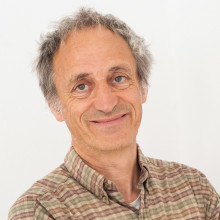
Pascal Xavier is a Professor at the Department of Electrical Engineering and Industrial Computing within the Institute of Technology at the University of Grenoble Alpes. He has been teaching since 1993 at IUT1 Grenoble and leads the DHREAMS research team at the CROMA Laboratory (UMR 5130 CNRS/G-INP/UGA/USMB) since 2018. His current responsibilities include coordinating the European Horizon EIC Challenge project 'DESIRE4EU' for responsible electronics since September 2024.
His educational background includes an Engineering degree from ENSIEG-INPG (1988), DEA in Electrical Engineering (1988), Doctorate in Physics (1994) on 'Study of the microwave response of vortices in thin superconducting layers,' and HDR in Physics (2000) on 'Hyperfrequency devices operating on a thermal principle.'
Xavier's research focuses on sustainable electronics and instrumentation, particularly in microwave frequencies. His work spans RF system design for environmental sciences, multi-physics numerical modeling (electromagnetism and thermal), and RF characterization of materials. Recent publications reveal a strong emphasis on biodegradable substrates (PLA/flax composites) for RF components, bacterial detection using electromagnetic methods, and sustainable PCB development. His team actively investigates moisture effects on cellulosic materials and develops eco-friendly alternatives for electronic applications.
With 15 thesis supervisions and participation in 36 defense juries (including 13 as President), Xavier has significantly contributed to academic mentoring. His collective responsibilities include serving as IEEE T-CPMT Associate Editor, Program Chair for IEEE SPI 2019, and leadership in the 'DAMP' maturation project with SATT Linksium. He previously chaired the 'Optics and Radiofrequencies' specialty for the EEATS Doctoral School (2015-2023) and served on IUT1 Grenoble's Board of Directors (2011-2015).
Xavier leads the DHREAMS team at CROMA Laboratory, which develops sustainable RF technologies and instrumentation. Their work bridges academic research with industrial applications through projects like DESIRE4EU, focusing on reducing electronics' environmental impact while maintaining performance standards.