About
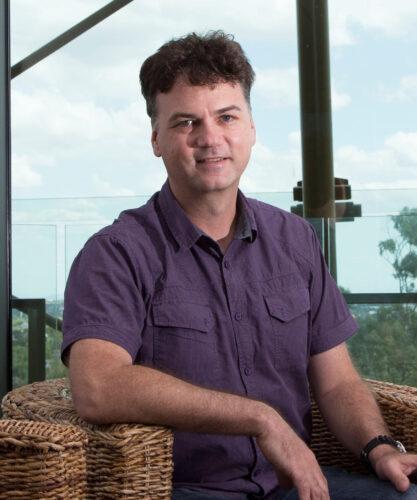
Dr. Mohammad Hassan Ranjbar is a Research Fellow at the Australian Rivers Institute, Griffith University, specializing in freshwater ecological and conservation modelling. His research focuses on developing individual-based models (IBMs) to study harmful cyanobacterial blooms, integrating physical and physiological processes to improve predictive accuracy of bloom dynamics. He holds a PhD in Water Engineering (2022, Griffith University) and an MSc in Environmental Engineering (2014, University of Tehran). His work is supported by Australian Research Council (ARC) grants and involves collaborations with institutions like the University of Western Australia and Virginia Tech. He is an active member of the Global Lake Ecological Observatory Network (GLEON).
Education:
- PhD in Water Engineering, Griffith University (2022)
- MSc in Environmental Engineering, University of Tehran (2014)
Research Interests:
- Individual-based modelling of cyanobacterial blooms
- Lake and reservoir hydrodynamics
- Numerical and ecological modelling of aquatic ecosystems
- Climate change impacts on freshwater systems
- Data-driven environmental management
Key Research Themes: His publications (2016–2025) emphasize mechanistic understanding of bloom dynamics, climate change effects, and adaptive physiological traits of cyanobacteria. Recent work explores nitrogen load estimation, light history impacts, and non-photochemical quenching mechanisms using IBM frameworks.
Teaching & Supervision: Associate supervisor for doctoral projects including "Individual-based modelling for predicting freshwater harmful cyanobacteria blooms" and "Increasing the resilience of catchments to extreme events".
Collaborations: Maintains partnerships with Seqwater (Australia), the University of Western Australia, and international institutions like Virginia Tech and the Leibniz Institute of Freshwater Ecology.