
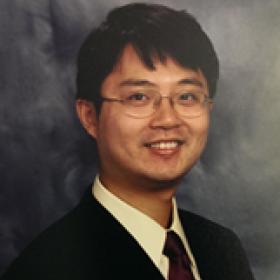
About
Ming Tang is an Assistant Professor in the Department of Chemistry at the College of Staten Island, City University of New York. His research focuses on the structure and function of membrane-associated protein complexes and aggregates, using solid-state nuclear magnetic resonance (NMR) as a primary tool. He investigates how proteins interact with lipids and cofactors within biological membranes, with implications for drug development, neurodegenerative diseases, and infectious conditions.
- PhD in Chemistry, Iowa State University, USA
- BS in Chemistry, Peking University, China
His research interests are centered on structural biology of membrane proteins and protein aggregation. He employs advanced solid-state NMR techniques to elucidate atomic-level details of protein-membrane interactions, particularly in systems like antimicrobial peptides, amyloid fibrils, and redox enzymes such as DsbB. His work bridges biophysics, biochemistry, and pharmaceutical sciences.
The trends in his publications from 2007 to 2018 show a consistent focus on developing and applying solid-state NMR methods to understand how membrane environments influence protein conformation, dynamics, and function. Key themes include peptide-membrane interactions, charge-transfer complexes, lipid-mediated structural changes, and the mechanistic basis of membrane-disrupting peptides. His work contributes to both fundamental science and potential therapeutic applications.
Ming Tang has not been publicly associated with any specific scientific awards or fellowships in the provided text.
He advises graduate students and leads the Ming Tang Research Group at CSI, focusing on biomolecular NMR and structural studies of membrane systems. While specific grants are not listed, his research program is likely supported by federal or institutional funding given the technical demands of NMR-based structural biology. He utilizes advanced NMR instrumentation, as indicated by references to solid-state NMR facilities.
His laboratory, the Ming Tang Group, is engaged in cutting-edge biophysical research, likely involving close collaboration with other structural biologists and access to high-field NMR spectrometers. The group appears to be active in method development and application to biologically relevant membrane protein systems.
Find Ming Tang elsewhere
Related Searches
You Might Also Like
 Wei QiangBinghamton University SUNY · Associate Professor
 Tim DohertyUniversity of Minnesota Twin Cities · Lecturer
 Sebastien PogetCity University of New York · Associate Professor
- MMarkus WeingarthUtrecht University · Associate Professor
- LLukas FreyETH Zurich · Researcher
 Ramamoorthy AyyalusamyTechnical University of Munich · Professor