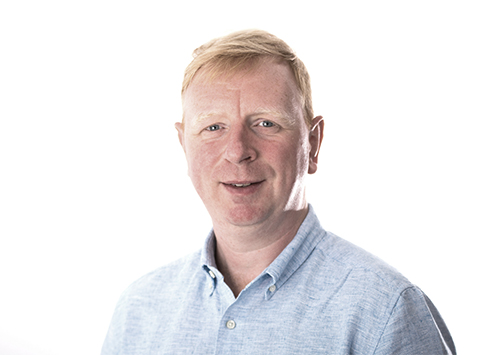
About
Professor Mike Jennings is a faculty member in the Department of Electronic and Electrical Engineering at Swansea University, part of the Faculty of Science and Engineering. His research focuses on wide bandgap semiconductor materials such as silicon carbide (SiC), gallium oxide (Ga2O3), and gallium nitride (GaN), with an emphasis on energy-efficient power electronics applications. He has extensive experience in silicon carbide power electronics since 2003 and has explored the commercial viability of ultra-wide bandgap gallium oxide for power devices. His work involves collaborations with industrial partners to bridge material science and practical device manufacturing.
Research Interests
His expertise encompasses power semiconductor device physics, wide bandgap materials, electrical characterization, and reliability analysis. Key areas include the manufacturability of SiC technologies, interface engineering in MOS devices, and novel trench processing techniques for automotive applications. Recent projects highlight advancements in Ga2O3 materials for high-efficiency power electronics and the development of reliable SiC MOSFETs.
Articles Trends
Recent publications span from 2017 to 2023, focusing on SiC and Ga2O3 device reliability, trench processing innovations, and material interface studies. Notable themes include optimizing breakdown voltage in vertical JFETs, enhancing MOS capacitor stability, and exploring Ga2O3's potential for photovoltaics and transparent electronics.
Scientific Contributions
Professor Jennings has supervised numerous postgraduate research projects, including studies on non-contact film characterization of semiconductors and advanced silicon carbide plasma etch processes. His work integrates academic and industrial insights to address challenges in power electronics efficiency and scalability.
Labs & Teams
He contributes to research teams at Swansea University's facilities, leveraging partnerships with industry to advance semiconductor technologies. His involvement in the Morgan Advanced Studies Institute (MASI) and collaborations highlight his role in interdisciplinary innovation.