
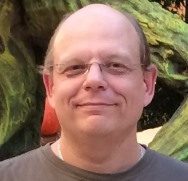
About
Michael Hendzel is an Adjunct Professor in the Department of Oncology, Faculty of Medicine & Dentistry at the University of Alberta. His laboratory is located in the Medical Sciences Building, where he conducts research on nuclear structure, chromatin dynamics, and DNA repair mechanisms. He collaborates with the Wuest Laboratory and employs advanced microscopy and molecular biology techniques.
His research focuses on the organization and function of nuclear compartments, particularly in response to DNA double-strand breaks. He investigates the role of the ATM kinase in DNA damage signaling and how compartmentalization influences substrate phosphorylation. A major technical focus is the development of 'color' transmission electron microscopy using electron spectroscopic imaging (ESI) and novel fluorinated/boronated probes to visualize transcription and protein-nucleic acid interactions at high resolution.
The recent publications reflect a strong emphasis on DNA repair pathways, chromatin remodeling, ubiquitin signaling, and nuclear architecture. His work bridges biochemistry, molecular imaging, and cancer biology, with implications for understanding therapy resistance in cancer stem cells.
- BMI1 and Polycomb Complex in DNA repair
- ATM kinase compartmentalization
- Development of ESI for molecular visualization
- Role of RNF138 and RYBP in DNA repair regulation
- Nuclear actin dynamics
- Post-translational modifications in chromatin
Scientific Awards:
No awards or honors are mentioned in the provided text.
Dr. Hendzel mentors a team of postdoctoral fellows, research associates, and technicians. His lab includes Dr. Faissal Ouenzar, Dr. Ajit Sharma, Dr. Zhigang Jin, and Dr. Hilmar Strickfaden. He has secured collaborative funding, particularly with the Wuest Laboratory, for developing advanced imaging technologies. While specific grants are not listed, the scope and technical innovation of his projects suggest significant research support.
The laboratory actively contributes to understanding how nuclear organization regulates genome function, with potential applications in cancer therapeutics and diagnostic imaging. The integration of biochemical assays with cutting-edge microscopy positions the lab at the forefront of structural cell biology research.
Find Michael Hendzel elsewhere
Related Searches
You Might Also Like
 Thomas HofmannMax Planck Institute for Chemistry · Professor
 Susan Patricia Lees-MillerUniversity of Calgary · Professor
 Andreas LadurnerLudwig Maximilian University of Munich · Professor
 Claudia LukasUniversity of Copenhagen · Professor
 Susan Jean MarriottBaylor College of Medicine · Professor
 Chris ToselandUniversity of Sheffield · Professor