

About
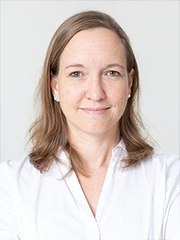
Meytal Landau is a Professor at the University Medical Center Hamburg-Eppendorf (UKE) and a Lead Scientist at the Deutsches Elektronen-Synchrotron DESY's Centre for Structural Systems Biology (CSSB). She also serves as an Associate Guest Group Leader at the European Molecular Biology Laboratory (EMBL) in Hamburg and as an Associate Professor at the Technion – Israel Institute of Technology. Her work bridges structural biology, microbiology, and biomedical research, focusing on the structural characterization of amyloid fibrils with implications for understanding infectious diseases and neurodegenerative conditions.
Her educational background includes:
- PhD in Biochemistry from Tel-Aviv University (2002-2007)
- M.Sc. in Neurobiology (Summa cum laude) from Tel-Aviv University (2000-2002)
- BSc in Pharmacy (Magna cum laude) from The Hebrew University, Jerusalem (1995-2000)
Landau's research focuses on the structural biology of amyloid fibrils, particularly exploring both pathological and functional amyloids across different biological contexts. Her lab made the groundbreaking discovery of cross-α amyloid structures, a novel form of amyloid architecture previously thought not to exist. She investigates how microbial amyloids contribute to bacterial virulence and how antimicrobial peptides can form amyloid structures with protective functions. Her work has revealed connections between amyloid structures in human diseases and microbial systems, suggesting potential evolutionary links between host defense mechanisms and neurodegenerative conditions.
Landau's recent publications demonstrate a consistent focus on the structural characterization of amyloid fibrils using cutting-edge techniques including X-ray crystallography and cryo-EM. Her work spans microbial amyloids involved in bacterial virulence, antimicrobial peptides with amyloid-forming capabilities, and the implications of these structures for understanding disease mechanisms. A notable trend is the exploration of structural polymorphism in amyloids, particularly the discovery and characterization of cross-α structures alongside traditional cross-β amyloids, revealing how subtle structural differences encode diverse biological functions.
Her significant scientific achievements have been recognized with:
- Biophysical Society's Margaret Oakley Dayhoff Award (2019)
- Wolf Foundation's Krill Prize for Excellence in Scientific Research (2018)
Professor Landau leads an active research group comprising postdoctoral scientists, PhD students, and technical staff. Her lab has secured funding from multiple prestigious sources including the Technion, Israel Science Foundation, Forschungskooperation Niedersachsen – Israel, Volkswagenstiftung, and Cure Alzheimer's Fund. Past funding has come from the U.S.-Israel Binational Science Foundation, the Israel Ministry of Science, Technology and Space, DIP – Deutsch-Israelische Projektkooperation, and the Marie Curie Reintegration Grant, among others. Her research program bridges basic science with potential therapeutic applications targeting amyloid-related diseases and bacterial infections.
Landau leads the Landau Lab, which is part of the Centre for Structural Systems Biology (CSSB) in Hamburg. The lab utilizes advanced research infrastructure including the PETRA III synchrotron at DESY. Her team includes multiple postdoctoral researchers, PhD students, and technical staff working collaboratively on structural characterization of amyloid fibrils. The lab maintains strong international collaborations, particularly with institutions in Israel and the United States, reflecting Landau's dual academic appointments in Germany and Israel.
Find Meytal Landau elsewhere
Related Searches
You Might Also Like
- LLinda LandauSan José State University · Lecturer
 Deborah LandauNew York University · Professor
 Caroline BarischUniversity of Hamburg · Professor
 Keren LaskerIrell and Manella Graduate School of Biological Sciences · Assistant Professor
 Tal DaganChristian-Albrechts-University zu Kiel · Professor
- EEhud GazitTel Aviv University · Professor