

About
Dr. Mark Hudson is a prominent researcher at the Max Planck Institute for the Science of Human History in Jena, Germany, where he leads work in the Language and the Anthropocene Research Group. He is also affiliated as Chercheur associé with the Institut d'Asie Orientale at ENS de Lyon in France. His research bridges archaeology, environmental humanities, and linguistic studies with a particular focus on East Asian prehistory.
- Max Planck Institute for the Science of Human History, Jena
- Institut d'Asie Orientale, ENS de Lyon (Chercheur associé)
Hudson's research interests focus on the intersection of archaeology, environmental change, and human cultural development, particularly in Japan and East Asia. His work examines the Jōmon period, the Anthropocene, language dispersal patterns, and the relationship between agricultural development and linguistic evolution. He investigates how human societies have adapted to environmental changes over millennia and challenges notions of Japanese exceptionalism in pre-industrial environmental impact. His approach combines archaeological evidence with linguistic and genetic data to provide interdisciplinary insights into human history.
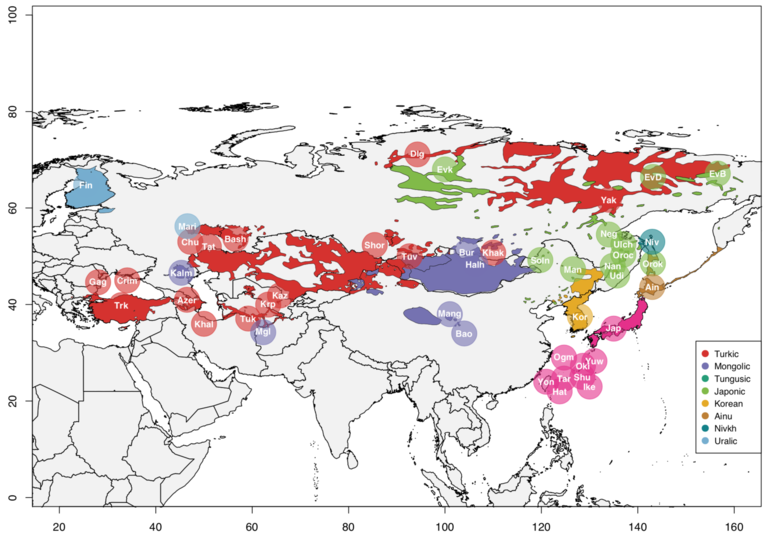
Analysis of Hudson's recent publications reveals a strong focus on interdisciplinary approaches connecting archaeology, linguistics, and genetics. His work frequently examines the relationship between agricultural development and language dispersal in East Asia, with particular attention to the Transeurasian language family. Hudson's research consistently challenges simplistic narratives about human-environment interactions, demonstrating through archaeological evidence that pre-industrial Japan experienced significant anthropogenic impacts comparable to global patterns. His work on the 3000-year-old shark attack victim represents innovative bioarchaeological methods combining skeletal analysis with 3D modeling.
Hudson has published extensively in top-tier journals including Nature, iScience, and Journal of World Prehistory. His research has been widely cited, with his Nature paper on Transeurasian languages receiving over 6,200 views. He has contributed to major reference works including the Cambridge World History of Violence and Routledge Handbook of the Bioarchaeology of Climate and Environmental Change.
As a researcher at the Max Planck Institute, Hudson collaborates with numerous international scholars across disciplines. His work involves significant data collection efforts, such as the ARCHIPELAGO Archaeological Isotope Database for the Japanese Islands, which compiles 1476 entries of human bone and hair carbon and nitrogen stable isotopes from Japanese archaeological sites spanning from the Upper Palaeolithic to the mid-nineteenth century. His research often involves fieldwork in Japan and China, examining sites from the Jōmon period through later historical periods.
Hudson's work connects with broader themes of environmental sustainability and resilience, examining how ancient societies navigated environmental challenges. His research group, Language and the Anthropocene, explores the deep historical roots of human impacts on Earth systems, challenging conventional periodizations of the Anthropocene that focus solely on the Industrial Revolution or post-1945 'Great Acceleration'.
Find Mark Hudson elsewhere
Related Searches
You Might Also Like
- MMartine RobbeetsMax Planck Institute of Geoanthropology · Professor
- MMargherita ColucciMax Planck Institute of Geoanthropology · Research Fellow
 Nataliia HüblerMax Planck Institute for Evolutionary Anthropology · Researcher
- AAlexander F. BlackwoodMax Planck Institute of Geoanthropology · Researcher
- OOHASHI JunThe University of Tokyo · Professor
 Christian LeipeFree University of Berlin · Researcher