About
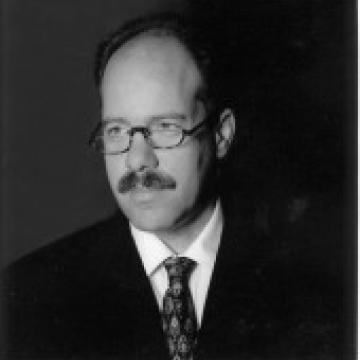
Leo Ching serves as Professor of Asian and Middle Eastern Studies and Dean of the Arts & Humanities at Duke University's Trinity College of Arts & Sciences, positions he has held since 2020 and 2024 respectively. His academic leadership extends across multiple departments including Asian & Middle Eastern Studies, Cultural Anthropology, Literature, Political Science, and Visual and Media Studies.
Dr. Ching received his academic training at premier institutions:
- B.A. from Occidental College (1985)
- M.A. from University of California, Los Angeles (1988)
- Ph.D. from University of California, San Diego (1994)
His research focuses on colonial discourse studies, postcolonial theory, Japanese mass culture, and theories of globalization and regionalism, with particular expertise in China, Japan, and Taiwan. Ching has published extensively in prestigious journals including boundary 2, positions, and Public Culture, examining how colonial histories continue to shape contemporary East Asian cultural and political landscapes. His scholarship often explores decolonial perspectives on regional dynamics, challenging conventional nation-state frameworks.
Ching's recent publications reveal a growing emphasis on archipelagic perspectives and oceanic methodologies in Asian studies, moving beyond traditional land-based conceptualizations of the region. His work increasingly addresses the complex interplay between China's rise and regional cultural formations, examining how power dynamics are negotiated through popular culture, historical memory, and geopolitical imaginaries.
As Dean of the Arts & Humanities, Ching oversees significant institutional initiatives, including a grant from the Mary Duke Biddle Foundation for Supporting the Arts in Trinity College (2025). His teaching portfolio includes diverse courses such as AMES 605: East Asian Cultural Studies, AMES 188FS: Games and Culture, and various cross-listed courses in Cultural Anthropology, Literature, and Visual and Media Studies.
Ching maintains an active scholarly presence with regular contributions to major conferences and media outlets, as evidenced by his recent appointment as Dean being featured in university news (June 14, 2024) and his commentary on decolonization (February 11, 2022). His work bridges theoretical sophistication with contemporary relevance, making significant contributions to both academic discourse and public understanding of East Asian cultural politics.