

About
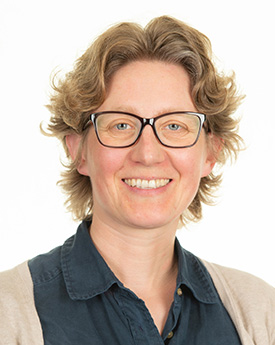
Laura Diprossimo is a Visiting Researcher in the Department of Psychology at Lancaster University and a WiRe Postdoctoral Fellow at the University of Münster, Germany. Her research focuses on language acquisition and socio-cognitive development in children, with particular interest in how contextual factors shape developmental trajectories.
She received her B.Sc. in Speech and Language Pathology from the University of Milan and her M.Sc. in Cognitive Neuroscience from the Center for Mind/Brain Sciences at the University of Trento, Italy. Prior to her doctoral studies, she worked as a predoctoral researcher at the Max Planck Institute for Human Cognitive and Brain Sciences in Leipzig, investigating basic cognitive mechanisms underlying early language acquisition using non-invasive optical brain imaging.
Dr. Diprossimo completed her PhD in Psychology at Lancaster University as a Marie Skłodowska-Curie Early-Stage Researcher under Professors Kate Cain and Margriet Groen. Her doctoral research investigated word learning from written contexts in early childhood, focusing on the role of book format, scaffolding features, and child characteristics in the word learning process as part of the Early Language Development in the Digital Age (e-LADDA) project.
Her current research examines the links between social contingency, vocalizations, and early vocabulary development. Her recent publications demonstrate a strong focus on individual differences in language learning across various media formats, bridging cognitive psychology, linguistics, and educational technology with implications for supporting language development across diverse populations.
Her scientific achievements include:
- Best Poster Audience Award from the 7th Summer Neurolinguistic School, Center for Language and Brain, HSE, Moscow
- Marie Skłodowska-Curie Innovative Training Network Fellowship
Currently supported by the WiRe Postdoctoral Fellowship at the University of Münster, Dr. Diprossimo collaborates with Prof. Dr. Joscha Kärtner's Developmental Psychology Lab to examine children's active contribution to their language development. Her work has been funded by the Marie Skłodowska-Curie ITN on Early Language Development in the Digital Age (e-LADDA) and continues to explore how digital technologies impact language acquisition processes in young children.
Find Laura Diprossimo elsewhere
Related Searches
You Might Also Like
 Margriet GroenLancaster University · Senior Lecturer
- IIbrahim El ShemyNorwegian University of Science And Technology · Research Fellow
- MMireille BabineauUniversity of Toronto · Assistant Professor
- MMireia Marimon TarterPompeu Fabra University · Research Fellow
 Louah SirriLancaster University · Researcher
- JJill LanyLancaster University · Senior Lecturer