
About
Karl Forchhammer is a full Professor at the University of Tübingen, chairing the Department of Microbiology/Organismic Interactions within the Interfaculty Institute of Microbiology and Infection Medicine Tübingen (IMIT). He received his education at Ludwig-Maximilians-Universität München, earning a Doctorate in Microbiology with a thesis on selenocysteine biosynthesis in Escherichia coli, for which he received the VAAM Promotionspreis in 1992. His academic career includes a postdoctoral fellowship at the Institut Pasteur and associate professorship at the Justus-Liebig-Universität Giessen (1999-2007).
- Current Roles:
- Chair of Microbiology/Organismic Interactions, University of Tübingen
- Editor for FEBS Journal
- Scientific Advisory Board member, Max Planck Institute for Terrestrial Microbiology
- DFG panel member (Microbiology, Virology, Immunology)
His research focuses on:
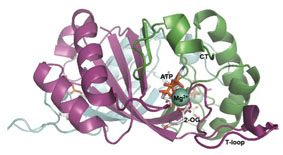
- PII Signal Transduction Proteins: Molecular mechanisms of 2-oxoglutarate sensing, ATP/ADP binding dynamics, and regulatory roles in carbon-nitrogen balance across bacteria, archaea, and chloroplasts.
- Nitrogen Starvation Response: Molecular basis of chlorosis in Synechocystis and Synechococcus species, including nblA gene regulation and sodium bioenergetics during dormancy.
- Metabolic Engineering Applications: Development of FRET sensors for metabolite detection and optimization of polyhydroxybutyrate (PHB) production in cyanobacteria.
- Carbon Regulation Systems: Structural analysis of SbtB redox-sensitive loops, c-di-AMP signaling in diurnal metabolism, and PirC-mediated phosphoglycerate mutase inhibition.
- Technological Innovations: Creation of SCAGE method for cyanobacterial transport and development of magnetic bead immunoassays for SARS-CoV-2 detection.
Scientific contributions include:
- Discovery of plant kingdom's first glutamine sensory mechanism through PII evolution
- Elucidation of PII-NAGK functional conservation over 1.2 billion years
- Identification of 2-oxoglutarate binding site in PII proteins
- Demonstration of sodium bioenergetics' critical role in cyanobacterial developmental transitions
- Development of metabolite FRET sensors for real-time metabolic monitoring
- Establishment of PHB production platforms without nitrogen starvation
His lab has trained 15+ PhD students and 3+ PostDocs, with collaborations spanning microbial biotechnology, structural biology, and environmental systems. Recent publications highlight:
- 2025 work on natural microbial community-enhanced bioplastic production
- 2024 structural studies of PII-regulated enzymes
- 2023-2024 investigations into glycogen metabolism and redox regulation
- 2022-2023 studies on c-di-AMP signaling and toxin-antitoxin systems
Find Karl Forchhammer elsewhere
Related Searches
You Might Also Like
- SSofía Doello RomanUniversity of Tübingen · Researcher
- FFRANCISCO JAVIER FLORENCIO BELLIDOUniversity of Seville · Professor
- AAndrew GatesUniversity of East Anglia · Associate Professor
- BBernhard KrismerUniversity of Tübingen · Researcher
- JJavier Espinosa ManzanoUniversity of Alicante · Associate Professor
 Elke DittmannUniversity of Potsdam · Professor