About
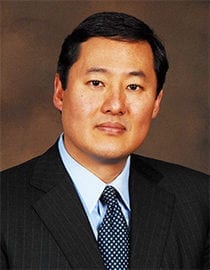
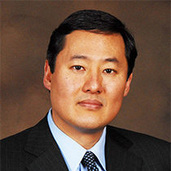
John Yoo is the Emanuel S. Heller Professor of Law at the University of California–Berkeley School of Law (Boalt Hall), a Visiting Fellow at the Hoover Institution, and a visiting scholar at the American Enterprise Institute. He has served in all three branches of government, including as Deputy Assistant Attorney General in the Office of Legal Counsel during the George W. Bush administration (2001-2003), general counsel of the US Senate Judiciary Committee under Chairman Orrin Hatch, and as a law clerk for Supreme Court Justice Clarence Thomas and Judge Laurence Silberman.
Yoo's research focuses on constitutional law, executive power, and national security law. His scholarly work emphasizes originalism in constitutional interpretation and the expansion of presidential authority, particularly in matters of national security. He has held visiting professorships at numerous institutions worldwide, including Keio Law School in Japan, Seoul National University, Chapman Law School, the University of Chicago, and the Free University of Amsterdam.
His publications reveal a consistent scholarly trajectory examining the boundaries of executive power across historical contexts, with recent work focusing on presidential immunity, Supreme Court reform, and constitutional challenges to government actions. Yoo has co-hosted the Pacific Century podcast addressing developments in China and Asia, and LawTalk with Richard Epstein and Troy Senik discussing legal and political developments.
- Paul M. Bator Award for excellence in legal scholarship and teaching
- Fulbright Distinguished Chair in Law at the University of Trento
- Author of multiple books including Defender in Chief: Donald Trump's Fight for Presidential Power (2020) and Striking Power: How Cyber, Robots, and Space Weapons Change the Rules for War (2017)
Yoo received his B.A., summa cum laude, in American history from Harvard University and his J.D. from Yale Law School, where he was an articles editor of the Yale Law Journal. His commentary appears frequently in major media outlets where he addresses constitutional questions raised by contemporary political controversies, particularly those involving presidential authority and separation of powers issues.