About
Hector Rasgado-Flores serves as Professor in the Department of Physiology and Biophysics at Rosalind Franklin University's Chicago Medical School, where his laboratory investigates cellular membrane transport mechanisms and volume regulation under physiological and pathophysiological conditions. His work bridges basic science with clinical applications in cystic fibrosis and neuroscience.
His primary research focuses on ion translocation (Ca$$^{2+}$$, Mg$$^{2+}$$, H$$^{+}$$, amino acids) using voltage-clamped barnacle skeletal muscle cells and intact muscle preparations. Collaborations with Dr. Robert Bridges explore hyperosmotic challenges in cystic fibrosis, while work with Dr. Alicia Ortega examines lung surfactants, and research with Dr. Richard Hawkins investigates taurine transport across the blood-brain barrier. His unique interdisciplinary interest examines music's physiological basis as a mood modifier.
Publication analysis reveals consistent focus on cellular ion dynamics since 2004, evolving from skeletal muscle studies to cystic fibrosis therapeutics (2013) and neuroscience applications (2012-2015), while maintaining his signature integration of music and physiology through projects like the "Body Notes" symphonic suite.
Scientific recognition includes:
- Santiago Ramon y Cajal Professor (2011) by Mexico's National Autonomous University
- Two Golden Apple Teaching Awards
- Master Teacher designation (2012) from Rosalind Franklin University
As an educational innovator, he developed the INSPIRE program (funded by Kerr Foundation and Abbvie) to advance underrepresented minority students in medicine, founded the Society of Latin American Biophysicists, and directed the American Physiological Society's Latin American initiative supporting 30+ symposia across 8 countries. His laboratory maintains active international collaborations while pioneering methods in cellular electrophysiology.
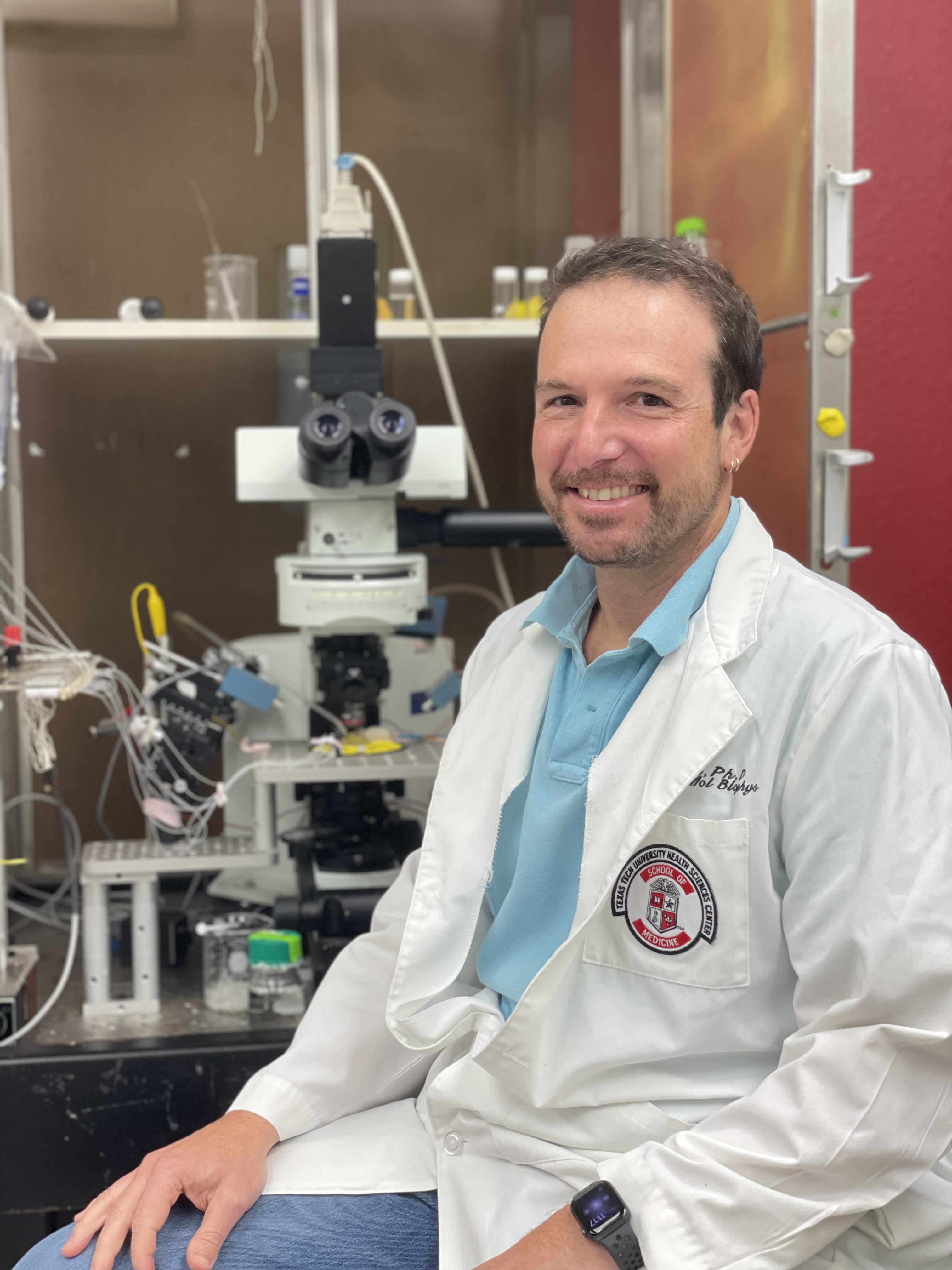
His research facility in Basic Sciences Building 3.266 utilizes dual experimental approaches: internally perfused voltage-clamped cells for controlled parameter measurement and intact muscle preparations for force/pressure/volume analysis during stimulation.