
About
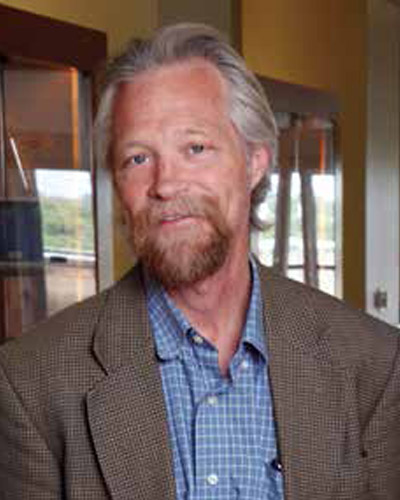
Hans W. Heidner is a Professor and Assistant Department Chair in the Department of Molecular Microbiology and Immunology at the University of Texas at San Antonio (UTSA), within the College of Sciences. His research is focused on alphaviruses, including their replication in vertebrate and mosquito cells, and the development of alphavirus-based vectors for targeted delivery and vaccine applications.
Dr. Heidner earned his Ph.D. in Microbiology from the University of California, Davis, an M.S. in Veterinary Microbiology from North Carolina State University, and a B.S. in Biochemistry from California Polytechnic State University.
His research interests include virology, vaccine development, recombinant viral vectors, and infectious diseases. He investigates how alphaviruses can be engineered to target specific cell types, such as tumor cells, and to express vaccine antigens from a broad range of pathogens. His lab explores methods to enhance both innate and adaptive immune responses through viral vector design.
The recent publications highlight a strong focus on alphavirus vector engineering, viral replication mechanisms, and vaccine efficacy. Themes include the design of Sindbis virus vectors for antigen expression and cell targeting, the use of replicon particles for equine arteritis virus vaccination, and enhancement of vaccine responses through immune modulators like TLR5 ligands.
There are no scientific awards listed in the provided materials.
Dr. Heidner leads the Heidner Lab at UTSA, which is affiliated with the South Texas Center for Emerging Infectious Diseases (STCEID). His research involves collaborative projects on viral pathogenesis, vaccine development, and host-pathogen interactions. While no specific grants are mentioned, his work suggests funding support for infectious disease research and virology. He advises research team members and contributes to training in molecular virology and immunology.
The Heidner Lab is actively involved in studying arboviruses and their applications in biotechnology and medicine. The lab uses reverse genetics, molecular cloning, and animal challenge models to evaluate vaccine candidates and viral vector systems. It collaborates with experts in veterinary medicine, immunology, and microbiology to advance understanding of viral diseases and develop novel interventions.
Find Hans W. Heidner elsewhere
Related Searches
You Might Also Like
- CCorinne GeertsemaWageningen University & Research · Researcher
 Jennifer (Jenny) HydeUniversity of Washington · Assistant Professor
- BBarry-Lee WaartsUniversity of Groningen · Researcher
 Vicki L. Traina-DorgeTulane University · Professor
 Drishya KurupThomas Jefferson University · Researcher
 Guoquan ZhangUniversity of Texas at San Antonio · Professor