
About
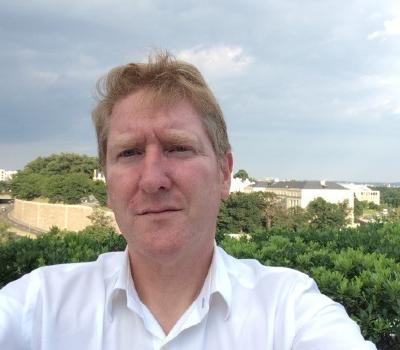
Gregory Rorrer is a Professor in the Department of Chemical, Biological, and Environmental Engineering at Oregon State University's College of Engineering. His research focuses on engineered systems for photosynthetic organisms, targeting sustainable applications in bioenergy, carbon management, and nanotechnology.
Dr. Rorrer earned his B.S. in Chemical Engineering from the University of Michigan, Ann Arbor (1983) and Ph.D. in Chemical Engineering from Michigan State University (1989).
His research program centers on marine biotechnology, specifically cultivating diatoms and macroalgae for biofuel production, ocean-based carbon sequestration, pharmaceutical biosynthesis, environmental remediation, and biofabrication of nanostructured materials. The Rorrer Lab pioneers techniques for high-density algal growth and exploits diatom biosilica's unique optical properties for advanced sensing applications, bridging environmental engineering with nanotechnology to address global sustainability challenges.
Analysis of his recent publications reveals a strategic convergence of marine algae cultivation with carbon capture technologies and diatom-based nanomaterial innovation. His work demonstrates increasing integration of photobioreactor engineering with molecular-scale biosilica modification, particularly for biosensors capable of single-molecule detection in environmental and biomedical contexts.
Dr. Rorrer's scientific contributions have been recognized through significant honors:
- U.S. Department of State Fulbright Scholar, Austria (2022)
- Program Director, U.S. National Science Foundation (2014-2016)
- OSU College of Engineering Research Award (2006)
- Loyd Carter Award for Outstanding and Inspirational Teaching (1993)
As principal investigator of the NSF EFRI-PSBR grant 'The Diatom-based Photosynthetic Biorefinery,' he directs major research initiatives advancing algal biotechnology. His textbook 'Fundamentals of Momentum, Heat and Mass Transfer' remains a cornerstone engineering education resource, reflecting his dual commitment to research excellence and pedagogical innovation.
The Rorrer Lab maintains specialized photobioreactor facilities for marine microalgae and macroalgae cultivation, featuring raceway ponds, tumble tanks, and advanced monitoring systems. Current projects focus on optimizing carbon sequestration in seaweed farms and developing commercializable diatom-based biosensors for explosives detection and cardiovascular biomarker screening.
Find Gregory Rorrer elsewhere
Related Searches
You Might Also Like
- PPeter RalphUniversity of Queensland · Professor
- MMarcel JanssenWageningen University & Research · Assistant Professor
- VVera CardosoInternational Iberian Nanotechnology Laboratory · Research Fellow
- AAlonso ZavaferBrock University · Assistant Professor
 Hans Christian EilertsenUiT The Arctic University of Norway · Professor
- MMeltem DALAYEge University · Professor