
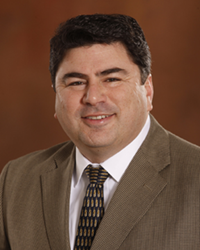
About
Gregory Colores is an Associate Professor in the Department of Biology at Central Michigan University, where he has been a faculty member since 2002. He is affiliated with the College of Science and Technology and leads the Colores Lab, focusing on microbial ecology and bioremediation. His research integrates molecular biology, physiology, and soil chemistry to study microorganisms capable of degrading toxic environmental contaminants.
Education:
- B.S. in Microbiology, Northern Arizona University, 1991
- Ph.D. in Biology, University of Colorado, 1998
- Postdoctoral Research, Montana State University, 1998–2002
His research interests center on microbial responses to environmental pollutants, particularly in agricultural and natural ecosystems. Key areas include atrazine degradation, hydrocarbon metabolism in Yellowstone, and microbial community dynamics in contaminated soils. His work employs molecular techniques such as PCR and DGGE to analyze microbial diversity and function.
The recent publications highlight a consistent focus on bioremediation, microbial competition, and environmental toxicology, particularly involving herbicides and polycyclic aromatic hydrocarbons. These studies often involve both field and laboratory approaches to understand microbial adaptation and degradation efficiency.
Scientific Awards and Honors:
- NSF Minority Postdoctoral Research Fellowship (declined)
- Equity and Excellence Award, University of Colorado
- National Hispanic Scholarship Fund
- Best Paper Award, ASM Michigan Branch (2003)
- Nomination for Karen Morehouse Best Paper Award (1999)
Dr. Colores has advised numerous graduate and undergraduate students and secured significant research funding from NSF, USDA, EPA, and CMU. He serves as Co-Director of the DNA Sequencing and Analysis Core Facility and chairs the Institutional Biosafety Committee. His professional service includes NSF review panels and active membership in the American Society for Microbiology and SACNAS.
His lab has conducted extensive work on microbial communities in diverse environments, including alvars, bogs, and hydrocarbon seeps, contributing to both fundamental microbial ecology and applied bioremediation strategies.
Find Gregory Colores elsewhere
Related Searches
You Might Also Like
 Thierry NADALIGUniversity of Strasbourg · Lecturer
- AAndreas Paul LoibnerUniversity of Natural Resources and Life Sciences Vienna · Associate Professor
 Silvia RossbachWestern Michigan University · Professor
 Frank LoefflerUniversity of Tennessee · Professor
 Antonio BucciUniversity of Molise · Associate Professor
 Melanie BeazleyUniversity of Central Florida · Associate Professor