
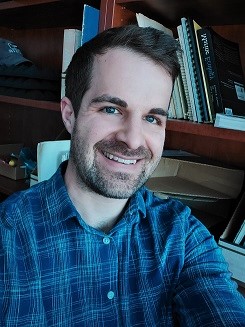
About
Graham Raby is an active Assistant Professor in the Department of Biology at Trent University, where he leads the Integrative Fish Ecology Lab. His research integrates ecophysiology, behavioural ecology, and fisheries science to address conservation challenges in freshwater ecosystems. Based in the Life and Health Sciences Building (LHS D236 office, LHS D204 lab), he teaches advanced courses including Fish Ecology (BIOL 3140H) and Advanced Ecology (BIOL 3380H).
Dr. Raby earned his B.Sc. from Trent University followed by a Ph.D. from Carleton University. His educational background established the foundation for his research on fish-environment interactions, particularly focusing on how physiological and behavioural mechanisms influence fish responses to anthropogenic stressors.
His primary research interests span metabolic ecology, thermal biology, conservation physiology, and fisheries management. The lab specializes in biotelemetry, biologging, respirometry, and physiological biopsy to study thermal tolerance, movement ecology, and fisheries capture effects. Current work examines climate change impacts on freshwater fishes, particularly how winter thermal regimes and warming events affect fish survival and behavior.
Analysis of his recent publications reveals a strong emphasis on methodological innovation in fish physiology, with recurring themes in thermal performance metrics (CTmax), bioenergetics modeling, and telemetry applications. His work increasingly integrates sex-specific and ontogenetic perspectives, particularly in walleye and brook trout systems, while maintaining a consistent focus on conservation applications.
Dr. Raby actively collaborates with fisheries managers, indigenous communities, and international researchers. He recruits graduate students and post-docs for projects addressing real-world conservation challenges, emphasizing partnerships with knowledge users to ensure research relevance. His lab maintains strong connections with Canadian fisheries agencies and international conservation groups.
The Integrative Fish Ecology Lab utilizes advanced facilities including respirometry systems, biotelemetry tracking, and field equipment for freshwater ecosystem studies. The team employs a multi-tool approach combining lab experiments with wild fish monitoring to generate actionable conservation insights.
Find Graham Raby elsewhere
Related Searches
You Might Also Like
 Bruce TuftsQueen's University at Kingston · Professor
 Thomas KlefothBremen University of Applied Sciences · Professor
 Tim C. TheisenFlorida Atlantic University - Boca Raton · Lecturer
 Ken JeffriesUniversity of Manitoba · Assistant Professor
 Steven J. CookeUniversity of Nebraska-Lincoln · Professor
 Eduardo MartinsUniversity of Northern British Columbia · Associate Professor