About
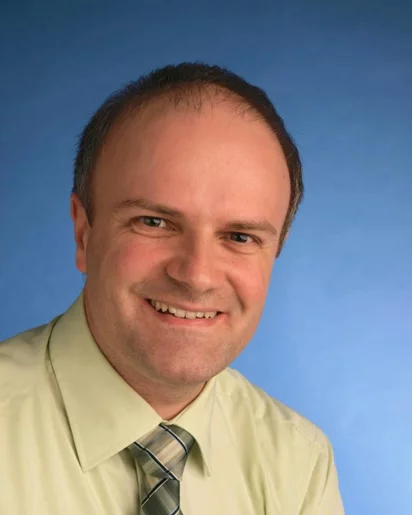
Golam Sarwar is a Senior University Lecturer in the Department of Chemical and Metallurgical Engineering at Aalto University. He holds a Doctoral degree (D.Sc. Tech.) from Helsinki University of Technology, awarded in 1999, and has maintained an active research career spanning over 25 years.
His educational background includes:
- Doctoral degree in Engineering and Technology from Helsinki University of Technology (1999)
- Licentiate degree in Engineering and Technology from Helsinki University of Technology (1995)
- Master's degree in Engineering and Technology from National Technical University Kharkov Polytechnical Institute (1987)
Dr. Sarwar's research focuses on chemical engineering applications for sustainable energy systems. His work particularly emphasizes biomass conversion technologies, supercritical water processes, and techno-economic analysis of biorefinery systems. He has made significant contributions to understanding gasification processes, particularly for black liquor, and has developed novel integration concepts for lignocellulosic biomass processing. His fingerprint analysis reveals strong expertise in carboxylic acid chemical engineering (100%), gasification (66%), supercritical water (66%), and biomass conversion (44%). His research also extends to thermodynamic modeling, including Gibbs free-energy-based approaches for electrolyte activity coefficient models.
His publication record shows sustained research activity from 1993 through 2019, with a notable increase in output after 2015. His most impactful works include the 2019 paper on supercritical water gasification of black liquor (48 Scopus citations), the 2018 colloidal lignin particles assessment (66 citations), and the highly cited 2017 biorefinery integration concept paper (138 citations).
Dr. Sarwar has been active in the academic community, participating in events such as the W2-Seminar on Circular Economy Now! in 2018 and serving as a visiting researcher at the Indian Institute of Technology Kharagpur in 2019. His work has been featured in media related to Bangladesh-Japan ICT training programs in early 2021, highlighting the international impact of his research and professional activities.
His research activities contribute to several UN Sustainable Development Goals, particularly those related to sustainable energy and responsible consumption and production, reflecting his commitment to developing engineering solutions with real-world environmental impact.