
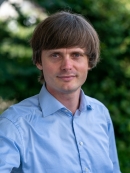
About
Friedhelm Serwane is a Research Group Leader at the Department of Physics, Ludwig-Maximilians-Universität München (LMU), and an associate member of the Munich Cluster for Systems Neurology (MCN). His lab operates at the intersection of physics and biology, focusing on retinal organoids and mechanobiology. As of January 1, 2025, the Serwane lab is relocating to the University of Ulm, where it will join the Biophysics Institute, continuing its innovative research in tissue mechanics and neuronal networks.
His research interests lie in understanding the mechanical cues guiding tissue self-organization, the processing of light-induced signals in retinal tissues, and the development of in vitro disease models using human retinal organoids. His group employs advanced techniques such as light-sheet microscopy and magnetic droplet-based mechanical actuation. This interdisciplinary work bridges soft matter physics, developmental biology, and neuroscience.
The recent publications highlight a strong trend toward quantitative, physics-driven approaches in biological systems, particularly in retinal organoid development, virus transduction dynamics, and tissue rheology. The work spans from fundamental quantum physics to applied biophysics, demonstrating a unique trajectory from mesoscopic quantum systems to complex tissue mechanics.
Scientific awards include:
- HFSP Grant
Friedhelm Serwane advises graduate students, including Katja Salbaum and previously Paulina, who successfully defended her PhD. His lab has secured competitive external funding such as the HFSP grant, supporting research into skin and tissue formation. The lab actively develops new methodologies for live imaging and mechanical probing of developing tissues.
The Serwane Lab, previously hosted within the Soft Matter group at LMU Physics, is transitioning to the Biophysics Institute at the University of Ulm, where it will continue to explore mechanobiological principles in neuronal and developmental systems.
Find Friedhelm Serwane elsewhere
Related Searches
You Might Also Like
 David KeaysLudwig Maximilian University of Munich · Professor
 Nicholas KurniawanEindhoven University of Technology · Associate Professor
 Alexandre J KablaUniversity of Cambridge · Professor
 Mauricio Rocha-MartinsUniversity of Münster · Researcher
 Mareike ZinkLeipzig University · Associate Professor
- SSapun ParekhMax Planck Institute for Polymer Research · Assistant Professor