About
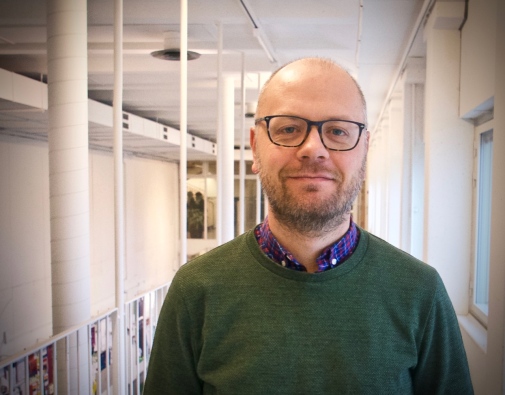
Erik Prawitz is an Associate Professor (Docent) in the Department of Economics and Statistics at Linnaeus University's School of Economics and Business Administration. He also holds a position as a Research Fellow at the Research Institute of Industrial Economics (IFN) in Stockholm. His academic career is built on a PhD in economics from the Institute for International Economic Studies (IIES) at Stockholm University, which he completed in 2017.
His research spans the interconnected fields of Economic Development, Political Economics, and Economic History, with particular focus on how emigration affects source regions, how infrastructure investments like railway expansion influence innovation and collaboration between inventors, and the historical role of large cities in the early increase of formal female workforce participation. His methodological approach combines historical analysis with modern economic techniques to examine long-term economic phenomena.
Prawitz's publication record demonstrates significant impact in top-tier economics journals including the Journal of Political Economy, Journal of Economic History, and Review of Economics and Statistics. His work often examines historical migration patterns and their economic consequences, with particular attention to Swedish migration history and its broader implications. His research frequently employs innovative approaches to historical data, including patent records and migration flows, to draw insights relevant to contemporary economic issues.
Among his notable recognitions are the Alexander Gerschenkron Prize for the best dissertation in non-US or Canadian Economic History and the Myrdal Prize for the best paper in Ekonomisk Debatt in 2018.
He actively contributes to the academic community through his involvement with the Linnaeus University Centre for Equality of Opportunity and Big Data Policy Analysis, where he conducts cutting-edge research on economic inequality and opportunity. His current work-in-progress includes projects examining cities and women's workforce participation, urban mortality decline, and the relationship between engineering and economic development.
Prawitz teaches advanced courses including Advanced Econometrics, Economics of Migration, and Economics of Inequality, focusing particularly on the historical roots of contemporary inequality patterns.