About
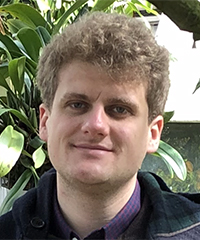
Eric Moerth, Ph.D., is a Research Fellow in Biomedical Informatics at Harvard Medical School and an Associate in Computer Science at the Harvard John A. Paulson School of Engineering and Applied Sciences. He is affiliated with the Department of Biomedical Informatics (DBMI) and the Gehlenborg Lab, focusing on the development and application of advanced visualization techniques in biomedical contexts.
- Ph.D. in Multimodal Medical Visualization, University of Bergen, Norway (2022)
- M.Sc. in Biomedical Engineering, Technical University of Vienna, Austria (2019)
- M.Sc. in Medical Informatics, Medical University of Vienna, Austria (2018)
- B.Sc. in Medical Informatics, Technical University of Vienna, Austria (2016)
Dr. Moerth's research is centered on interactive and multimodal visualization of complex medical data, particularly in radiomics, cancer imaging, and surgical applications. His work enables clinicians and researchers to explore multiparametric data such as MRI and tumor profiles through intuitive visual interfaces. Key themes include trust in visualizations, dynamic storytelling in science (scrollytelling), and scalable tools for multi-patient and multi-audience data communication.
His recent publications (2020–2024) demonstrate a strong focus on visual analytics for medical data, with applications in oncology, bariatric surgery outcomes, and rehabilitation. Trends show increasing sophistication in interactive, user-centered design and integration of empirical studies to evaluate visualization effectiveness.
- Best Paper Honorable Mention (2022)
- Best Short Paper (2022)
- Best Interdisciplinary Presentation Award (2020)
Dr. Moerth has collaborated extensively with researchers in visualization and biomedical informatics, particularly with Prof. Noeska Smit and the Gehlenborg Lab. While no formal advising or grant leadership roles are mentioned, his contributions to high-impact publications and software tools indicate active engagement in collaborative research. He has no listed students or formal teaching responsibilities.
He is a key contributor to the Gehlenborg Lab’s efforts in biomedical data visualization, where he develops tools that bridge clinical needs with computational innovation. His work emphasizes usability, scalability, and trustworthiness in visual systems for healthcare.