About
Edward Ruthazer is a James McGill Professor at McGill University and Director of the Integrated Program in Neuroscience, a graduate program with approximately 600 full-time students. He holds a Tier II Canada Research Chair and an FRQS Research Chair. His research is conducted at The Neuro (Montreal Neurological Institute-Hospital), a bilingual academic healthcare institution and McGill research and teaching institute that forms part of the McGill University Health Centre's Neuroscience Mission.
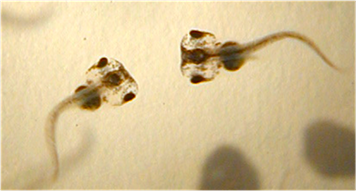
The Ruthazer Lab employs in vivo multiphoton microscopy and electrophysiology to investigate the development of topographic maps in the visual systems of zebrafish and Xenopus tadpoles. A primary focus is understanding how neural activity and early experience influence the morphology and connectivity of neurons. The lab also explores the interactions between glial cells and neurons, particularly how gliotransmitters modulate structural and functional plasticity during nervous system development. Additionally, the lab develops novel imaging and electrophysiology techniques to advance the study of neuronal connectivity and intracellular signaling.
Analysis of Dr. Ruthazer's publications from 2011 to 2022 reveals a sustained investigation into visual system development and neural circuit formation. Key research themes include the roles of NMDA receptors, microglial trogocytosis, the complement system, gliotransmission (particularly D-serine), and endocannabinoid signaling in axonal remodeling, synapse maturation, and plasticity. His work consistently utilizes zebrafish models and in vivo imaging, providing insights into activity-dependent transcription, chloride modulation, and the stabilization of neural circuits.
Dr. Ruthazer has been honored with several prestigious awards:
- Tier II Canada Research Chair
- FRQS Research Chair
- James McGill Professorship
- Canadian Association for Neuroscience Young Investigator Award
As Director of the Integrated Program in Neuroscience, Dr. Ruthazer oversees the academic training of about 600 graduate students. His research is funded through his Canada Research Chair and FRQS Research Chair, which support the lab's investigations into neural development, plasticity, and the molecular mechanisms underlying circuit formation. The lab has made significant contributions to understanding how experience shapes the developing brain.
The Ruthazer Lab is part of The Neuro's Neurodevelopmental Disorders Research Group. The lab's research team utilizes zebrafish and Xenopus tadpoles as model systems for live imaging, enabling real-time observation of neural development. Their work bridges molecular, cellular, and systems neuroscience to uncover fundamental principles of brain wiring and plasticity.