About
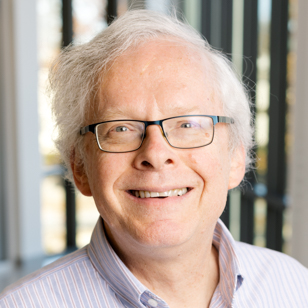
David Glass is a Senior Lecturer in the School of Computing at Ulster University, where he has been a faculty member since 2000. He is an active member of the Artificial Intelligence Research Centre and teaches courses in both computer science and mathematics, including specialized modules in artificial intelligence.
Dr. Glass holds a BSc in Mathematics, an MA in Philosophy, and a PhD in Theoretical Physics, all from Queen's University Belfast. Before joining Ulster University, he worked as a post-doctoral research associate at Queen's University Belfast.
His research spans the intersection of computer science, mathematics, and philosophy of science. A key focus is on explanatory and Bayesian reasoning, with applications in artificial intelligence and the mathematical modeling of complex systems. His work has practical applications in healthcare, including COVID-19 modeling, epilepsy diagnosis, and dementia research. He has also explored the relationship between science and religious belief, applying Bayesian reasoning to topics like 'explaining away' and design arguments. Analysis of his recent publications shows a strong emphasis on conjunctive explanations, neural network modeling of chaotic systems, and healthcare applications of machine learning.
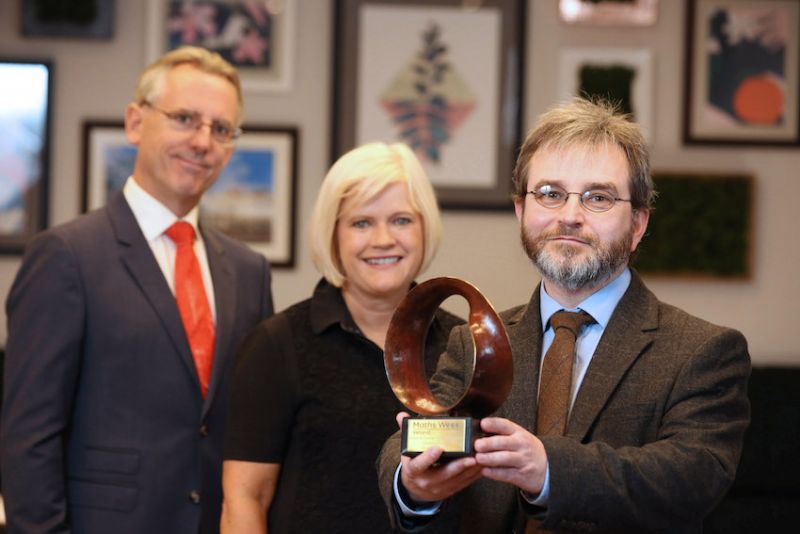
- Ulster University Research Excellence Award - Business Category (Under 50 employees), May 2019
Dr. Glass has supervised numerous PhD students and secured external funding for research projects, including "Conjunctive Explanations: how science and religion can work together" (2018-2021), "Extraction and Modelling of Alzheimer's Disease Data for Patient Stratification" (2015-2018), and "Explaining Away in Science and Religion" (2013-2015). His work demonstrates a strong commitment to interdisciplinary research that bridges technical computing with philosophical inquiry.
As a member of the Artificial Intelligence Research Centre, Dr. Glass collaborates with colleagues on various AI applications in healthcare and complex systems modeling. He is actively involved in academic community building, having co-organized the 23rd Annual UK Workshop on Computational Intelligence in 2024 and planning "The Future of AI and Humanity" event for the NI Science Festival in February 2025.