About
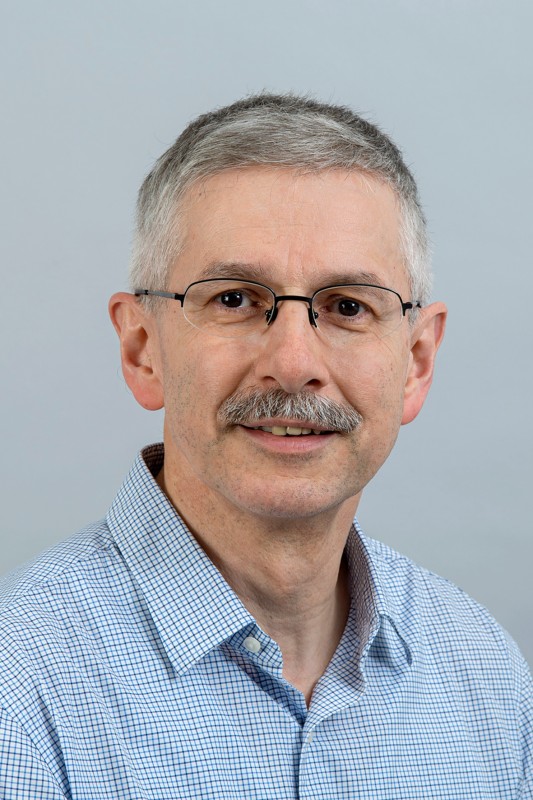
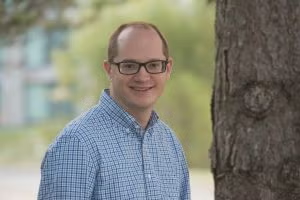
Claude Ederer is a Professor at ETH Zürich, specifically within the Materials Theory Group of the Department of Materials. He has held this position since March 2012, initially as a Senior Scientist/Lecturer and later being appointed as an Ad Hominem Professor in April 2017. His academic journey includes significant research experience across multiple prestigious institutions worldwide.
Dr. Ederer's educational background includes a Ph.D. in Physics from the University of Stuttgart (2003) and a Diplom in Physics from the same institution (2000). His research career began with doctoral work at the Max-Planck Institute for Metals Research in Stuttgart, followed by postdoctoral positions at the University of California, Santa Barbara and Columbia University.
His research focuses on first principles-based materials theory, with particular expertise in magnetic oxides, ferroelectricity, multiferroics, and materials with strong electronic correlations. His work bridges theoretical physics and materials science, employing advanced computational techniques to understand complex phenomena in quantum materials.
Analyzing his recent publications reveals a consistent focus on correlated electron systems, particularly transition metal oxides like vanadium dioxide and nickelates. His research explores metal-insulator transitions, charge disproportionation, magnetoelectric effects, and the development of advanced computational methodologies including dynamical mean-field theory and machine learning applications in condensed matter physics.
- Ad Hominem Professor, ETH Zürich (since 04/2017)
- CRANN Investigator 2009-2012 (Ireland's leading Nanoscience Research Centre)
- President of Ireland Young Researcher Award (PIYRA) 2007
Professor Ederer has established himself as a leading researcher in computational materials science, with a particular focus on complex oxides and correlated electron systems. His work at ETH Zürich's Materials Theory Group continues to advance our understanding of quantum materials through sophisticated first-principles calculations and theoretical modeling. While specific grant information isn't detailed in the provided text, his sustained research output suggests successful funding from multiple sources supporting his computational materials research program.
At ETH Zürich, Professor Ederer works within the Materials Theory Group, which focuses on developing and applying advanced computational methods to understand the electronic, magnetic, and structural properties of materials. The group's research spans from fundamental quantum mechanical calculations to applications in next-generation electronic and energy materials, with particular emphasis on materials exhibiting strong electron correlations.