
About
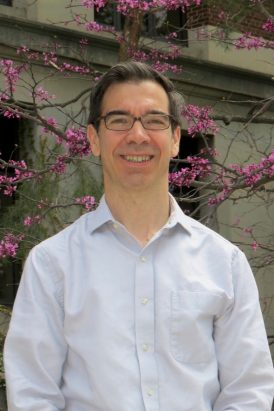
Christopher Monk is a Professor of Psychology, Psychiatry, and Neuroscience at the University of Michigan, affiliated with the Department of Psychology within the College of Literature, Science, and the Arts (LSA). He holds a Ph.D. from the University of Minnesota. His research focuses on understanding how childhood adversity impacts neural development and mental health outcomes, particularly anxiety and depression, across developmental stages. Key areas include the interplay between social environments, brain circuitry, and affective functioning.
Dr. Monk’s work employs neuroimaging techniques to study developmental trajectories, emphasizing three core research lines: (1) mapping age-related changes in affective neural circuitry, (2) linking ecological adversities (e.g., violence exposure, parental neglect) to neural development, and (3) connecting adolescent brain function to symptomatology and treatment efficacy. He co-leads the Translational & Developmental Neuroscience Lab (TaD Lab), integrating clinical and translational research to inform prevention and intervention strategies.
Recent publications highlight his contributions to understanding poverty’s impact on brain architecture, the role of school connectedness as a protective factor, and neurobiological mechanisms underlying anxiety treatment responses. He has been recognized in Stanford University’s list of the World’s Top 2% Scientists (2022, 2024) for citation impact. His teaching spans developmental psychology and neuroscience, emphasizing translational research applications.
Find Christopher Monk elsewhere
Related Searches
You Might Also Like
 Jamie L. HansonUniversity of Pittsburgh · Associate Professor
 Nim TottenhamBarnard College · Professor
 Robin NusslockNorthwestern University · Professor
 Nim TottenhamYale University · Professor
 Janet MenardQueen's University at Kingston · Associate Professor
 Lauren BorchersStanford University · Researcher