About
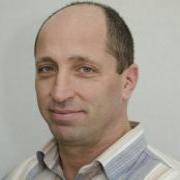
Prof. Arie Ruzin is a faculty member at the School of Electrical Engineering, Tel Aviv University, affiliated with the Department of Physical Electronics. His research focuses on semiconductor detectors for radiation and particle detection, with applications in medical imaging, non-destructive testing, and high-energy physics experiments.
Research Interests
Prof. Ruzin's work spans several key areas:
- Development of compound semiconductor detectors (CdZnTe, InSb, SiGe) for X-ray, gamma-ray, and particle detection
- Investigation of radiation-induced defects in semiconductors and radiation-hardness enhancement techniques
- Device simulation (1D/2D/3D) of novel semiconductor structures
- Nano-contact physics and atomic force microscopy (AFM) characterization
- Novel semiconductor materials including 2D materials and compensated semiconductors
His research often involves collaborations with international institutions like CERN's RD50 Collaboration.
Publications Overview
Recent publications (2010-2015) demonstrate a strong focus on semiconductor contact physics, radiation detector optimization, and nano-scale characterization. Key themes include modeling of ohmic/Schottky contacts, radiation damage simulations in CdZnTe/SiGe, and nano-contact behavior. The work consistently applies advanced simulation techniques alongside experimental validation.
Student Advising
Prof. Ruzin actively recruits graduate students (M.Sc./D.Sc.) for research projects involving:
- Radiation detector development and characterization
- Semiconductor device simulation
- AFM-based nano-scale measurements
- VLSI circuit design for detector systems
He also mentors undergraduate students in projects related to LabVIEW programming, electronic measurements, and VLSI design.
Laboratory Activities
He leads a research laboratory equipped for semiconductor device characterization, including atomic force microscopy (AFM), deep-level transient spectroscopy (DLTS), and radiation testing capabilities. The group participates in the CERN RD50 collaboration focusing on radiation-hard semiconductor detectors for high-energy physics experiments.