About
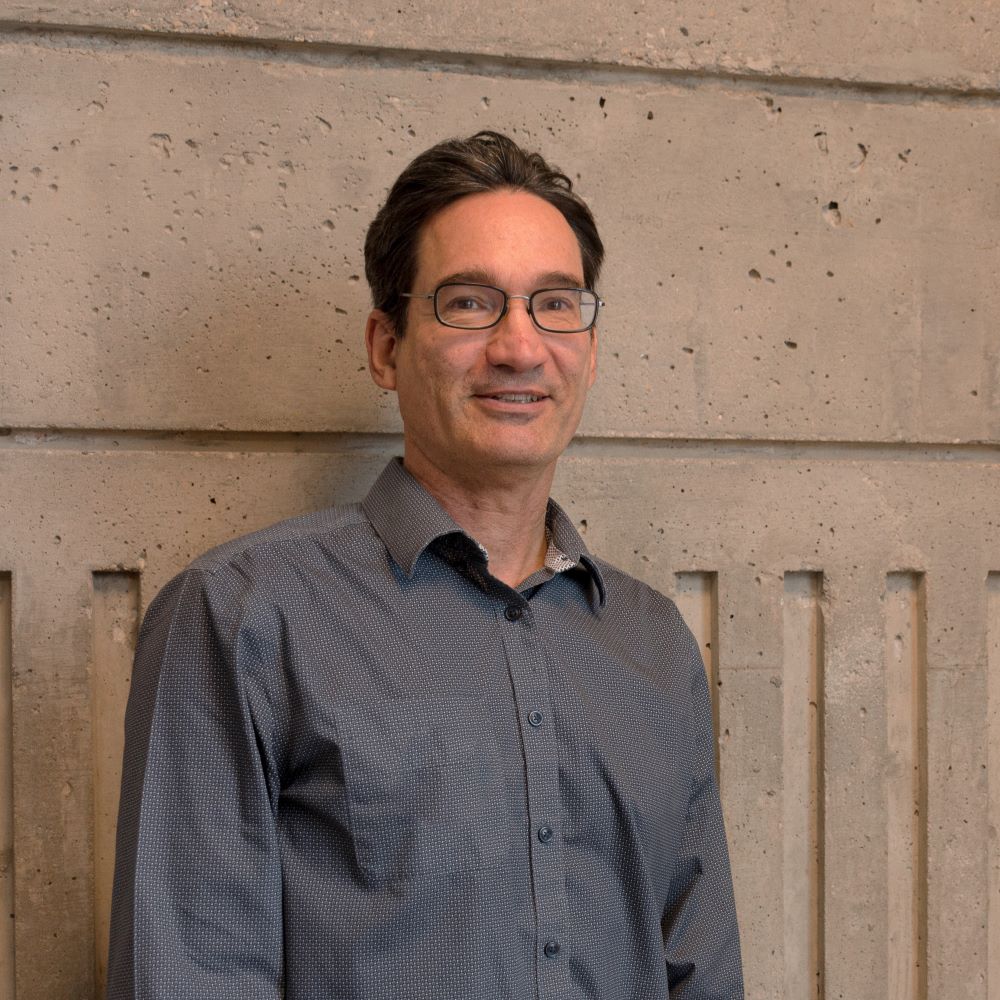
Dr. Allen Herman is a Professor in the Department of Mathematics and Statistics at the University of Regina, where he also serves as PIMS Site Director and Chair of the Research Committee. He has been with the university since 1995, progressing from Lecturer to his current position as full Professor.
Dr. Herman received his Ph.D. in Mathematical Sciences from the University of Alberta in 1995, following an M.Sc. in Mathematics (also from Alberta) in 1992, and a B.Ed. from the University of Lethbridge in 1988.
Dr. Herman's research focuses on the intersection of algebra and combinatorics, with particular expertise in representation theory, association schemes, and computational algebra. His work explores the algebraic structure of adjacency algebras, coherent configurations, and Terwilliger algebras. He has made significant contributions to understanding the representation theory of finite groups and the units of group algebras. His research often involves computational approaches, as evidenced by his development of software tools like wedderga for the GAP system.
Dr. Herman's recent publications demonstrate a continued focus on association schemes and their algebraic structures. His work spans theoretical investigations of Schur indices, table algebras, reality-based algebras, and computational methods. A notable trend is his exploration of connections between combinatorial structures and algebraic properties, particularly in the context of representation theory.
Dr. Herman has supervised numerous graduate students throughout his career, mentoring researchers who have gone on to make their own contributions to algebra and combinatorics. His research has been supported by multiple NSERC Discovery Grants and Mitacs Globalink Summer Student Fellowships.
Dr. Herman maintains active collaborations with researchers internationally, including visits to institutions such as the University of St. Andrews, University of Murcia, and University of Florida. He is particularly known for his work on the computational aspects of representation theory and his contributions to the GAP software system through the wedderga package.