
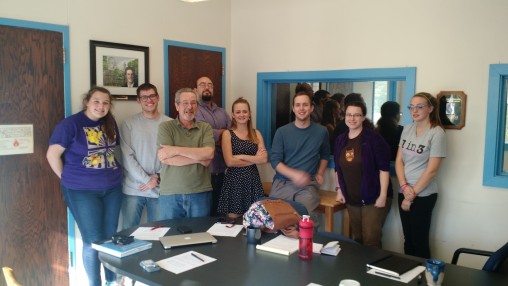
About
Alan Rosenwasser is a Professor of Psychology at the University of Maine. His primary appointment is in the Department of Psychology, and he serves as a cooperating faculty member in the School of Biology and Ecology, the Graduate School of Biomedical Science & Engineering (GSBSE), and the University of New England's Center for Excellence in the Neurosciences.
Dr. Rosenwasser's research focuses on the chronobiology of alcohol intake using animal models. Chronobiology is the scientific study of biological rhythms, particularly circadian rhythms - endogenous cycles with near-24-hour periods that influence processes from gene expression to mood and cognition. His laboratory investigates how excessive alcohol intake disrupts normal circadian patterns of sleep-wake behavior and how chronobiological disruption promotes and sustains excessive alcohol consumption. Using rats, mice, and hamsters, his team examines bidirectional relationships between alcohol exposure and circadian rhythms, with particular attention to genetic predispositions to consume (or avoid) alcohol. Key findings include chronic alcohol intake altering fundamental properties of the circadian pacemaker and simulated 'jet-lag' lighting regimens modifying alcohol intake.
Analysis of Dr. Rosenwasser's recent publications reveals a consistent focus on circadian-alcohol interactions across multiple animal models and methodologies. His work demonstrates how environmental factors like light-dark cycles influence alcohol consumption patterns, with significant implications for understanding the bidirectional nature of this relationship where each factor exacerbates the other. The research spans genetic, physiological, and behavioral dimensions of circadian disruption and alcohol use.
Dr. Rosenwasser's research has been supported by major funding sources including the National Institute for Alcohol Abuse and Alcoholism (NIAAA), the Integrative Neuroscience Initiative on Alcoholism (INIA), and the Maine Institute for Human Genetics and Health (MIHGH). His work aims to develop circadian-based strategies for managing and preventing alcohol-related disorders, with potential applications for addressing sleep disorders, depression, jet-lag, shift-work related health problems, and cancer associated with circadian disruption.
Find Alan Rosenwasser elsewhere
Related Searches
You Might Also Like
 Patrick EmeryUniversity of Massachusetts Chan Medical School · Professor
- NNayantara SanthiNorthumbria University · Researcher
 Helen BurgessUniversity of Michigan-Ann Arbor · Professor
 Jonathan JohnstonUniversity of Surrey · Professor
 Silke KiesslingUniversity of Surrey · Lecturer
 Marijke GordijnUniversity of Groningen · Researcher