About
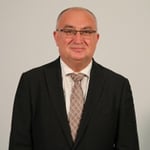
Adriano Lopes is an Invited Assistant Professor at Iscte - Instituto Universitário de Lisboa, affiliated with the Department of Information Science and Technology within the School of Technologies and Architecture. He is also an Associate Researcher at ISTAR-IUL, the university's research center in Information Sciences, Technologies, and Architecture. His academic work spans software systems engineering, visual analytics, and big data technologies.
- PhD in Computer Science – University of Leeds, UK (1999)
- Master’s in Computer Science – University of Coimbra (1993)
- Bachelor’s in Electrical Engineering (Computer Science branch) – University of Coimbra (1986)
- Postgraduate studies in Financial Analysis – Technical University of Lisbon, ISEG (2013)
Adriano Lopes’ research focuses on visual analytics, big data, software engineering, and computer graphics, with a strong emphasis on data visualization and its applications in domains such as smart tourism and urban planning. His work integrates human-centric design with advanced computational techniques to support decision-making in complex systems.
His recent publications highlight a shift toward applied research in digital transformation for sustainable tourism, particularly through spatiotemporal visualization of tourism crowding and carrying capacity modeling. These works demonstrate a consistent trend in leveraging data-driven platforms for real-world societal challenges, especially in the context of post-pandemic recovery and sustainable development.
Adriano has supervised numerous Master’s students at both Iscte and Universidade Nova de Lisboa, with thesis topics covering sentiment analysis, GPU-based rendering, anomaly detection, and tourism flow forecasting. He has participated in EU-funded research projects such as RESETTING, which aims to relaunch sustainable tourism models through digitalization. His academic service includes organizing roles in major visualization conferences like EUROVIS 2006 and the Eurographics UK Conference.
He has been actively involved in research labs and teams including ISTAR-IUL and CITI (research center at FCT/UNL), contributing to interdisciplinary projects that bridge computer science with architecture, telecommunications, and tourism. His work reflects a strong commitment to collaborative, applied research with societal impact.