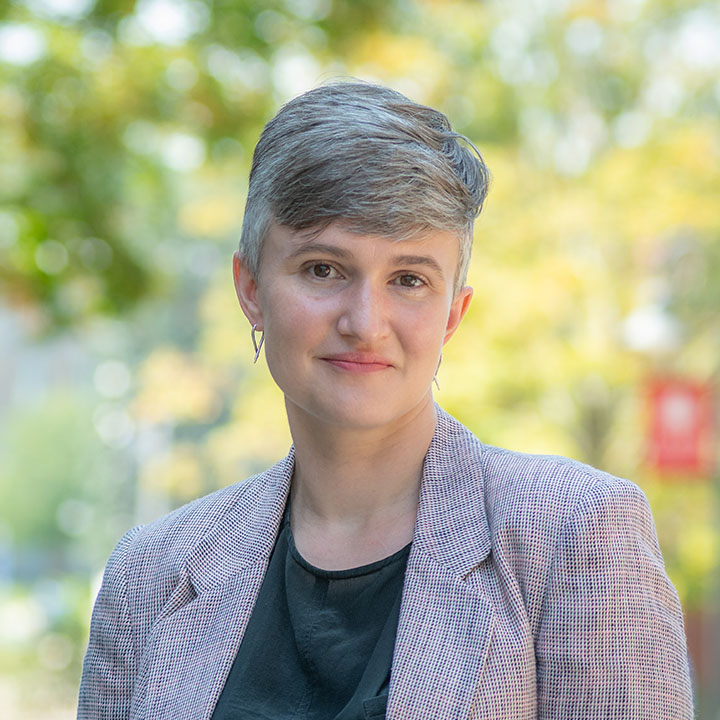
About
Aaron J. Stone is a Rising Scholar Postdoctoral Fellow in the Women, Gender, and Sexuality Studies program at the University of Virginia, specializing in queer and trans studies, narrative theory, and modernist literature with critical intersections of race and gender.
Education:
- A.B. from Kenyon College (2014)
- Ph.D. from the University of Michigan (2022)
Stone's research centers on queer desires for form, investigating how queer and trans subjects navigate social structures through narrative. His first book project, Desires for Form: Modernist Narrative and the Shape of Queer Life, analyzes early 20th-century queer communities' narrative strategies, arguing that experimental forms often express desires for traditional life structures while conventional narratives enable queer worldmaking. His second project, Black Vernacular Sexology, examines how African American novelists engage with and subvert sexual science.
His scholarly output reveals a trajectory from modernist literary analysis to contemporary drag culture studies, with consistent focus on narrative form's role in shaping queer and trans identities across historical periods. Key thematic threads include racialized gender nonnormativity, the politics of respectability, and vernacular knowledge production challenging scientific racism.
Scientific Awards:
- Mellon Foundation fellowship
- University of Michigan Institute for the Humanities fellowship
Stone's research is supported by prestigious fellowships enabling deep archival work on queer modernism and Black literary responses to sexology. While his postdoctoral position does not involve formal student advising, his publications establish foundational frameworks for analyzing narrative structure in gender and sexuality studies. His work bridges literary criticism with transfeminist and critical race theory, particularly through projects examining drag as both cultural form and autobiographical practice.
Operating within interdisciplinary gender studies, Stone's scholarship actively engages with decolonial methodologies and critiques of scientific racism, positioning narrative analysis as central to understanding how marginalized communities imagine alternative social structures beyond normative constraints.